For more than two decades, AutoStore has built its business on a simple premise: stack plastic bins in a dense aluminum grid and let battery-powered robots climb across the top to fetch them. Pallets never fit that model. On November 5, 2026, the Norwegian company said it will buy Logiqs BV, a Dutch developer of roaming pallet automated storage and retrieval systems, for up to EUR 30 million, with the transaction expected to close in the fourth quarter of 2026 subject to customary conditions. The words "up to" matter. They suggest part of the price is contingent on performance, which is typical when an acquirer is buying technology still proving itself at commercial scale.
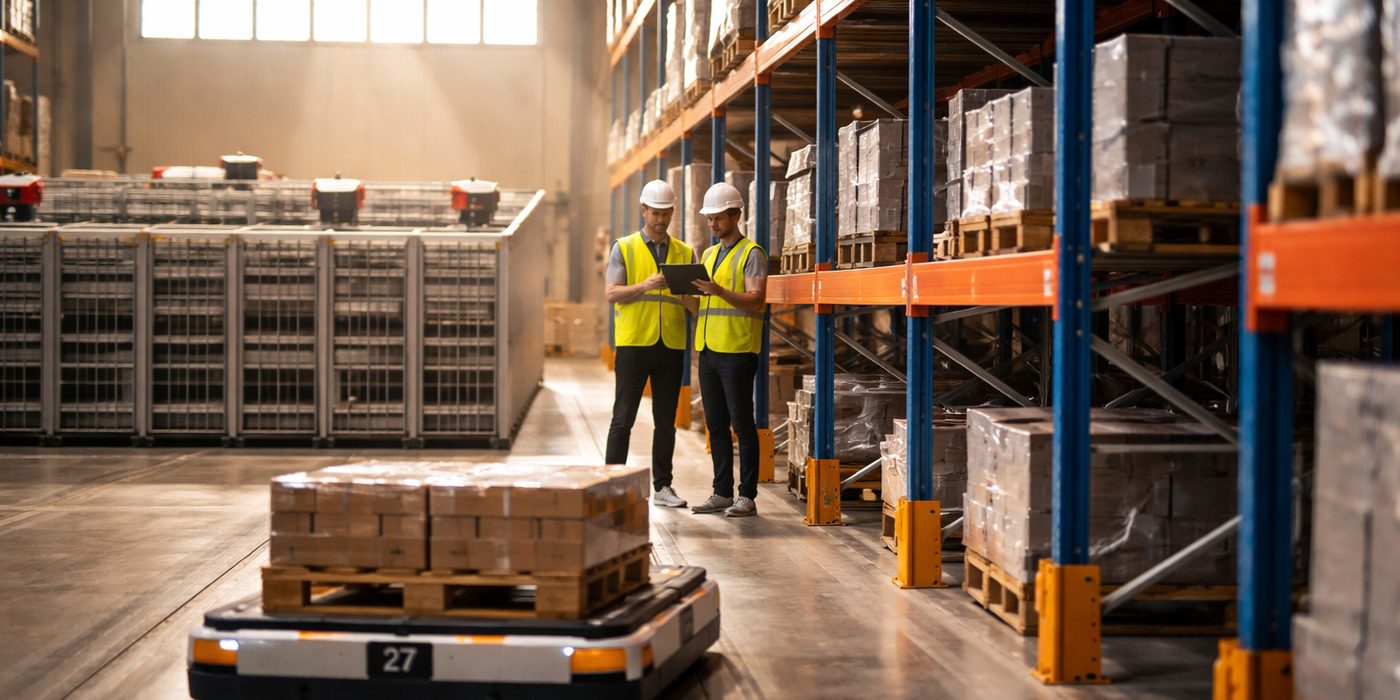
The logic of the deal becomes clearer against the competitive backdrop. Pallet AS/RS has long been dominated by fixed-aisle shuttle systems and stacker cranes, rigid structures that deliver density but demand heavy civil engineering and weeks of commissioning. Roaming pallet vehicles take a different approach. Rather than running on fixed rails confined to an aisle, they move freely across a floor or lane layout, placing and retrieving pallets with more flexibility and, in theory, easier reconfiguration when inventory profiles change. Logiqs, based in the Netherlands, has been developing exactly that class of system. AutoStore, by contrast, has spent its history perfecting the opposite end of the warehouse, where individual items rather than full pallets move.
Parth Joshi, AutoStore's chief product officer and president of its product business unit, framed the acquisition as an extension of the company's fulfillment platform, adding pallet handling alongside the grid it already sells through a network of integration partners. That partner model is the quiet complication. AutoStore does not sell directly to most end customers; it sells through system integrators who design, install, and service the installations. Adding a pallet product means those integrators must now decide whether to invest in a second product line, train technicians on new hardware, and pitch a hybrid architecture. Whether the channel embraces a pallet offering under the AutoStore brand will shape the acquisition's value more than any engineering milestone.
The broader industry context is a market where customers increasingly want one coordinated system rather than a patchwork of point solutions. Warehouse operators running both case-level and each-level flows have traditionally bought from multiple vendors and stitched the software together themselves, a process that creates integration cost and finger-pointing when throughput falls short. Consolidation around platform vendors is a response. AutoStore's move follows a pattern in which automation suppliers extend upward from a core strength into adjacent handling formats, betting that a unified control layer and a single service relationship will win budget from competitors offering narrower products. At EUR 30 million at most, the price is small enough to look like an option on that strategy rather than a bet-the-company commitment, which also limits the downside if pallet integration proves harder than the slide decks suggest.
For engineers, the open questions are practical. Roaming pallet systems must solve load stability, fork or platform handling of variable pallet quality, and navigation among vehicles carrying hundreds of kilograms, all while meeting safety standards for heavy mobile equipment. Those are different problems from moving a lightweight bin on a rigid grid, and the grid's mechanical simplicity has been central to AutoStore's reputation for reliability. Bringing a freer-roaming architecture under the same umbrella means the company must prove it can maintain its uptime record while absorbing a technology with more degrees of freedom. Investors will be watching whether the contingent portion of the price is tied to technical or commercial milestones, details that the company's closing filings should clarify.
What to Watch
Track the closing announcement, targeted for the fourth quarter of 2026, for disclosure of how much of the EUR 30 million is fixed versus contingent and what milestones trigger the remainder. Watch AutoStore's next quarterly earnings call for commentary on integrator reception and any early pilot customers for Logiqs-based systems. Monitor whether AutoStore's largest integration partners publicly commit to selling or installing the pallet product, since channel adoption will be the clearest early signal. Finally, keep an eye on competing pallet AS/RS vendors for pricing or partnership responses in the first half of 2027.