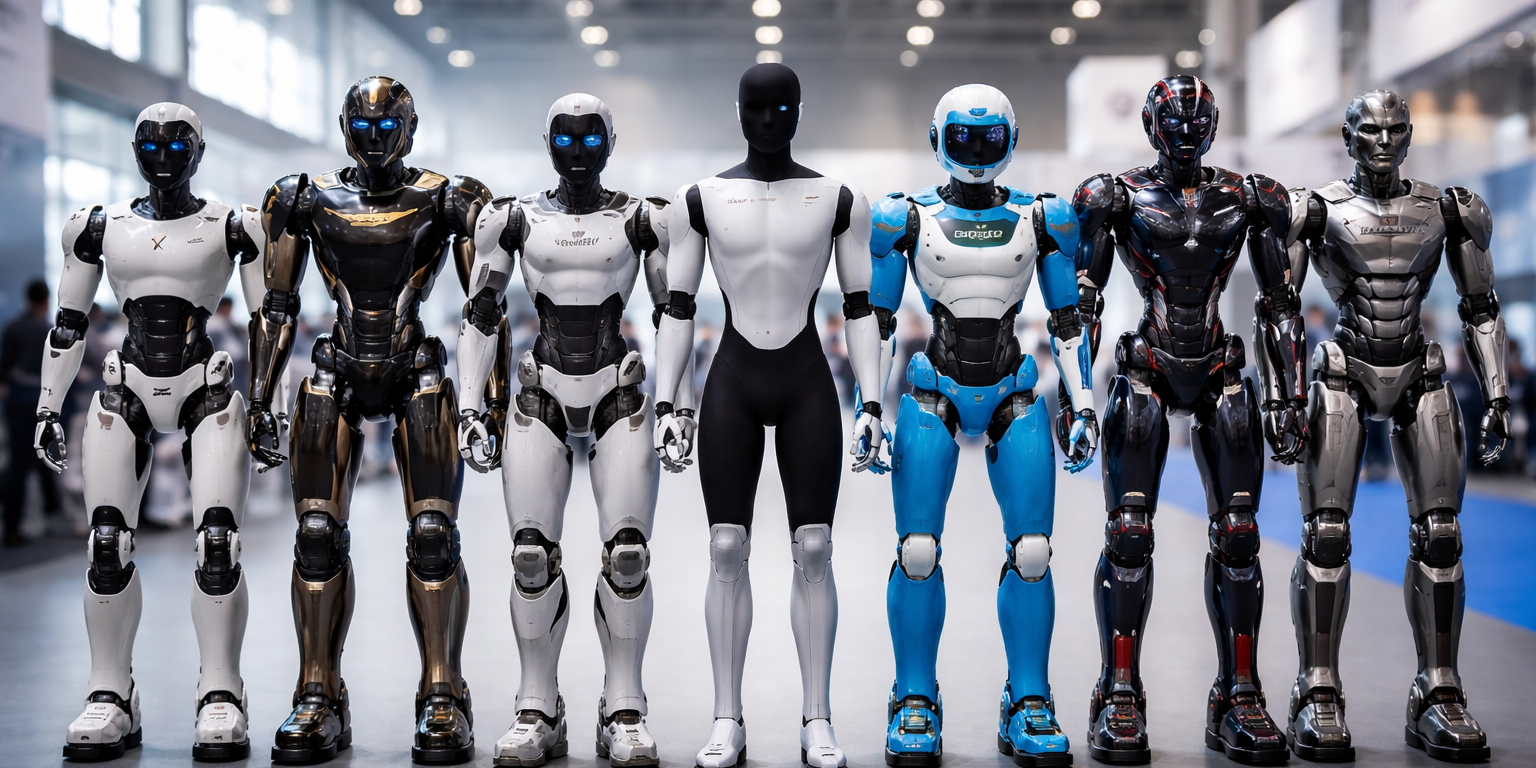
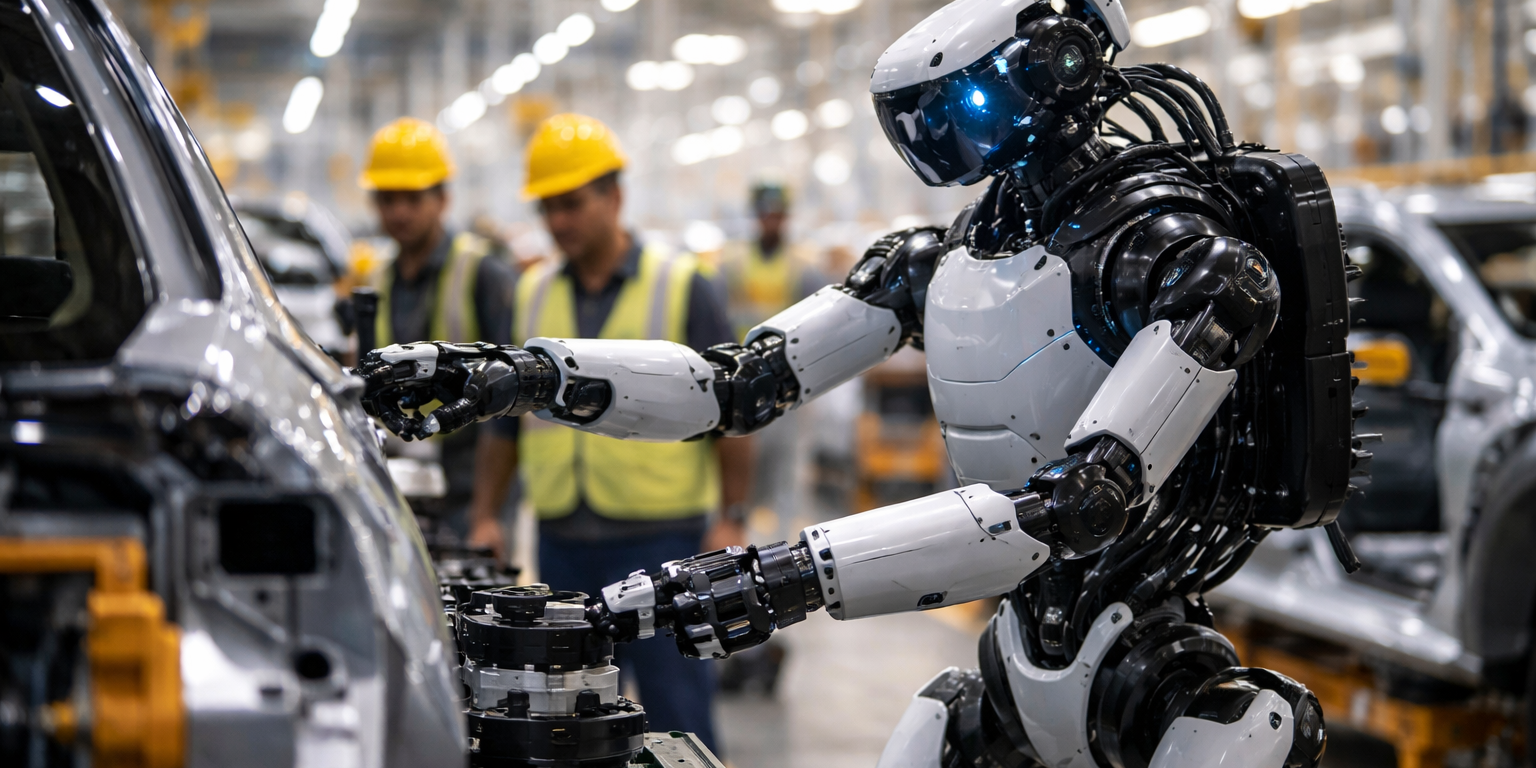
Nvidia revealed at GTC Taipei that Unitree Robotics will serve as the hardware foundation for what the chipmaker is positioning as an open reference architecture for humanoid development. The partnership aims to establish a de facto standard in the fragmented robotics sector by pairing Nvidia's Isaac robotics platform and Jetson compute modules with Unitree's proven humanoid designs. The announcement arrives as dozens of startups and established manufacturers race to bring general-purpose humanoids to market, each engineering proprietary systems from the ground up. Nvidia's play here mirrors the Windows-Intel dynamic that consolidated PC hardware in the 1990s, offering developers a consistent target platform instead of fractured custom solutions.
Unitree brings credibility that matters in hardware circles. The Hangzhou-based company ships the G1, a humanoid standing 127 centimeters tall and weighing 35 kilograms, at a price point under $16,000. That price alone represents a ten-fold reduction compared to research-grade platforms like Boston Dynamics' Atlas or Agility Robotics' Digit. Unitree's previous quadruped robots achieved wide distribution in academic labs and industrial pilots, proving the company can manufacture at scale and support third-party developers. Nvidia gets a manufacturing partner with existing production lines and supply chain relationships in China, sidestepping the capital-intensive process of building reference hardware in-house. Unitree gains access to Nvidia's compute roadmap, software libraries, and the ecosystem of developers already building on Isaac.
The reference design will bundle Nvidia's Jetson Thor system-on-module, purpose-built for robotics with integrated CPU, GPU, and transformer acceleration. Isaac includes perception models for navigation and manipulation, physics simulation through Isaac Sim, and a middleware layer that abstracts differences between robot morphologies. Developers building on the Unitree reference platform will inherit locomotion controllers, inverse kinematics solvers, and pre-trained vision models rather than starting from first principles. The collaboration also standardizes mechanical interfaces and electrical specifications, meaning third-party developers of end effectors, sensors, or auxiliary modules can design once and deploy across any robot built on the reference design. That interoperability could catalyze the kind of component ecosystem that transformed drones after DJI established dominant form factors.
Industry observers draw parallels to mobile robotics, where established platforms like ROS created common ground but never achieved true hardware standardization. Fetch Robotics, Clearpath, and others built ROS-compatible machines with wildly different capabilities and interfaces, forcing developers to port code across platforms. Nvidia's vertical integration of compute, simulation, and now reference hardware through Unitree addresses that fragmentation directly. The unanswered question is adoption outside China, where Unitree faces export restrictions on advanced models and geopolitical headwinds around Chinese robotics. Figure AI, Apptronik, Sanctuary AI, and other Western humanoid developers have existing relationships with Nvidia but also strategic reasons to differentiate on hardware. If those companies adopt the reference design, it validates Nvidia's standardization thesis. If they build proprietary systems despite access to the Unitree blueprint, the PC analogy breaks down.
The announcement also signals Nvidia's confidence that humanoids represent a compute market worth owning, distinct from industrial arms or autonomous vehicles. CEO Jensen Huang has called general-purpose robotics the next computing platform, predicting humanoids will ship in volumes rivaling smartphones within a decade. That forecast assumes costs drop below $10,000 per unit and capabilities expand beyond constrained environments into homes and small businesses. Unitree's aggressive pricing suggests the first assumption is achievable. The second depends on whether standardized platforms accelerate software development faster than they constrain hardware innovation. Tesla's Optimus remains a wildcard, built on proprietary silicon and tightly coupled to the company's AI training infrastructure. If Optimus reaches volume production first, Nvidia's open reference design becomes a hedge rather than the dominant architecture.
What to Watch: Track whether U.S. and European humanoid developers adopt the Nvidia-Unitree reference design or continue building proprietary platforms. Monitor Unitree's G1 shipment volumes and any announcements of manufacturing partnerships outside China to gauge the reference platform's geographic reach. Watch for third-party component suppliers announcing products designed specifically for the reference design's mechanical and electrical interfaces, which would indicate genuine ecosystem formation. Pay attention to any statements from Figure AI, Apptronik, or Agility Robotics regarding their hardware strategies in the wake of this announcement.