A humanoid robot learned to walk in seven days using NVIDIA's Isaac Lab simulation environment, compressing a training timeline that typically spans months into a single week of GPU-accelerated reinforcement learning. The achievement, demonstrated on an open-source hardware platform, represents a practical benchmark for laboratories evaluating whether simulation-to-reality transfer can substitute for time-intensive physical trials. Unlike earlier demonstrations that relied on proprietary datasets or bespoke hardware, this implementation used publicly available tools and commodity robotics components, making the methodology reproducible for university research groups and startups operating without venture-scale budgets.
The training pipeline ran entirely in Isaac Lab, NVIDIA's Python-based simulation framework built atop the Omniverse platform. Researchers generated millions of simulated footsteps across varied terrain conditions, then distilled the resulting neural network policies into a controller compact enough to run on the robot's onboard compute. The seven-day figure refers to wall-clock time on a workstation equipped with NVIDIA GPUs, not continuous robot operation. Physical hardware entered the loop only after simulation training concluded, when engineers deployed the learned policy and observed the robot executing stable bipedal gaits within hours of first contact with real flooring. This inversion of the traditional workflow, where robots spend weeks in lab trials before achieving reliable motion, hinges on simulation fidelity reaching a threshold where physics models approximate reality closely enough that trained behaviors transfer without catastrophic failure.
Isaac Lab's architecture parallelizes thousands of simulated robot instances across GPU cores, a design that treats locomotion training as a massively parallel graphics rendering problem rather than a sequential robotics experiment. Each virtual robot explores slightly different gait parameters, stumbles under different random perturbations, and encounters different surface friction coefficients. The system aggregates this experience into a single policy network that generalizes across conditions the physical robot will face. NVIDIA first released Isaac Lab in early 2024 as a successor to Isaac Gym, aiming to lower the barrier to entry for reinforcement learning researchers who previously needed expertise in both robotics and high-performance computing. The platform abstracts GPU scheduling and physics engine integration, exposing a simpler API that resembles standard machine learning frameworks. By handling the infrastructure complexity, Isaac Lab allows a graduate student with access to a single high-end workstation to run experiments that once required compute clusters.
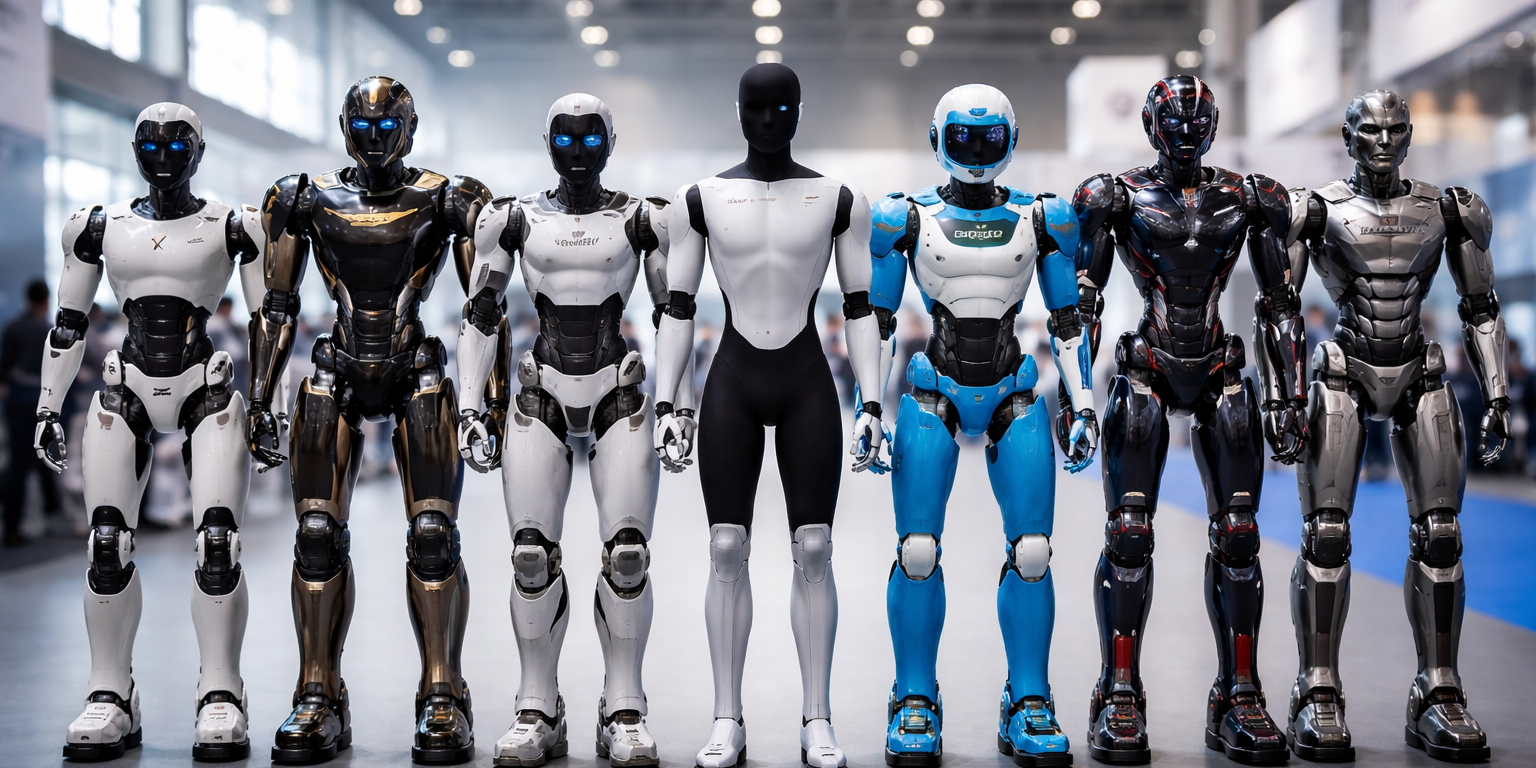
The choice of open-source humanoid hardware matters for adoption velocity. Proprietary platforms like Boston Dynamics' Atlas or Agility Robotics' Digit carry licensing restrictions that limit dataset sharing and cross-institutional collaboration. Open designs, by contrast, permit researchers to publish trained models alongside hardware specifications, creating a feedback loop where incremental improvements compound across labs. Several Chinese manufacturers now offer humanoid kits priced below $20,000, a price point that positions these systems as laboratory instruments rather than capital equipment. Combined with cloud-hosted simulation environments, this cost structure enables distributed research networks where institutions contribute specialized datasets, terrain types, or failure mode studies to a shared knowledge base. NVIDIA's role extends beyond providing simulation tools; the company curates reference implementations and pre-trained models that serve as starting points, reducing the cold-start problem for teams entering humanoid research.
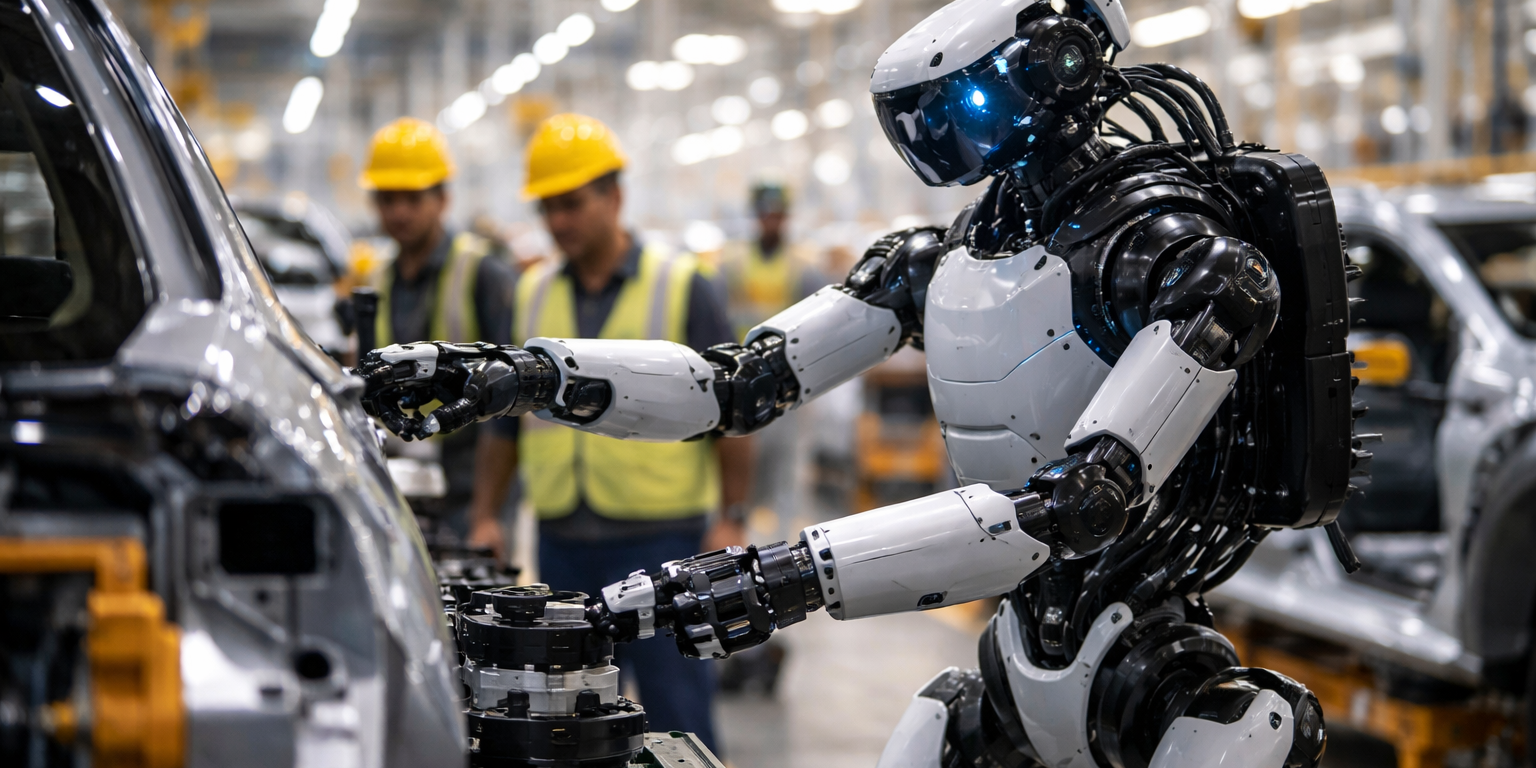
Broader industry implications center on whether simulation-first development can match or exceed the data efficiency of deploying large robot fleets in controlled environments. Companies like Tesla and Figure AI operate hundreds of humanoid units in warehouses and factories, generating real-world interaction data at scale. Simulation advocates argue that virtual environments explore edge cases and failure modes faster than physical deployments, since simulated robots can fall, collide, and reset instantly without damage. The counterargument holds that reality contains subtleties—contact dynamics, actuator hysteresis, sensor noise profiles—that simulations omit, and that policies trained purely in silico hit a performance ceiling. The seven-day locomotion result suggests the ceiling has risen significantly, though walking on flat indoor surfaces represents the simplest end of the humanoid task spectrum. Manipulation, dynamic balance recovery, and unstructured outdoor navigation remain open questions.
What to Watch: Monitor whether NVIDIA releases Isaac Lab benchmarks for manipulation tasks beyond locomotion, particularly dexterous hand control and whole-body coordination required for warehouse work. Track adoption metrics among academic labs publishing humanoid research using Isaac Lab versus competing platforms like MuJoCo or PyBullet. Observe whether open-source humanoid manufacturers begin shipping robots with pre-loaded Isaac Lab policies as default firmware, signaling a shift from hardware sales to ecosystem plays. Finally, watch for announcements from Figure AI, Apptronik, or Sanctuary AI regarding their internal use of NVIDIA simulation tools, which would indicate enterprise validation beyond academic proof-of-concept.