Hyundai Motor Group deployed robots for plant watering, security patrols, and package delivery throughout its Seoul headquarters lobby when NVIDIA chief executive Jensen Huang arrived Monday, a choreographed demonstration that formalized an expanded partnership placing Boston Dynamics' Atlas humanoid at the center of joint development efforts. The meeting, which brought together Hyundai Motor Group executive chair Euisun Chung and Boston Dynamics CEO Robert Playter, extends a relationship that began with manufacturing-focused automation and now encompasses foundation models, simulation infrastructure, and humanoid platform development. Huang's visit represents NVIDIA's most public commitment to humanoid robotics since the company began positioning its Omniverse and Isaac platforms as essential tools for training embodied AI systems that operate in physical environments.
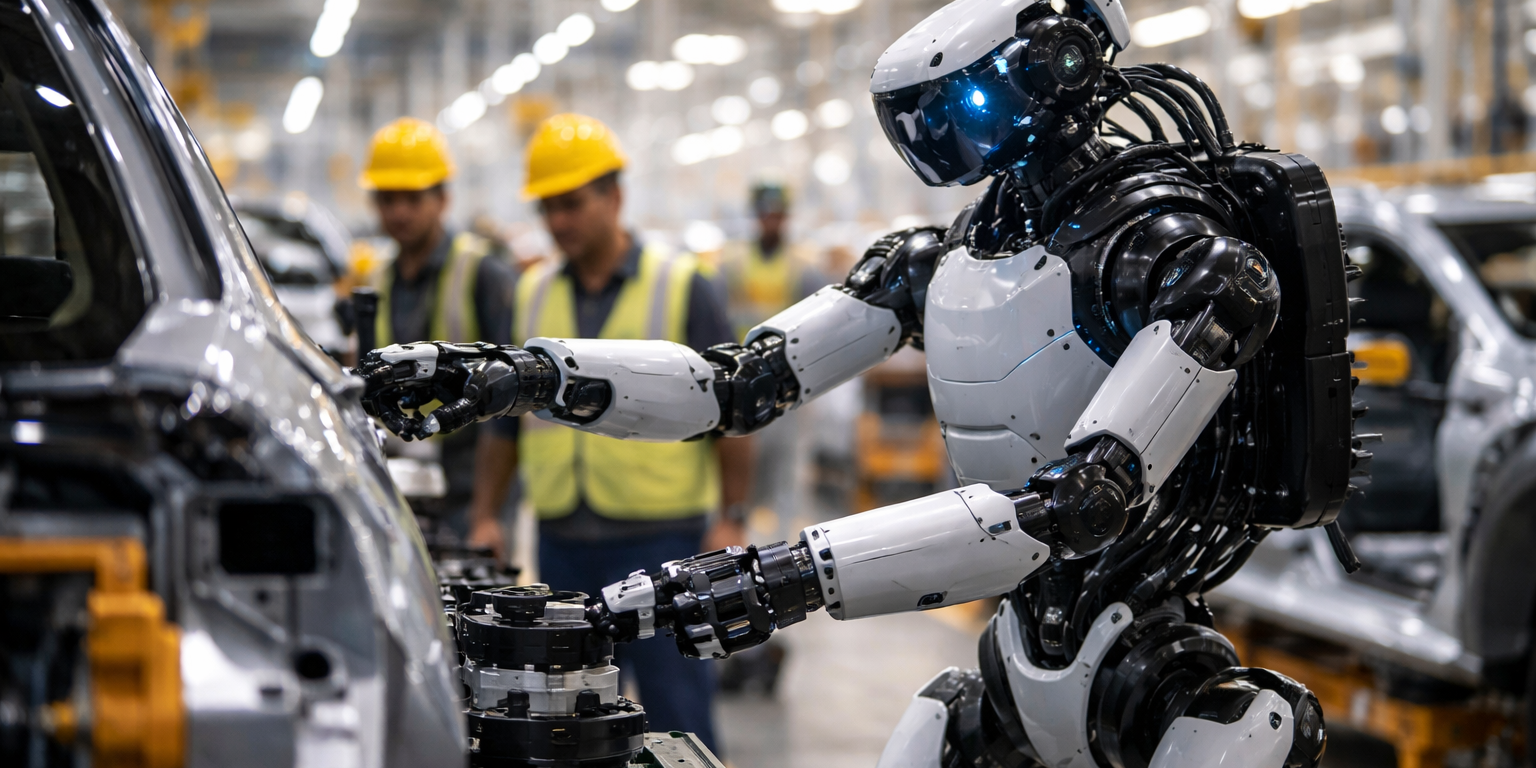
Hyundai acquired Boston Dynamics from SoftBank for $1.1 billion in June 2021, a transaction that initially puzzled analysts who questioned whether a carmaker needed a robotics laboratory famous for viral videos but short on revenue. Three years later, the strategic logic has clarified. Hyundai operates some of the world's most capital-intensive manufacturing facilities, with production lines designed around human workers whose dimensions, reach, and movement patterns dictate factory layouts that have remained largely unchanged for decades. Atlas, which stands 1.5 meters tall and weighs 89 kilograms, matches human proportions closely enough to navigate existing infrastructure without requiring retooling. Boston Dynamics has demonstrated the hydraulically-actuated humanoid performing parkour, lifting objects, and maintaining balance on uneven surfaces, capabilities that translate directly to automotive assembly tasks like parts retrieval, quality inspection, and material handling in tight quarters between workstations. The robot's ability to operate in spaces built for people eliminates the need for dedicated automation zones that reduce manufacturing flexibility.
NVIDIA's contribution centers on the software and simulation infrastructure required to make Atlas useful beyond controlled demonstrations. The company's Isaac platform provides physics simulation, sensor modeling, and reinforcement learning tools that let engineers train robot behaviors in virtual environments before deploying them on physical hardware. Omniverse, NVIDIA's collaborative 3D design platform, allows teams to build digital twins of entire factory floors where multiple Atlas units can be tested simultaneously against production scenarios that would be expensive or dangerous to replicate in the real world. Huang has repeatedly emphasized that embodied AI requires orders of magnitude more training data than large language models, with physical robots needing to learn manipulation, navigation, and task planning through millions of simulated interactions. The Hyundai partnership provides NVIDIA with a clear deployment path for these tools while giving Hyundai access to AI capabilities its internal teams would struggle to develop independently. Boston Dynamics brings the hardware platform and control algorithms refined through decades of DARPA-funded research, creating a three-way arrangement where each party contributes distinct technical capabilities.
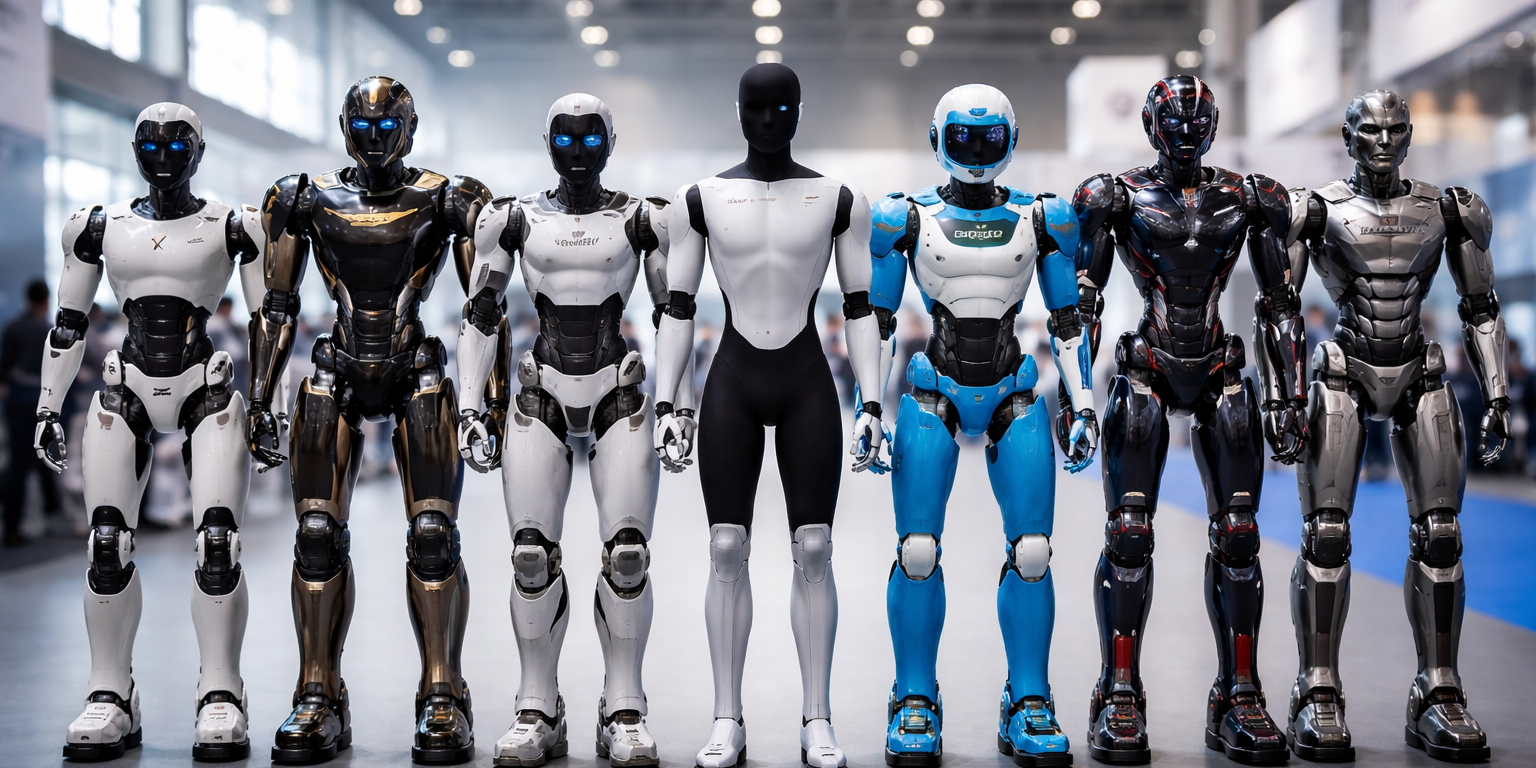
The broader robotics industry has watched Hyundai's Boston Dynamics acquisition for signals about humanoid viability in industrial settings. Tesla CEO Elon Musk has positioned the Optimus humanoid as essential to manufacturing scale, claiming robots will eventually outnumber cars in Tesla's product mix. Figure AI raised $675 million in February 2024 at a $2.6 billion valuation to develop humanoids for logistics and warehousing, with backing from Microsoft, NVIDIA, and Amazon's Bezos Expeditions fund. Sanctuary AI and Apptronik have both announced partnerships with automotive and aerospace manufacturers to pilot humanoid systems in production environments. What separates Hyundai's approach is integration depth. Where most companies treat humanoids as experimental additions to existing operations, Hyundai controls both the robot manufacturer and the deployment environment, allowing iteration speed and customization impossible for third-party vendors. The Seoul headquarters demonstration included multiple robot types from Hyundai's portfolio, suggesting the company views robotics as a platform play rather than a single-product bet. If Atlas proves viable in Hyundai's factories, the company gains both operational advantages and a potential robotics business selling to other manufacturers facing similar labor constraints and spatial limitations.
What to Watch: Track whether Hyundai announces specific Atlas deployment timelines for its Ulsan or Alabama manufacturing facilities within the next quarter, which would signal confidence beyond laboratory development. Monitor NVIDIA's GTC conference in March 2025 for announcements about Isaac platform features tailored to humanoid manipulation tasks, particularly simulation tools for bimanual assembly work. Watch for Boston Dynamics product updates that address Atlas battery life and autonomy duration, currently limiting factors for multi-shift industrial deployment that Hyundai's use cases will expose quickly.