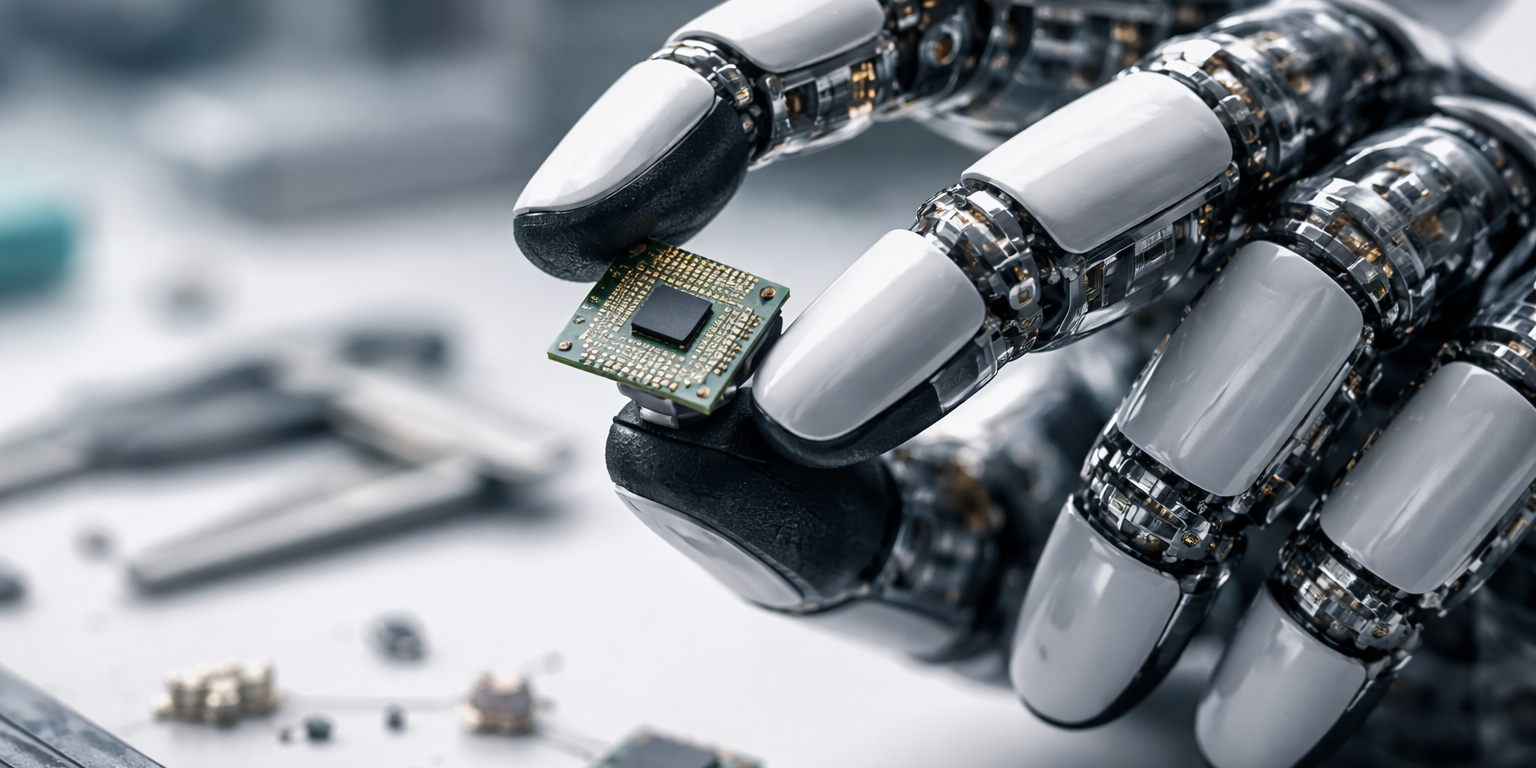
A motor manufacturer with three decades of experience in miniature actuators has moved its robotics subsidiary within striking distance of commercial humanoid hands. MINDSYNC TECH, owned by Jiangsu Leili Motor Company, now claims production-ready dexterous manipulators that rely on hollow-cup motors paired with gearboxes as small as 6 millimeters in diameter. The company positions the hardware as a solution to the mechanical stiffness problem that continues to separate research prototypes from factory-floor robots that can handle delicate assembly tasks without crushing components or failing to maintain grip under load.
Jiangsu Leili built its reputation supplying micro motors to consumer electronics, medical devices, and automotive systems. That background in high-precision, high-volume manufacturing gives MINDSYNC TECH access to production infrastructure most robotics startups lack. The dexterous hand design incorporates gearboxes spanning 6 to 42 millimeters, allowing engineers to match actuator size to specific joint requirements rather than forcing a one-size-fits-all approach. Hollow-cup motors deliver higher power density and faster response times than conventional iron-core designs, a characteristic that matters when a robot needs to adjust grip force in milliseconds as it manipulates an object. The autonomous wire winding process Jiangsu Leili developed for its motor production now extends to the robotics line, reducing labor costs and improving consistency across production runs. MINDSYNC TECH has not disclosed pricing, but engineers familiar with the underlying motor technology estimate Bill of Materials costs could land well below competing systems that rely on custom actuators without the economies of scale a dedicated motor manufacturer commands.
Mechanical stiffness represents one of the stubborn engineering challenges in humanoid manipulation. Too much stiffness and the hand damages fragile objects or cannot conform to irregular shapes. Too little and the system lacks the rigidity needed to apply controlled force, leading to slippage during precision tasks. The problem compounds in humanoid applications because each finger typically requires multiple actuated joints, multiplying the points where stiffness must be tuned. MINDSYNC TECH's approach uses the gearbox range to address this: smaller gearboxes in distal joints where compliance matters, larger ones in proximal joints and the palm where structural rigidity takes priority. The hollow-cup motors contribute by delivering torque without the cogging and hysteresis effects that make smooth, low-speed control difficult with traditional motors. Whether this architecture performs as claimed in production environments remains an open question, but the design rationale aligns with what biomechanics researchers have recommended for years. The 2027-2028 deployment timeline the company floats gives industrial customers roughly 12 to 24 months to evaluate prototypes before committing to integration projects.
Competition in dexterous manipulation has intensified as humanoid development accelerates. Shadow Robot Company has sold research-grade hands for over a decade, but at price points and lead times that preclude volume manufacturing applications. Robotiq, OnRobot, and other end-effector specialists focus primarily on two- and three-finger grippers optimized for pick-and-place rather than the fine motor control humanoid tasks demand. Tesla revealed a five-fingered hand on its Optimus platform, though technical specifications remain scarce and the design appears purpose-built for Tesla's internal workflows rather than third-party integration. Sanctuary AI demonstrated dexterous manipulation with its Phoenix humanoid, but the company has not broken out the hand as a standalone product. MINDSYNC TECH's pitch centers on being first to market with a dexterous hand designed for manufacturing scale, backed by a parent company that already ships millions of motors annually. If Jiangsu Leili can translate its motor production expertise into reliable robotic subsystems, the company could claim a significant share of the humanoid components market before Western competitors tool up their own supply chains. That scenario depends on execution, however, and on whether industrial customers trust a relatively unknown robotics brand with mission-critical manipulation tasks.
What to Watch: Monitor whether MINDSYNC TECH announces pilot deployments with named industrial partners in the first half of 2027. Watch for technical papers or patents detailing the stiffness control algorithms the system uses, as the hardware alone does not solve the compliance problem. Track Jiangsu Leili's capital expenditures in the next two quarters for signals about production scale-up commitments. Pay attention to competing announcements from established gripper manufacturers entering the dexterous hand market, particularly any partnerships between actuator suppliers and robotics integrators.