The military robotics sector will consume $128.92 billion annually by 2031, up from $42.15 billion this year, representing a tripling of market size in just five years. MarketsandMarkets released the projection September 3 from its Delray Beach office, quantifying what defense contractors and their investors have observed firsthand: procurement officers across NATO and Pacific allies are writing checks for autonomous systems at a pace that has no precedent in modern defense budgeting. The 25.1% compound annual growth rate exceeds the expansion trajectory of nearly every other defense technology segment, including conventional avionics, ground vehicles, and naval systems. For context, the broader defense industry typically grows at 3-5% annually. Something fundamental has shifted in how militaries worldwide are allocating capital.
That shift stems from operational necessity more than technological novelty. Autonomous and teleoperated systems proved their worth in Ukraine, where both sides deployed thousands of ground robots and aerial drones for reconnaissance, logistics, and direct engagement. Those battlefield results erased decades of institutional skepticism about whether robots could function reliably in contested environments. Defense ministries that once viewed robotics as experimental now consider them essential. The United States Department of Defense alone plans to field tens of thousands of autonomous systems across all service branches by 2028, with the Army's Robotic Combat Vehicle program and the Navy's unmanned surface vessel initiatives representing multi-billion-dollar commitments. Allied nations are following similar trajectories, with the United Kingdom, Australia, South Korea, and Japan each announcing major robotics procurement programs in the past eighteen months. China's military modernization strategy places autonomous systems at the center of its force structure redesign, though transparency on spending remains limited.
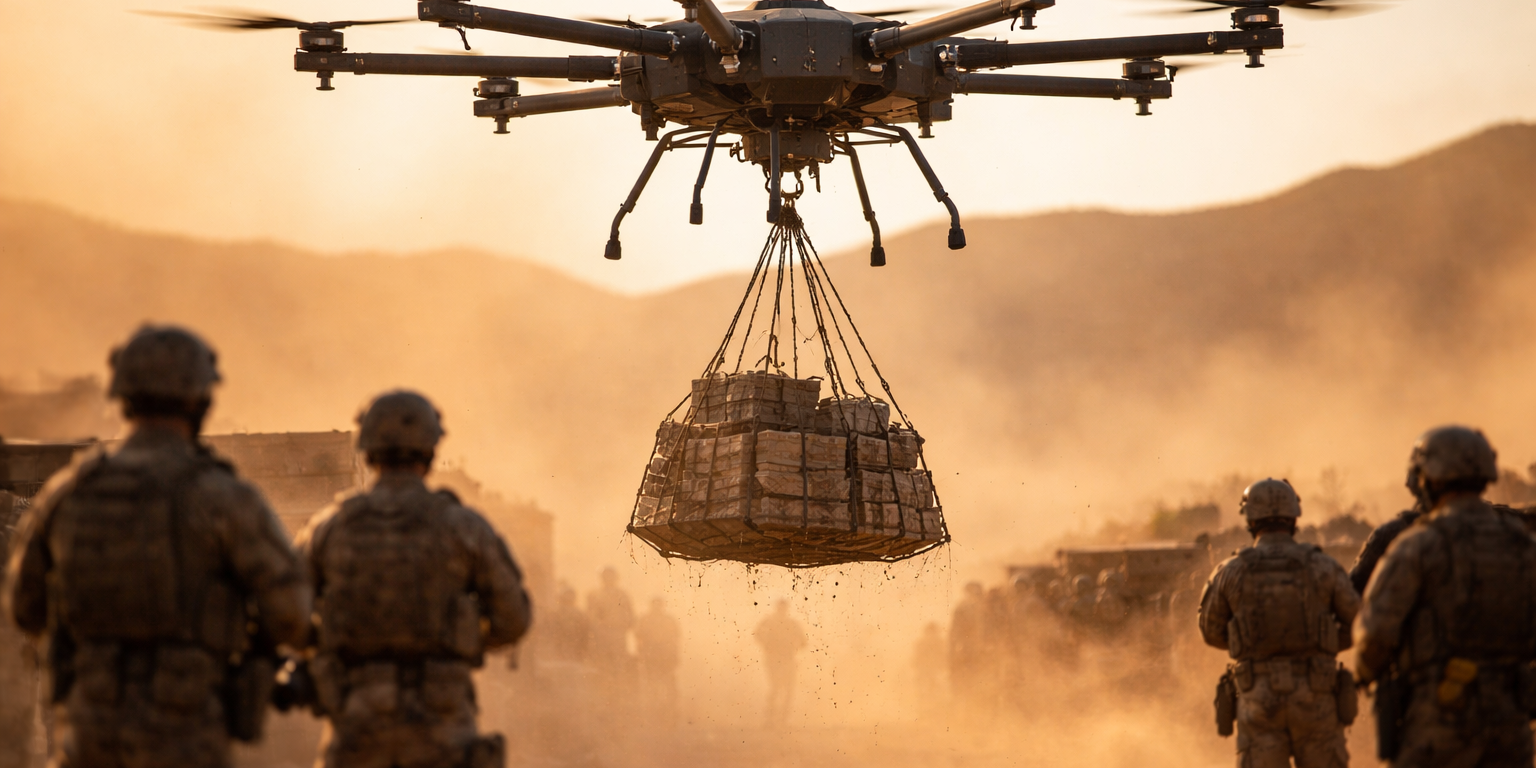
The market expansion encompasses multiple platform categories, each with distinct growth drivers. Ground robots, including unmanned combat vehicles and logistics platforms, are seeing particularly aggressive procurement as armies seek to reduce human exposure in forward positions. Companies like Milrem Robotics, QinetiQ North America, and HDT Global are scaling production to meet demand for vehicles that can conduct reconnaissance, transport ammunition, or evacuate casualties without risking soldiers. Aerial systems—ranging from small quadcopters to long-endurance fixed-wing drones—constitute another high-growth segment, with manufacturers like AeroVironment, Elbit Systems, and Turkish supplier Baykar expanding capacity. Maritime autonomous vehicles represent the smallest but fastest-growing category, driven by naval requirements for mine countermeasures, anti-submarine warfare, and persistent surveillance. The U.S. Navy's Ghost Shark program with Anduril Industries and similar initiatives from European allies are pushing autonomous submarine technology from concept to operational deployment.
Financial markets have responded accordingly. Defense-focused venture capital firms deployed over $3 billion into military robotics startups during the first half of 2026, according to PitchBook data, with later-stage rounds increasingly common as companies transition from prototypes to production contracts. Public defense contractors are directing more R&D capital toward autonomous systems as well. Northrop Grumman, L3Harris, and Lockheed Martin each allocated over 15% of their 2026 research budgets to robotics and autonomy programs, up from single-digit percentages five years ago. The market's growth trajectory also reflects a broader recapitalization cycle across Western militaries, as equipment fielded in the 1980s and 1990s reaches end-of-life and gets replaced with systems designed for network-centric, autonomous operations. That generational turnover creates opportunities for new entrants and established primes alike, though supply chain constraints—particularly for advanced sensors, processors, and batteries—remain a limiting factor on how quickly production can scale.
The speed of this market expansion raises practical questions about integration, doctrine, and workforce. Military robotics deployments are outpacing the development of training programs, maintenance infrastructure, and operational doctrine. Defense forces must simultaneously procure robots, train operators and maintainers, establish supply chains for spare parts, and develop tactics for employing these systems effectively. That organizational challenge is particularly acute for ground forces, where integrating autonomous vehicles into combined-arms maneuver requires rethinking unit structures that have remained largely unchanged for decades. The contracting model itself is evolving, with more militaries adopting modular, software-defined architectures that allow continuous capability upgrades rather than locked specifications at contract award. This shift favors companies with strong software engineering cultures and creates aftermarket revenue streams that differ fundamentally from traditional defense business models.
What to Watch: MarketsandMarkets plans to release volume data and regional breakdowns in Q4 2026, which will clarify whether growth concentrates in the United States and China or distributes more broadly. Watch for the U.S. Army's Robotic Combat Vehicle program to issue production contracts in early 2027, a decision that will set technical standards for ground robots across allied forces. European defense procurement agencies are expected to announce joint robotics acquisition frameworks before year-end, potentially creating a unified market for autonomous systems across EU member states. Supply chain developments for key components—particularly radiation-hardened processors and military-grade batteries—will determine whether manufacturers can meet projected demand.