Mobile robots weighing more than 2 kilograms with communications capabilities can no longer enter the United States as new products from foreign suppliers, following a July 28 expansion of the FCC's Covered List that industry observers describe as the most sweeping robotics trade restriction in U.S. history. The rule applies to robots from all countries, not just geopolitical adversaries, marking a sharp departure from previous export control frameworks that targeted specific nations or companies. The weight threshold captures virtually every autonomous mobile robot used in warehouses, factories, and research laboratories, from collaborative arms on mobile bases to delivery robots and inspection platforms.
The Covered List originated in 2021 as a mechanism to identify communications equipment and services that the FCC determined pose national security threats. For three years, it focused primarily on telecommunications infrastructure from Chinese manufacturers. The addition of robotics equipment represents a categorical expansion driven by the Department of Defense, according to the FCC's documentation of the rule change. Power inverters commonly used in solar panel installations joined the list simultaneously, suggesting a broader concern about foreign-manufactured components in critical infrastructure. The FCC has not published detailed technical criteria for what constitutes a "communicating" robot, leaving distributors and end users uncertain about which products fall under the restriction. Industry sources report that the rule appears to cover any robot using wireless protocols including Wi-Fi, Bluetooth, cellular, or proprietary RF links for command and control.
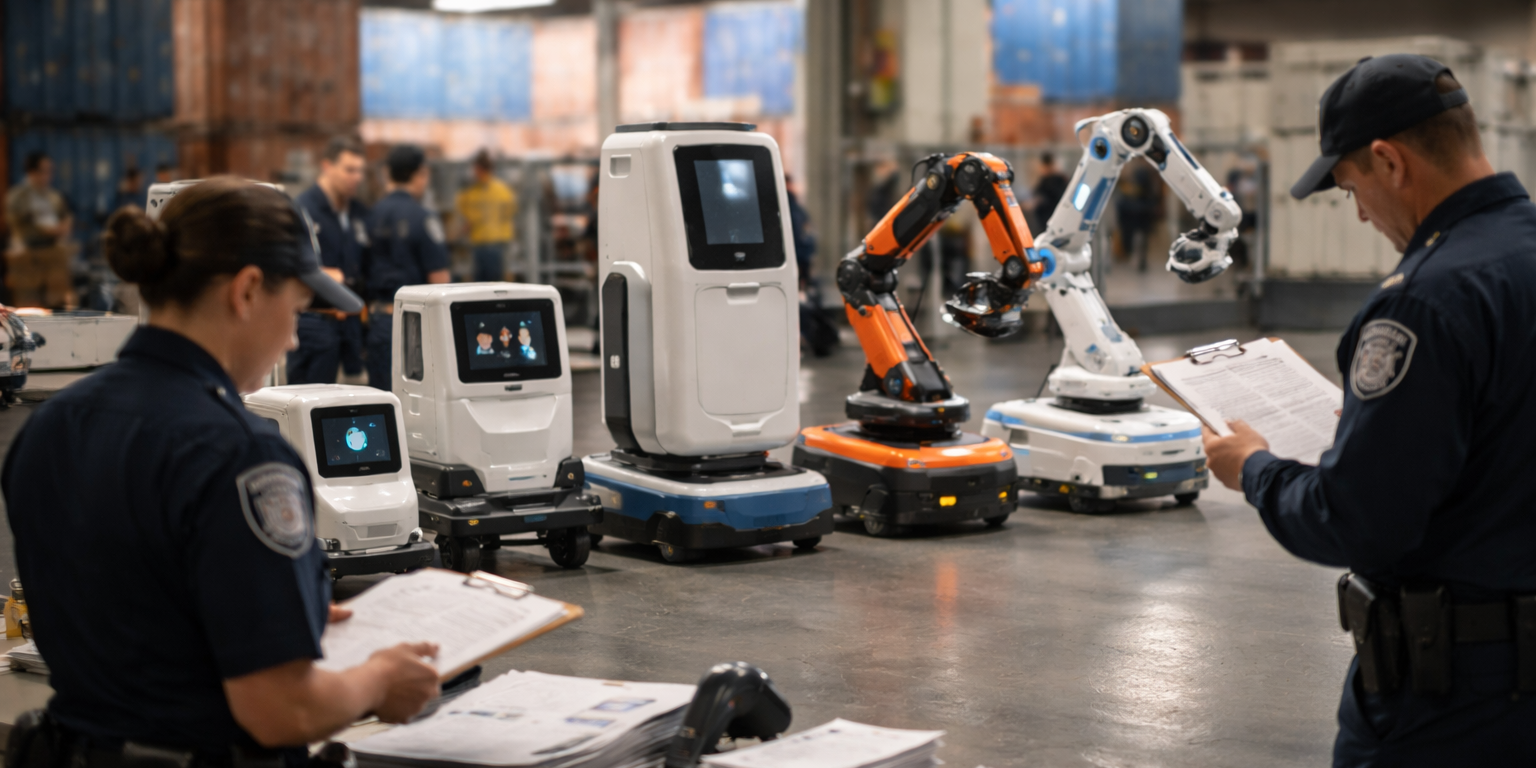
The immediate impact falls hardest on companies that have built operations around robots from European, Japanese, Korean, and Chinese manufacturers. Logistics operators using autonomous mobile robots from vendors like Mobile Industrial Robots, a Danish company, or Geek+ from China, face particular uncertainty about replacement units and fleet expansion. Research institutions that standardized on platforms from Universal Robots or ABB confront questions about whether educational and laboratory robots fall under the restriction. The 2-kilogram threshold appears deliberately chosen to exclude consumer drones and small hobbyist platforms while capturing industrial equipment. A standard UR5e collaborative robot arm weighs 20.6 kilograms; a typical AMR from Fetch Robotics or Locus Robotics exceeds 50 kilograms. Even robots assembled in the United States may be affected if they incorporate foreign-manufactured communications modules or controllers that independently meet the definition of covered equipment.
Defense contractors and their suppliers show limited public reaction to the rule, likely because military robotics procurement already operates under International Traffic in Arms Regulations and other restrictions that effectively required domestic sourcing for sensitive applications. The commercial robotics sector, by contrast, has operated on assumptions of open trade in automation equipment. Companies scrambling to interpret the rule face a more fundamental question than simple compliance: whether this signals a permanent shift toward regionalized robotics supply chains. If the restriction remains in place for years, it could accelerate domestic manufacturing of mobile robotics platforms, but the near-term effect is inventory constraints and project delays. Some integrators report customers demanding contractual guarantees that replacement parts will remain available through 2028 and beyond. The FCC has not announced an exception process for research equipment, humanitarian applications, or other special cases that typically exist in export control regimes.
What to Watch: Monitor whether the FCC publishes technical guidance defining "communicating robot" by October, particularly whether wired-only robots or those using only passive RFID remain exempt. Track inventory levels and lead times from major AMR suppliers through year-end, as current stockpiles of already-imported equipment may command premiums. Watch for announcements from European and Asian robotics manufacturers about U.S. manufacturing partnerships or licensing arrangements that could restore supply access. Pay attention to congressional hearings scheduled for September, where commerce and defense committee members are expected to question FCC officials about the breadth of the restriction and potential carve-outs for allied nations.