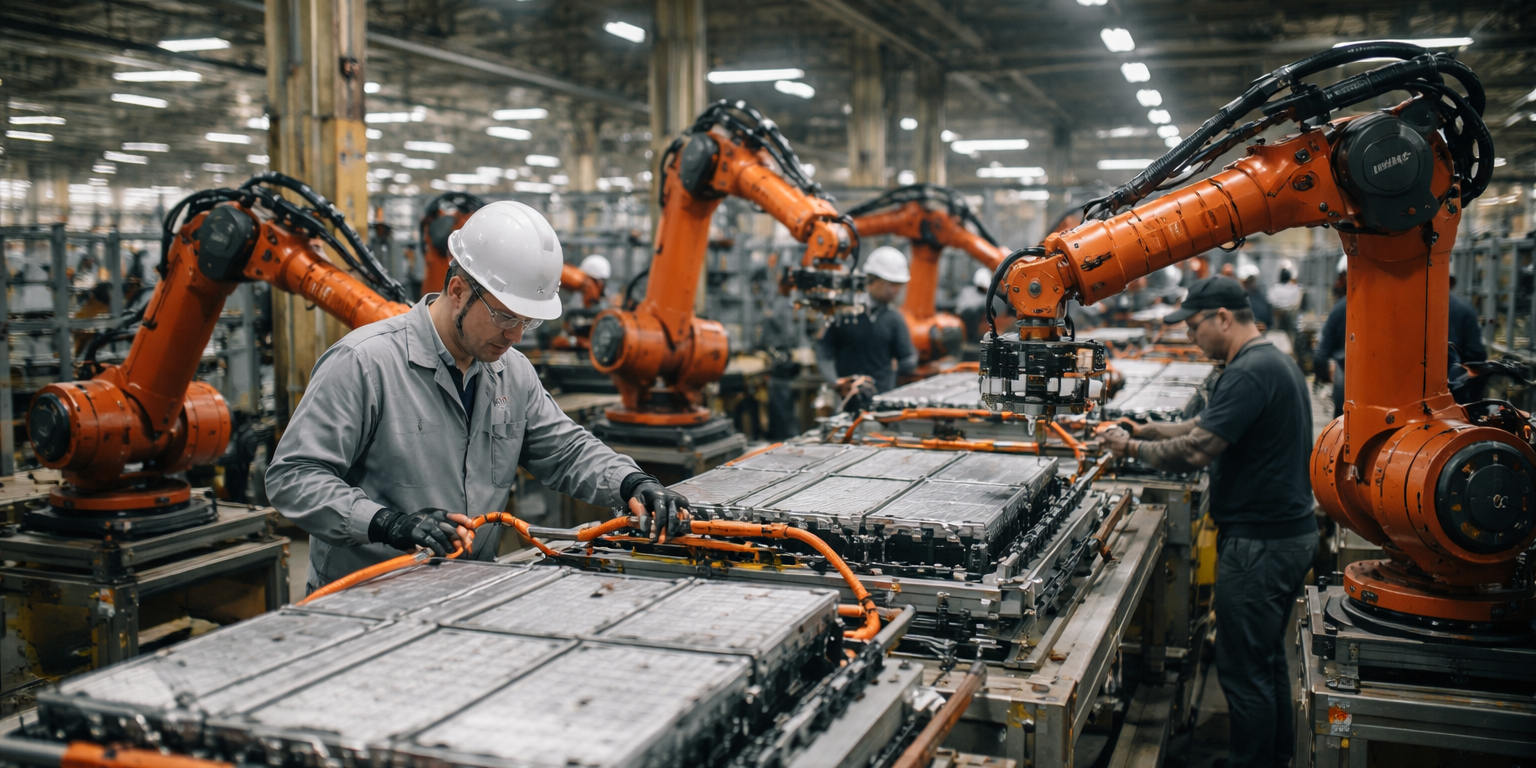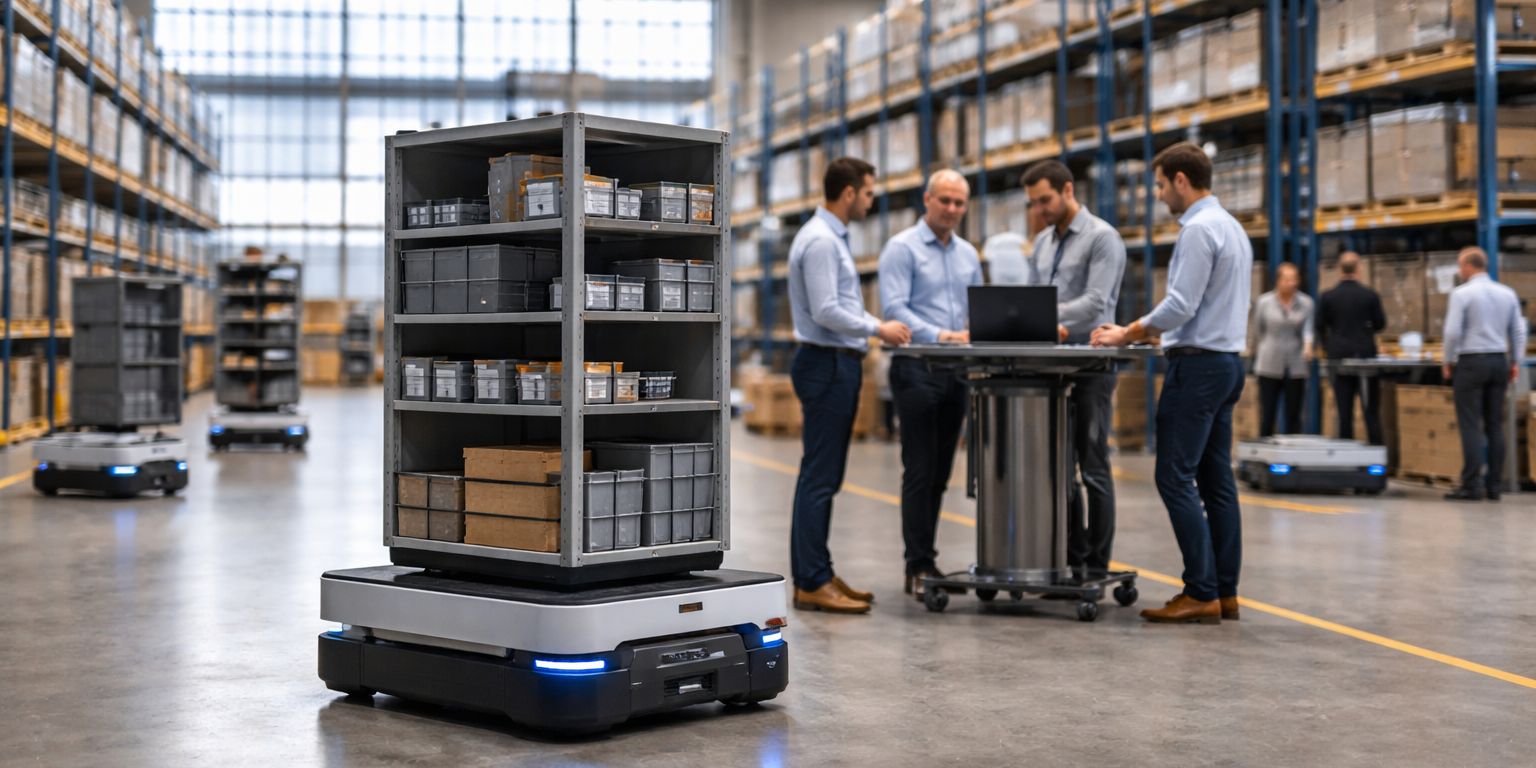

Orders at Mech-Mind Robotics climbed 75.3% year-on-year in the first half of 2026, outpacing the company's revenue growth and signaling sustained demand for its 3D vision systems across automotive, electronics, and logistics customers. The Hong Kong-based firm reported revenue of RMB 237.3 million for the period in its first financial results since completing a public listing earlier this year. More than 30,000 of its vision-guided robotic systems now operate in production facilities worldwide, according to the September 24 disclosure. The gap between order growth and revenue recognition reflects typical lag times in integrator-led deployments, where purchase orders precede installation and revenue booking by several months. For systems integrators and end users, the metric that matters is deployment velocity, and Mech-Mind's installed base suggests its software is clearing the repeatability thresholds required for high-mix manufacturing environments.
The company specializes in machine vision software that enables industrial robots to identify, grasp, and manipulate randomly oriented parts, a capability known in the industry as bin-picking or random depalletizing. Founded in 2016, Mech-Mind competes with established players like FANUC's iRVision, ABB's Integrated Vision, and newer entrants including Photoneo and Solomon Technology in a market where millimeter-level precision and cycle-time predictability determine which systems scale beyond pilot projects. Its Mech-Eye 3D cameras pair with proprietary path-planning algorithms that generate collision-free trajectories for six-axis arms in cluttered environments. The technology addresses a persistent bottleneck in factory automation: the final transition from structured, fixtured assembly lines to flexible cells that handle part variation without retooling. Automotive tier-one suppliers and contract manufacturers have deployed Mech-Mind systems for tasks including casting sorter feeding, stamped-part destacking, and mixed-SKU order fulfillment, applications where vision failure rates directly impact line uptime.
Gross margins remained elevated during the period, though the company did not disclose the specific percentage. High margins in this segment typically reflect software-centric business models where hardware serves primarily as a delivery vehicle for algorithms, rather than integrated systems where margin compression follows component commoditization. Mech-Mind's revenue model bundles camera hardware with perpetual software licenses and optional support contracts, a structure common among machine vision specialists but distinct from robot OEMs that embed vision as a loss-leader feature. The financial structure matters because it determines R&D leverage: software-driven margins fund continued algorithm development without the capital intensity of manufacturing scaled hardware. For comparison, Cognex, the dominant player in 2D machine vision, has sustained gross margins above 70% for over a decade by treating cameras as software appliances. Whether Mech-Mind can maintain similar economics as it scales depends on how much of its value proposition customers attribute to the neural-network models versus the sensor hardware, a distinction that becomes critical when low-cost camera modules from Shenzhen suppliers enter the market.
The company described recent technical progress as enabling "industrial-scale growth potential," language that in engineering contexts refers to crossing reliability thresholds rather than incremental performance gains. In robotic bin-picking, industrial scale means consistent sub-second cycle times across thousands of SKUs, grasp success rates above 98%, and mean time between failures measured in months rather than shifts. Mech-Mind's deployed base of 30,000 units provides a dataset advantage that compounds over time: each failed grasp, calibration drift, and lighting variation that customers report feeds model retraining, assuming the company built telemetry infrastructure to capture that operational data. The challenge facing all vision-guided robotics suppliers is that customers tolerate almost no failure rate variability, because a single missed pick in a high-speed packaging line costs more in downtime than the annual software license. The firms that solve for edge-case reliability, not average-case performance, capture the repeat deployment budgets that turn pilots into fleetwide rollouts.
What to Watch: Track whether Mech-Mind discloses full-year guidance or backlog metrics in its year-end results, expected in early 2027, which would clarify how much of the 75% order growth converts to recognized revenue versus multi-quarter projects. Watch for announcements of partnerships with major robot OEMs like KUKA or Yaskawa, which would signal a shift from aftermarket vision retrofits to factory-integrated offerings. Monitor patent filings related to sim-to-real transfer learning, as companies solving the synthetic training data problem gain decisive advantages in time-to-deployment for new part geometries. Pay attention to any geographic expansion disclosures, particularly entry into North American automotive or European logistics markets where localized support infrastructure determines customer acquisition costs.