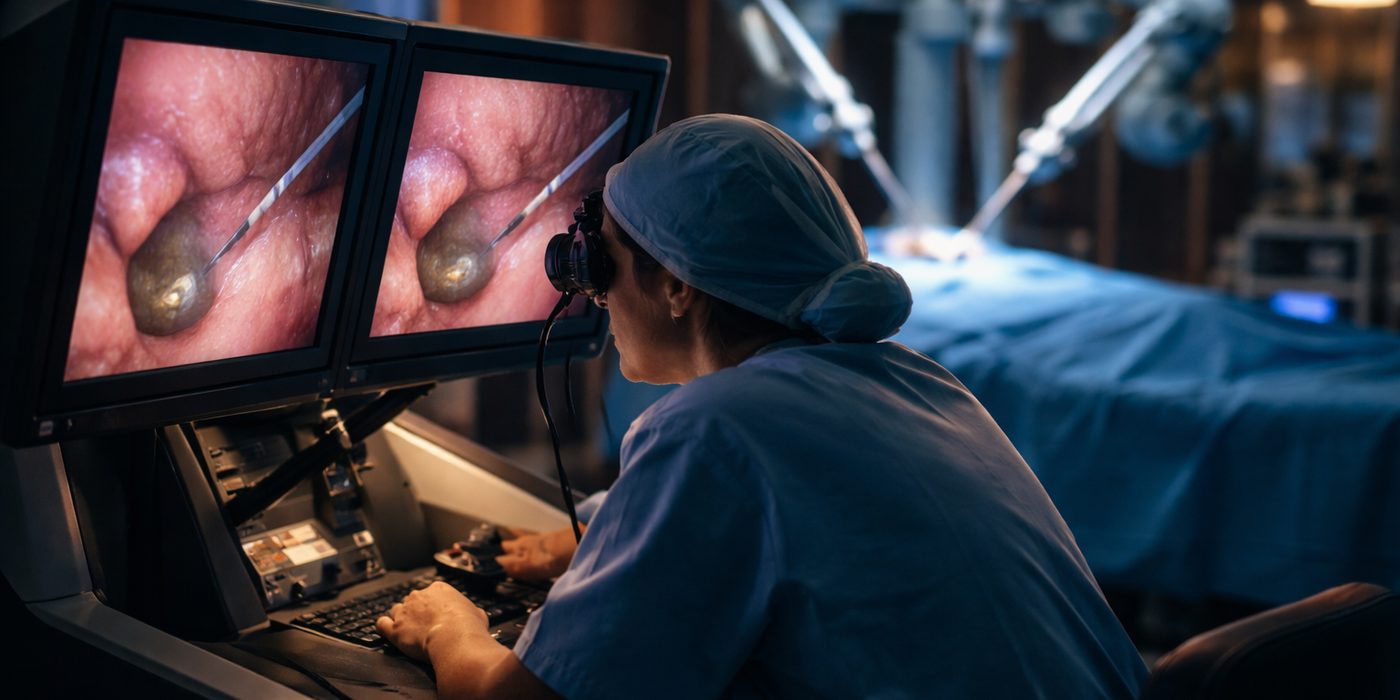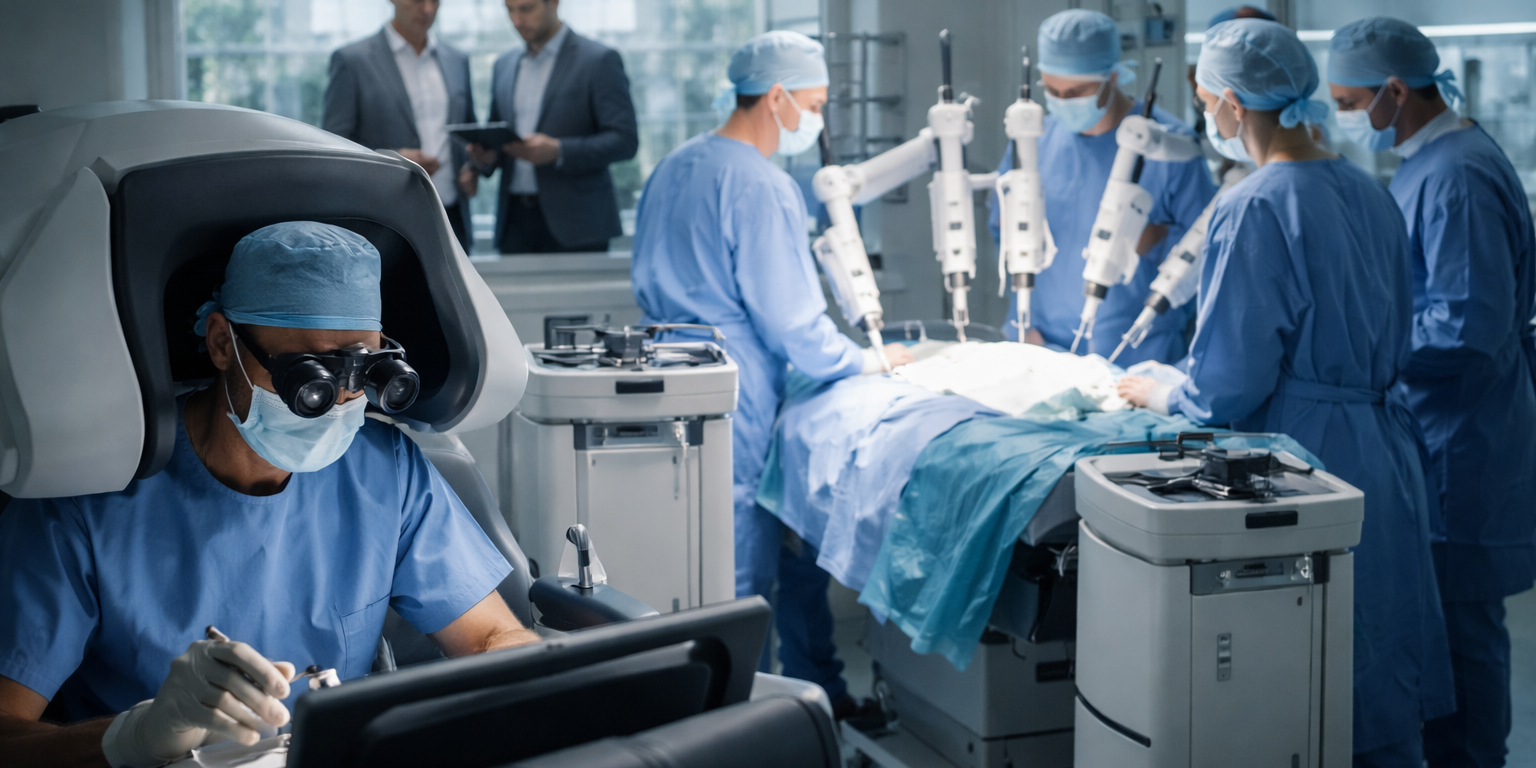
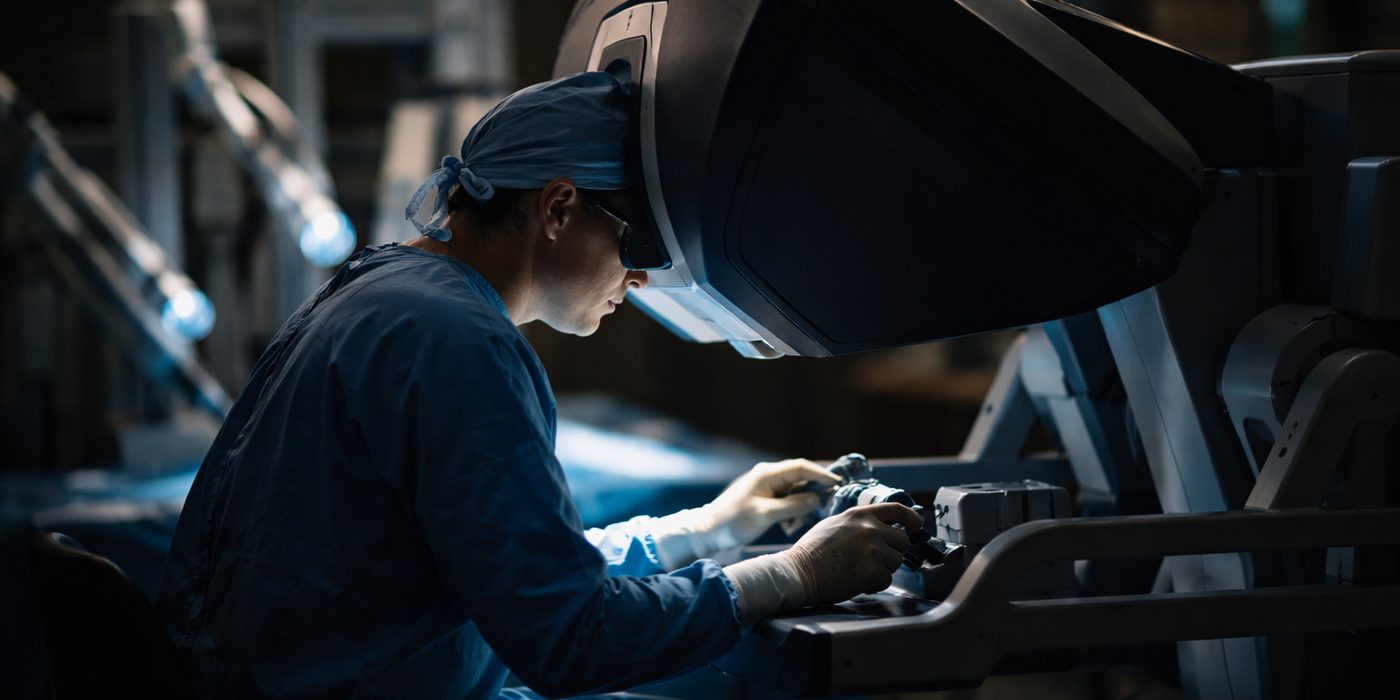
A surgeon operating through a robotic console has, for most of the field's history, been working blind to touch. The instrument tip can press on an artery, tug on a suture or tear a membrane, and the hands on the controls feel nothing. Matthew Dean, who heads the medical business unit at maxon UK & Ireland, makes the case in a Medical Device Network piece that this gap is as much an actuator problem as a sensor problem, and that coreless brushless DC motors are the most practical way to close it. His argument is narrow but consequential: the quality of the motor determines the quality of the feel.
The physics explains why. A conventional iron-core motor carries rotor mass and magnetic cogging, a slight notchiness as the rotor passes the stator teeth. Both corrupt the signal a surgeon needs. A coreless design winds its copper in a self-supporting skewed structure with no iron laminations, which strips out cogging, slashes rotor inertia and produces torque that tracks current with unusual linearity. That linearity is the quiet enabler of force feedback. If torque is proportional to current, then measuring current becomes a rough proxy for measuring the force at the instrument, and a motor that responds in milliseconds can render that force back to the surgeon's hand without lag or smearing.
This matters because the alternatives are expensive and awkward. Embedding strain-gauge force sensors at the tip of a wristed instrument is possible, but the instrument is small, wet, repeatedly sterilized and often single-use or limited-use, which makes every added sensor a cost and a failure point. Estimating force from motor current, sometimes called sensorless or proximal sensing, shifts the burden from fragile tip electronics to a well-characterized actuator sitting further up the arm. It is not a free lunch. Friction in cables, gearheads and seals muddies the estimate, and the gearing that gives a surgical wrist its strength also hides small forces. Dean's pitch is that a low-cogging, low-inertia motor paired with a low-backlash drivetrain leaves less noise to filter out in the first place.
For the industry, the commercial stakes are plain. Soft-tissue robotics has been dominated by platforms that deliver superb visualization and dexterity but limited tactile information, and competitors are increasingly differentiating on haptics, from orthopedic systems that wall off bone boundaries to newer entrants promising force-aware suturing. Component suppliers like maxon sit upstream of all of it. Their leverage comes from qualification: a motor that has cleared medical-grade reliability, sterilization compatibility and documentation requirements is a motor an OEM can design in with confidence. As the market pushes toward smaller, more distributed arms and single-port systems, the demand for compact, high-torque-density, low-noise drives will tighten rather than loosen, and the supplier that can supply predictable electromechanical behavior will hold the stronger hand.
The sharper observation for engineers is that force feedback is a systems problem wearing a motor problem's clothing. Even a perfect actuator cannot rescue a control loop with too much latency, and haptic stability imposes a hard trade-off between transparency, meaning how faithfully the surgeon feels reality, and the risk of oscillation when the system is rendered stiff. Teams that treat the motor as a plug-in commodity tend to discover this late. Those that co-design the motor, the encoder, the gearing and the control firmware together tend to reach usable feel sooner, which is where a supplier offering integrated drive electronics and application engineering earns its margin. Dean's emphasis on optimizing control, rather than simply specifying torque, reflects that shift in where the real engineering effort now sits.
What to Watch
Over the next 30 to 90 days, track whether surgical robot OEMs begin citing sensorless force estimation in regulatory submissions, since FDA clearances and CE documentation will show how aggressively companies are leaning on motor-current feedback versus dedicated sensors. Watch the product pipelines of Intuitive Surgical, Medtronic's Hugo platform and CMR Surgical's Versius for any haptic-feedback announcements before year-end 2026, as these will set the market's expectations for tactile fidelity. Follow maxon's medical-segment announcements and trade-show appearances in late 2026 for new compact drive and integrated-controller releases aimed at wristed instruments. Finally, monitor academic and clinical-trial output on haptic-assisted suturing and tissue-handling errors, because measurable reductions in tissue damage are what will turn force feedback from a feature into a purchasing requirement.