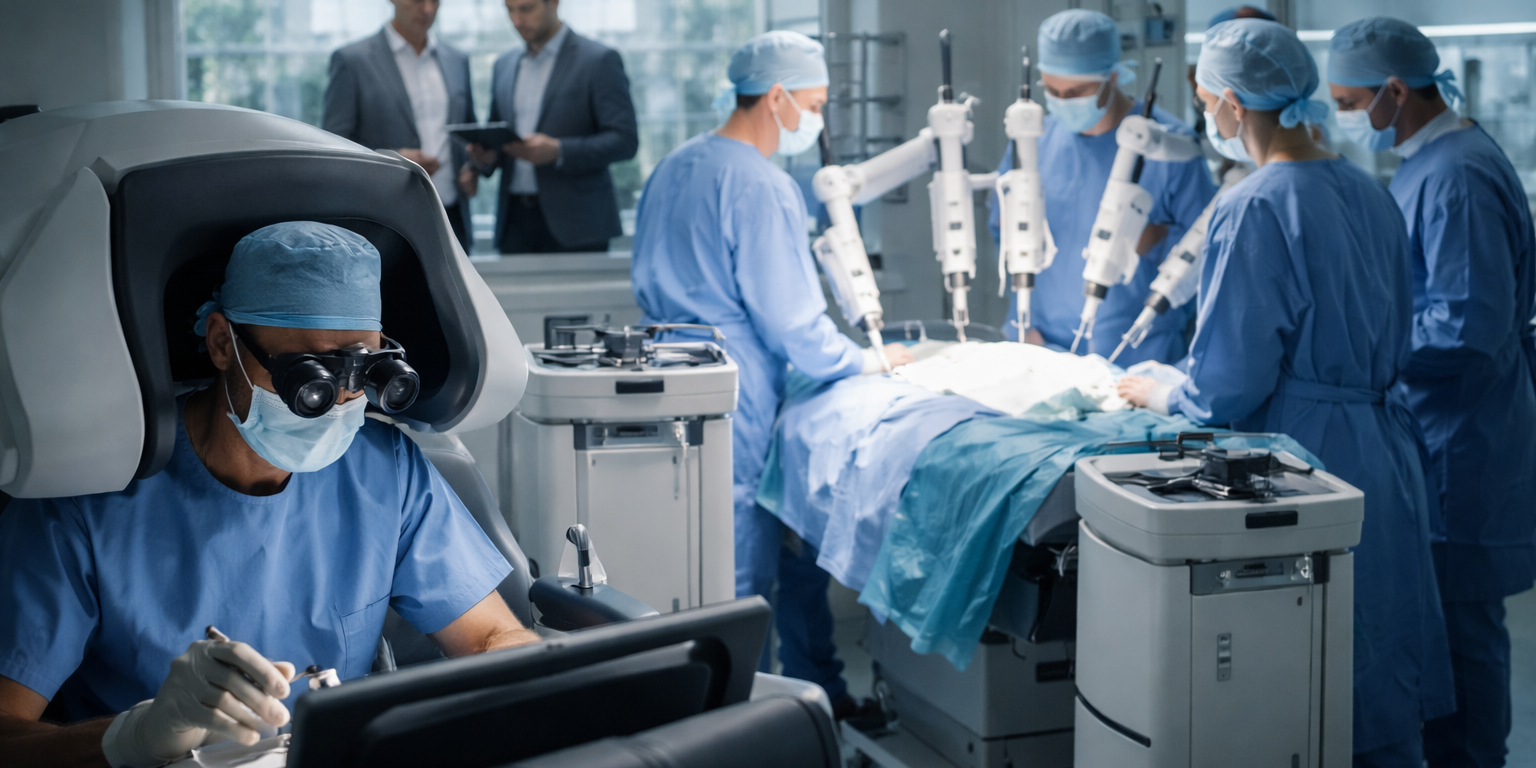
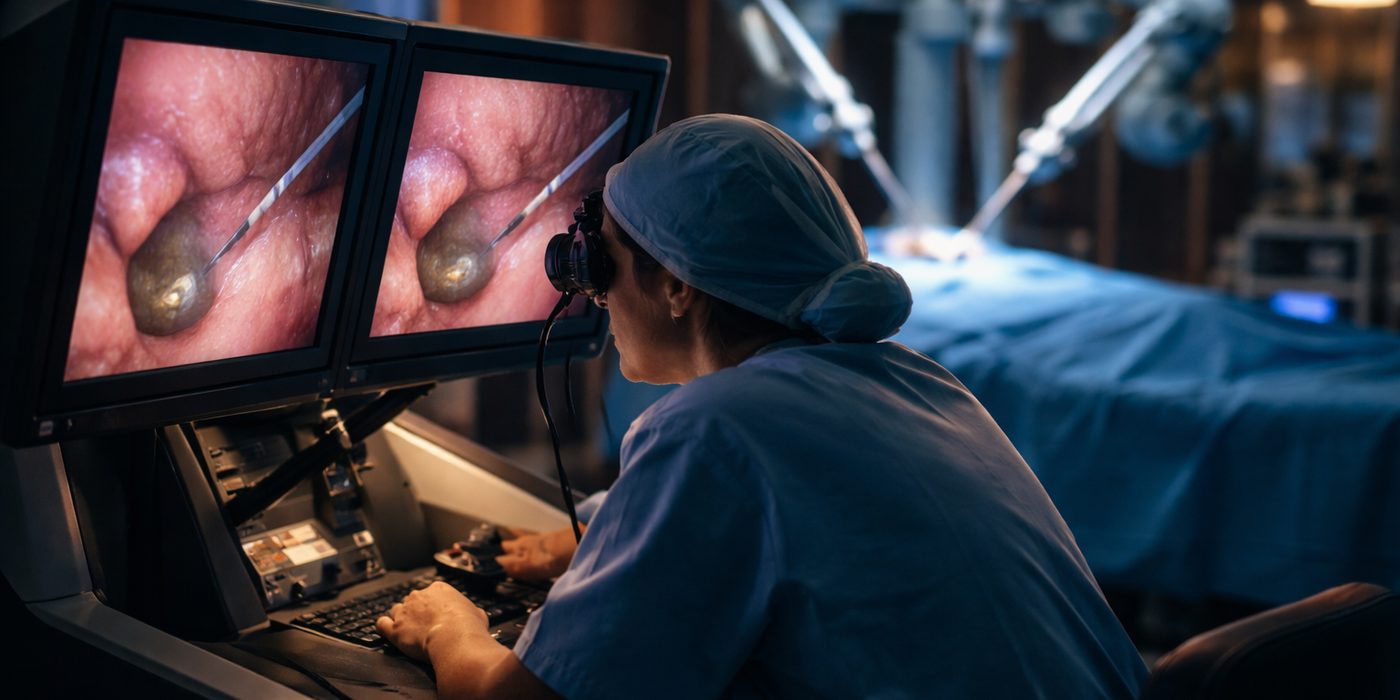
The model does one thing that matters: it predicts what a surgeon will see next, frame by frame, as fast as the surgery unfolds. NVIDIA released Cosmos3-H-Dreams on October 20, 2026, publishing the model checkpoint and companion code the same day. The system is action-conditioned, meaning it takes a robot's commanded motions as input and generates the resulting endoscopic video, rather than simply replaying or extrapolating footage. It was fine-tuned on clinical recordings of cholecystectomy, the laparoscopic removal of the gallbladder, captured on CMR Surgical's Versius platform. In an NVIDIA-authored announcement on Hugging Face, the company said that, to its knowledge, this is the first real-time generative surgical simulator trained on clinical cholecystectomy recordings.
The claim deserves scrutiny, and the details explain why NVIDIA chose this procedure. Cholecystectomy is among the most commonly performed operations in the world, which means it generates abundant video, follows a well-understood sequence of steps, and has been the proving ground for a generation of surgical computer-vision research. It is also a procedure where the anatomy that matters, the cystic duct and artery, sits close to structures that cannot be damaged. A simulator that renders tissue response convincingly could, in principle, let developers rehearse those moments thousands of times without a patient. The Versius data matters here too. Most public surgical datasets come from legacy platforms or from freehand laparoscopy, so footage from a modular, next-generation robotic system gives the model a view that matches what newer hardware actually produces.
The engineering story is the word "real-time." Video world models have generally been slow, trading latency for visual fidelity, which makes them useful for offline data generation but awkward for anything that needs a closed loop. A surgical simulator that runs fast enough to respond to commands as they are issued can serve as a training ground for reinforcement learning, a test bench for autonomy stacks, and a rehearsal environment for human trainees. NVIDIA has been building toward this through its Cosmos world-model family and its broader physical-AI push, which also includes Isaac for robot simulation and Holoscan for medical-device sensor pipelines. Cosmos3-H-Dreams applies that toolkit to a domain where physical simulators have long struggled: soft, deformable, bleeding tissue that does not obey the tidy rigid-body physics robotics engines handle well.
For the industry, the interesting question is not whether the video looks convincing but whether it is faithful. A generative model can produce plausible tissue behavior that is wrong in ways a surgeon would catch immediately, and a policy trained against a flattering simulator may fail on contact with real anatomy. That gap, between visual realism and physical accuracy, is the central risk for any team tempted to use the model as a substitute for cadaver or animal work. Still, the release changes the economics of experimentation. Surgical robotics companies, including those building autonomy features atop systems from Intuitive, Medtronic, J&J, and CMR, have long been constrained by scarce, privacy-restricted procedure data. An open checkpoint gives smaller teams and academic labs a starting point they could not previously afford to build.
What to Watch Watch the Hugging Face repository over the next 30 to 60 days for community benchmarks, reproduction attempts, and any independent evaluation of how well generated tissue dynamics match real-world physics, since NVIDIA's own claims are so far self-reported. Track whether CMR Surgical, which supplied the underlying Versius recordings, publicly discusses how the model might feed into its own development roadmap or whether other surgical-robotics makers announce comparable partnerships. Look for the first academic preprints that use Cosmos3-H-Dreams to train or evaluate autonomous-assistance policies, which will show whether the simulator holds up in a closed loop. Finally, follow NVIDIA's upcoming developer events and healthcare announcements through the end of 2026 for additional procedure-specific models beyond cholecystectomy.