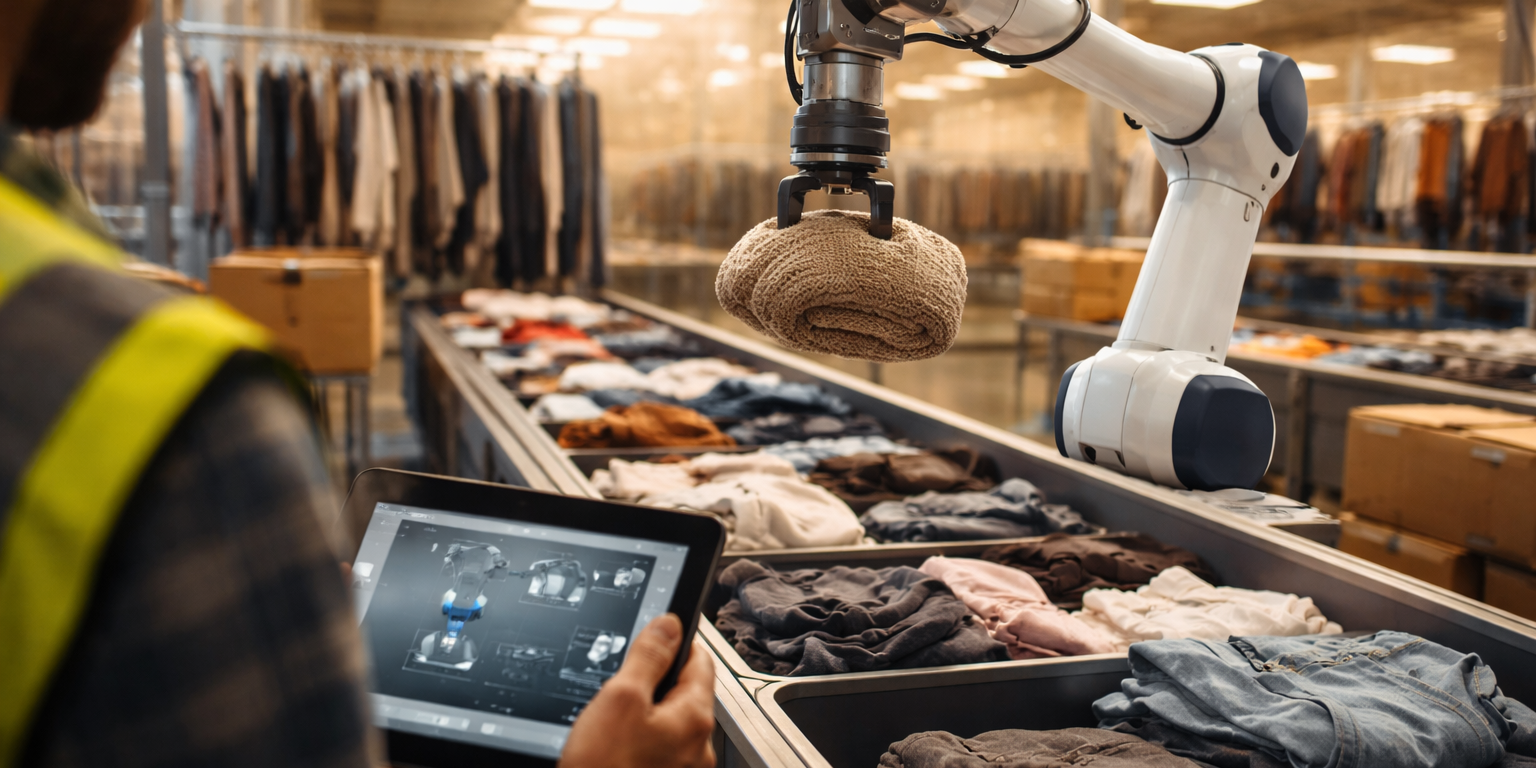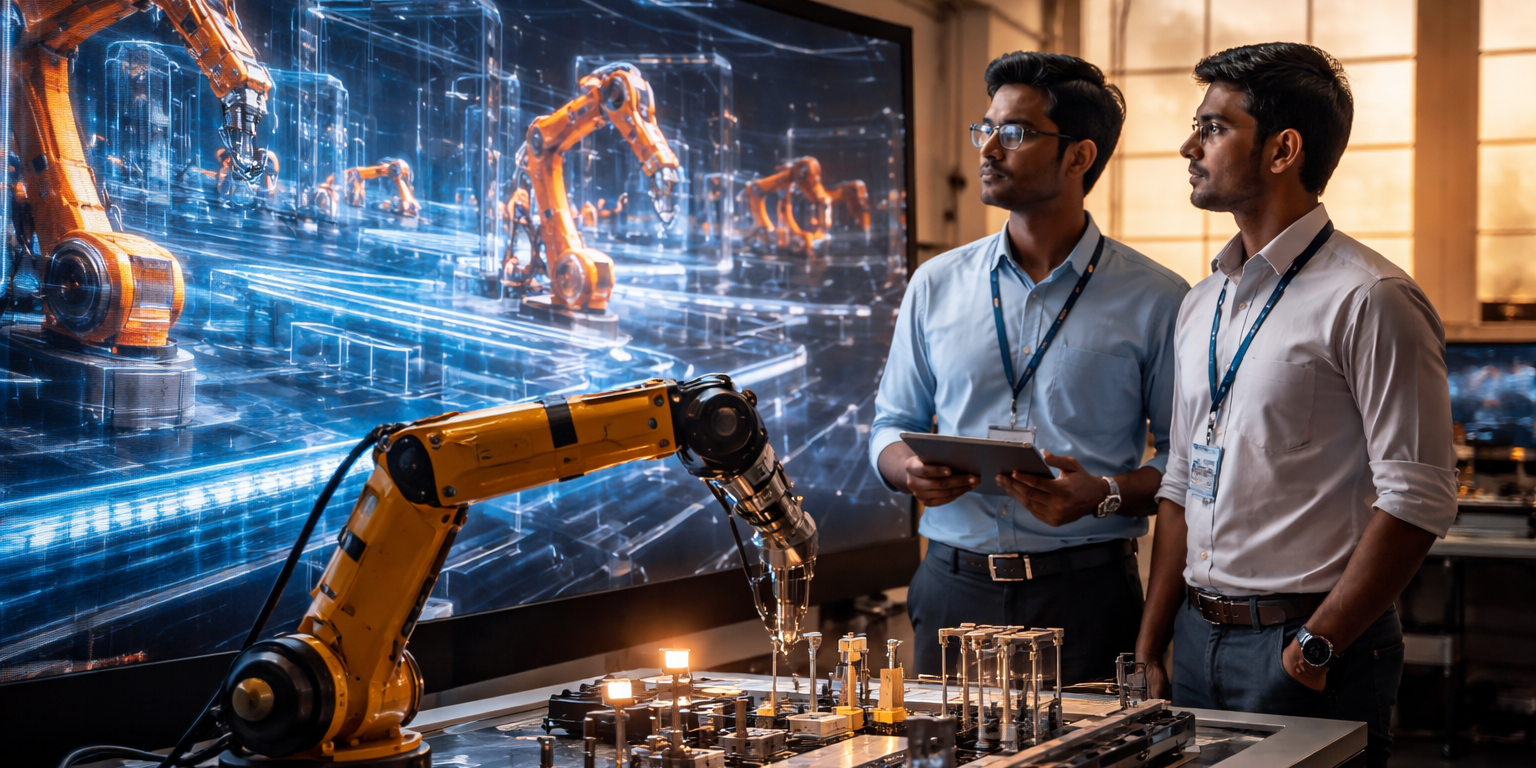
A factory that exists first as a physics-accurate simulation, and only later as steel, conveyors, and robots, is the premise at the center of the new EI Lab from L&T Technology Services (LTTS). The Indian engineering services firm has built the facility around what it calls an NVIDIA accelerated AI-native factory, a working showcase where digital twins, Industrial AI, and Physical AI are used to design, test, and tune production environments before anything is installed on a real floor. The lab covers five domains: autonomous manufacturing, industrial robotics, supply chain, energy and emissions, and asset reliability. It is a demonstration space as much as a lab, aimed squarely at customers deciding how much of their operations to hand to machines.
The move reflects a shift in how industrial automation gets sold. For two decades, robotics integrators competed on hardware reach, cycle times, and payload. Now the contest is increasingly about software that can model an entire plant, predict where it will fail, and train robots in virtual space before they touch a part. NVIDIA has spent several years assembling the stack for that argument, pairing its Omniverse simulation platform and accelerated computing with the idea that physical AI, meaning models that perceive and act in the real world, needs enormous volumes of synthetic data to be useful. Engineering services firms like LTTS sit between that stack and the manufacturers who must actually adopt it, which makes them an important and often overlooked channel.
The details of the EI Lab show why that channel matters. LTTS positions its Engineering Intelligence portfolio as the connective layer: digital twins that mirror production lines, industrial AI models that watch equipment health and energy draw, and robotics workflows that can be rehearsed in simulation. Pairing asset reliability with energy and emissions in the same facility is a telling choice. Those are the two problems plant managers face daily, unplanned downtime and rising power and carbon costs, and both are tractable with the sensor data and predictive models a twin can ingest. Robotics sits inside that frame rather than above it. A robot cell becomes one more asset to be simulated, monitored, and optimized against throughput and kilowatt-hours.
The broader industry context sharpens the picture. Manufacturers face persistent labor shortages, tighter emissions reporting, and fragile supply chains, and each pressure favors automation that can be validated cheaply before capital is committed. Simulation lowers that barrier. A line that has already run thousands of virtual shifts carries less commissioning risk than one designed on spreadsheets and intuition. That is the commercial logic behind NVIDIA's push into industrial twins, and it explains why large engineering and IT services players, including LTTS and its peers, are building showcase environments rather than waiting for customers to ask. The lab functions as a sales instrument and a proving ground at once, letting a prospective client watch a scenario play out in simulation and then see comparable hardware running nearby.
For robotics engineers and investors, the interesting question is where value accrues. If simulation-first design becomes the default, the robot arm or mobile manipulator risks becoming a commoditized endpoint, while the twin, the data pipeline, and the integration expertise capture the margin. Services firms with deep domain engineering, the kind LTTS built across transportation, industrial products, and plant engineering, are well placed to own the customer relationship in that world. Robot makers, in turn, will need their products to be first-class citizens inside these simulated environments, with accurate models and clean interfaces, or risk being designed out of the specification. The EI Lab is a small, concrete instance of a larger power shift in who defines the factory.
What to Watch Track whether LTTS names anchor customers or pilot programs coming out of the EI Lab over the next 90 days, since showcase facilities only matter once they convert into signed engagements. Watch NVIDIA's industrial and robotics announcements through the remainder of 2026 for updates to Omniverse and its Physical AI tooling, which will determine how much of the lab's capability can be replicated by competing integrators. Monitor peer services firms and system integrators for comparable AI-native factory showcases, an early sign the category is becoming standard rather than differentiating. Finally, follow how robot OEMs publish simulation-ready models and digital twin assets for their products, because that compatibility will increasingly decide who gets specified in these designs.