Rohit Prasad spent more than a decade turning Alexa from an Echo speaker feature into one of the largest deployed voice AI systems on the planet, and now he has been handed the company that built the most recognizable robots in the world. Boston Dynamics has named Prasad, formerly Amazon's senior vice president and head scientist for artificial general intelligence, as its chief executive. The appointment, reported by Crypto Briefing and other outlets, lands at a pivotal moment. The Waltham, Massachusetts company has spent three decades perfecting machines that can run, jump, and flip. What it has not yet done is sell them in volumes that match its fame.
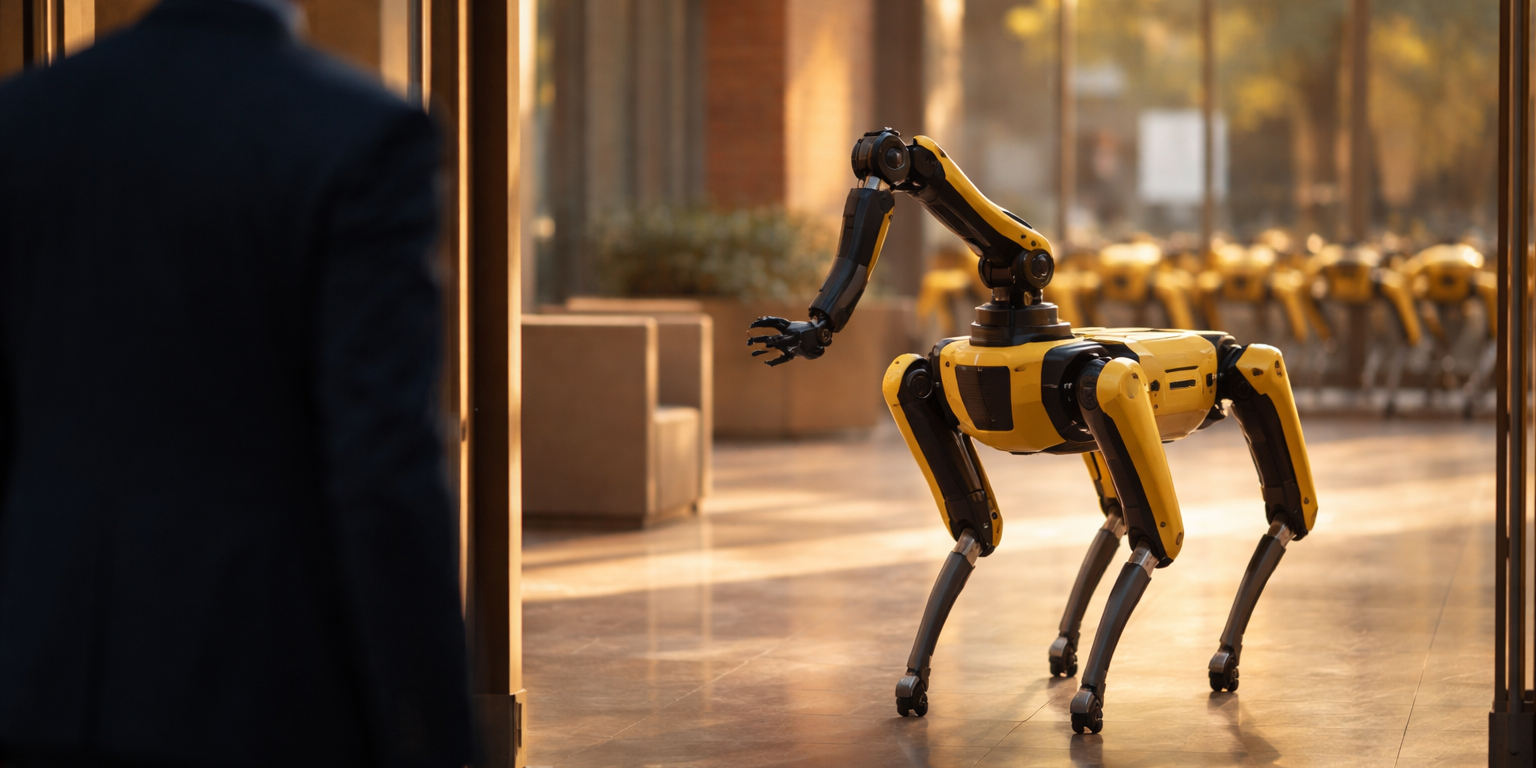
That gap between spectacle and scale is the story behind the hire. Boston Dynamics began as an MIT spinout in 1992, passed through Google and then SoftBank, and has been majority-owned by Hyundai Motor Group since 2021, when the Korean automaker valued the company at roughly $1.1 billion. Spot, the quadruped, has been commercially available since 2020 and has found a steady niche in industrial inspection, from oil and gas facilities to nuclear sites. Stretch, the truck-unloading robot, targets warehouse logistics. And Atlas, retired in its hydraulic form in 2024 and replaced by an all-electric successor, is being positioned for automotive manufacturing. Each product line has proved capability. None has yet proved the kind of repeatable, high-volume deployment that investors expect from a platform business.
Prasad's résumé reads like a deliberate answer to that problem. At Amazon he ran a organization that had to ship software to enormous installed bases, manage relentless iteration cycles, and push large models down onto constrained edge hardware. He later led Amazon's foundation-model efforts, including the Nova family, before leaving the company. The skills map neatly onto robotics' current bottleneck, which is no longer whether a legged robot can balance but whether a fleet of them can be updated, monitored, and taught new tasks without a team of PhDs on site. Boston Dynamics has already moved in this direction, partnering with Toyota Research Institute on large behavior models for Atlas and pairing the humanoid with learned manipulation policies. A chief executive fluent in model training and deployment pipelines is a natural fit for that roadmap.
The harder test is manufacturing economics, and here a software pedigree offers less of a head start. Humanoid and legged robots remain expensive to build, with actuators, sensors, and compute stacking up to unit costs that only make sense if the machine displaces substantial labor. Hyundai has said it intends to deploy Atlas units at its own plants, including its Georgia facility, giving Boston Dynamics a captive first customer and a controlled environment to validate cycle times and uptime. Competitors are circling. Figure AI, Agility Robotics, Apptronik, and Tesla's Optimus program are all chasing the same factory and warehouse floors, while Chinese manufacturers such as Unitree are pushing prices down aggressively. Prasad will need to convince customers that Boston Dynamics' engineering depth justifies a premium, and convince Hyundai that patience will be rewarded.
For the wider industry, the appointment reinforces a pattern: robotics leadership is migrating from mechanical pedigree toward AI and platform experience. The founders who built the field's hardware are giving way, at the top of the largest players, to executives who understand data flywheels and developer ecosystems. That shift carries risk. Robots operate in the physical world, where a software mindset of shipping fast and patching later collides with safety certification, warranty exposure, and the unforgiving physics of a 90-kilogram machine moving near people. Prasad's challenge is to import Silicon Valley's speed without importing its tolerance for failure. If he manages it, Boston Dynamics could finally convert its reputation into recurring revenue. If he stumbles, the company risks being outpaced by faster, cheaper, less celebrated rivals.
What to Watch Watch for Prasad's first public remarks on strategy, particularly any commitment to Atlas production volumes and a timeline for deployments beyond Hyundai's own factories in 2026 and 2027. Track whether Boston Dynamics expands its partnership with Toyota Research Institute or announces new foundation-model collaborations, which would signal how much of the AI stack the company intends to build in-house. Keep an eye on senior hires and departures over the next 90 days, since a wave of software and cloud executives joining from Amazon would confirm the platform pivot. Finally, monitor pricing and fleet-management announcements for Spot and Stretch, which will reveal whether the company is moving toward subscription-style revenue.