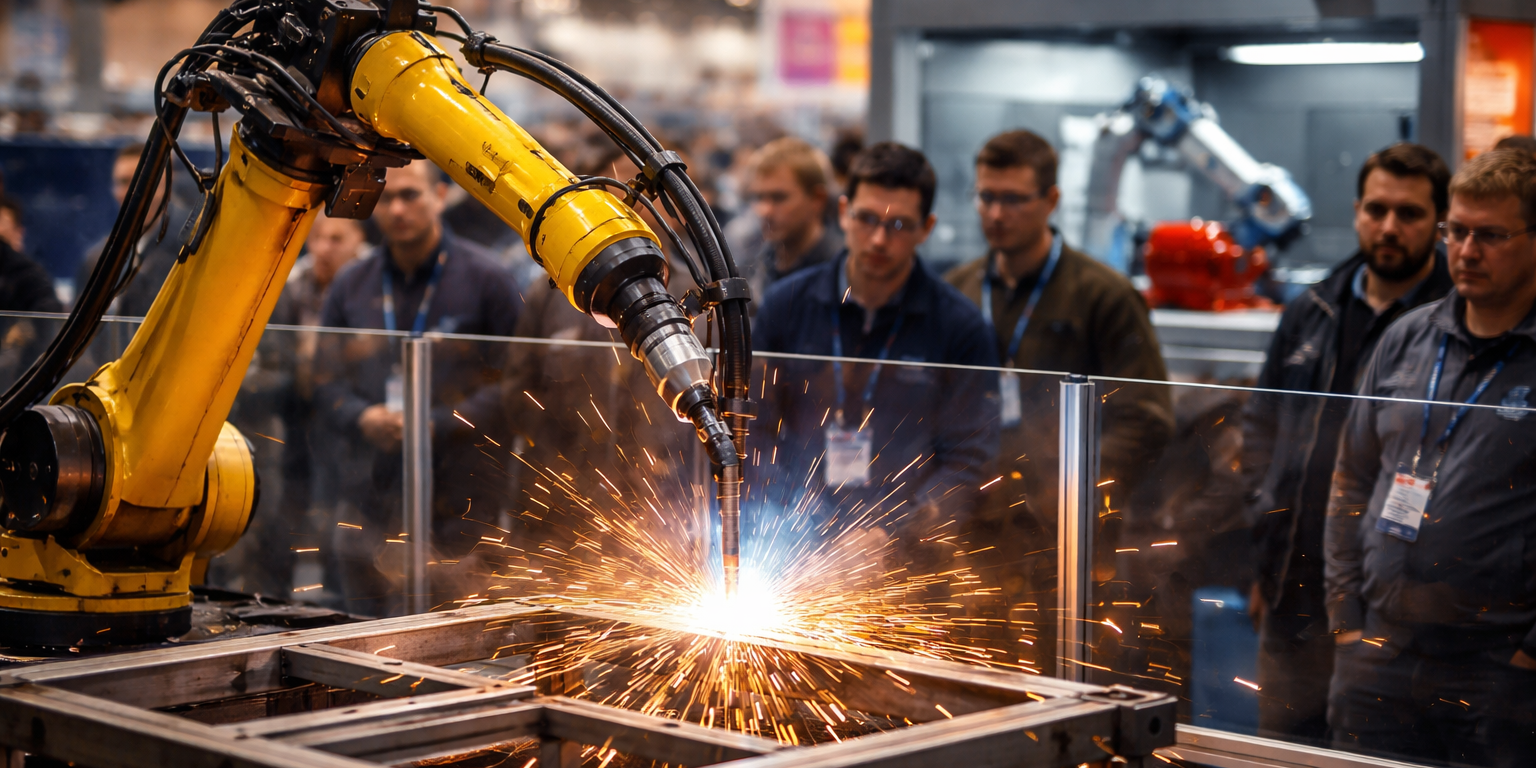
A fivefold jump in nine years is the kind of number that usually belongs in a venture pitch deck, not a market forecast. Yet that is what Maximize Market Research put on the wire from Pune, India, on October 12, 2026: a global robotics market growing from $92 billion in 2025 to $480.1 billion by 2034, a 20.15% compound annual growth rate across the 2026-2034 window. The firm attributes the climb to three forces: rising industrial automation demand, the spread of AI-powered robotics, and the adoption of smart manufacturing technologies. Those are familiar drivers. The arithmetic behind them is what deserves scrutiny.
To reach $480.1 billion from $92 billion, the sector would need to add roughly $388 billion in annual revenue in under a decade. For context, that increment exceeds the entire current annual revenue of the global machine tool industry by a wide margin. Forecasts like this are always sensitive to definitions, and robotics is a category with unusually elastic borders. Depending on the analyst, the figure can encompass traditional articulated arms bolted to factory floors, autonomous mobile robots shuttling pallets through warehouses, surgical systems, service robots, and the software layers that orchestrate them. Maximize's headline number tells a reader little until the segment breakdown is known, and press-release summaries rarely supply it.
The growth narrative itself rests on a real shift in how factories buy automation. Labor scarcity in manufacturing-heavy economies, reshoring pressure on supply chains, and falling costs for sensors and compute have pushed robots out of the automotive welding cell and into electronics assembly, food processing, logistics, and light manufacturing. The AI component is the newer variable. Machines that previously needed weeks of precise programming and fixturing can increasingly be taught by demonstration or adapt to part variation on the fly. That lowers the integration cost, which has long been the hidden multiplier on every robot purchase, often running two to three times the price of the hardware itself. If AI genuinely compresses that integration burden, the addressable market widens to mid-sized manufacturers who were previously priced out.
Still, a 20% CAGR sustained for nine consecutive years would be extraordinary by any industrial benchmark. The International Federation of Robotics, which tracks installations of industrial robots, has historically reported double-digit swings in individual years, but those were punctuated by downturns tied to automotive and electronics cycles. Compounding at 20.15% leaves no room for a recession year, a capex freeze, or a supply shock. The more instructive reading for senior engineers and investors is where the value lands. As robots become more software-defined, margin may migrate away from commodity arms and toward perception stacks, foundation models for manipulation, fleet orchestration, and simulation tooling. Hardware makers face a familiar squeeze if a handful of AI platform vendors become the default brain across multiple robot bodies. Forecasts of this size are best treated as directional signals about capital flows rather than point estimates, and the capital is clearly moving toward intelligence rather than iron.
What to Watch Track Q3 2026 earnings from Fanuc, ABB Robotics, and Yaskawa over the coming weeks for order-book commentary that either supports or undercuts double-digit growth assumptions. Watch whether the IFR releases its World Robotics 2026 installation figures this fall, since actual unit shipments are the cleanest check on any market-size forecast. Monitor funding announcements from AI-first robotics software firms through the end of 2026, as the size of those rounds will show whether investors agree that value is shifting toward the software layer. Finally, look for Maximize Market Research's full segment breakdown, which should reveal how much of the $480.1 billion is attributed to industrial arms versus mobile and service categories.