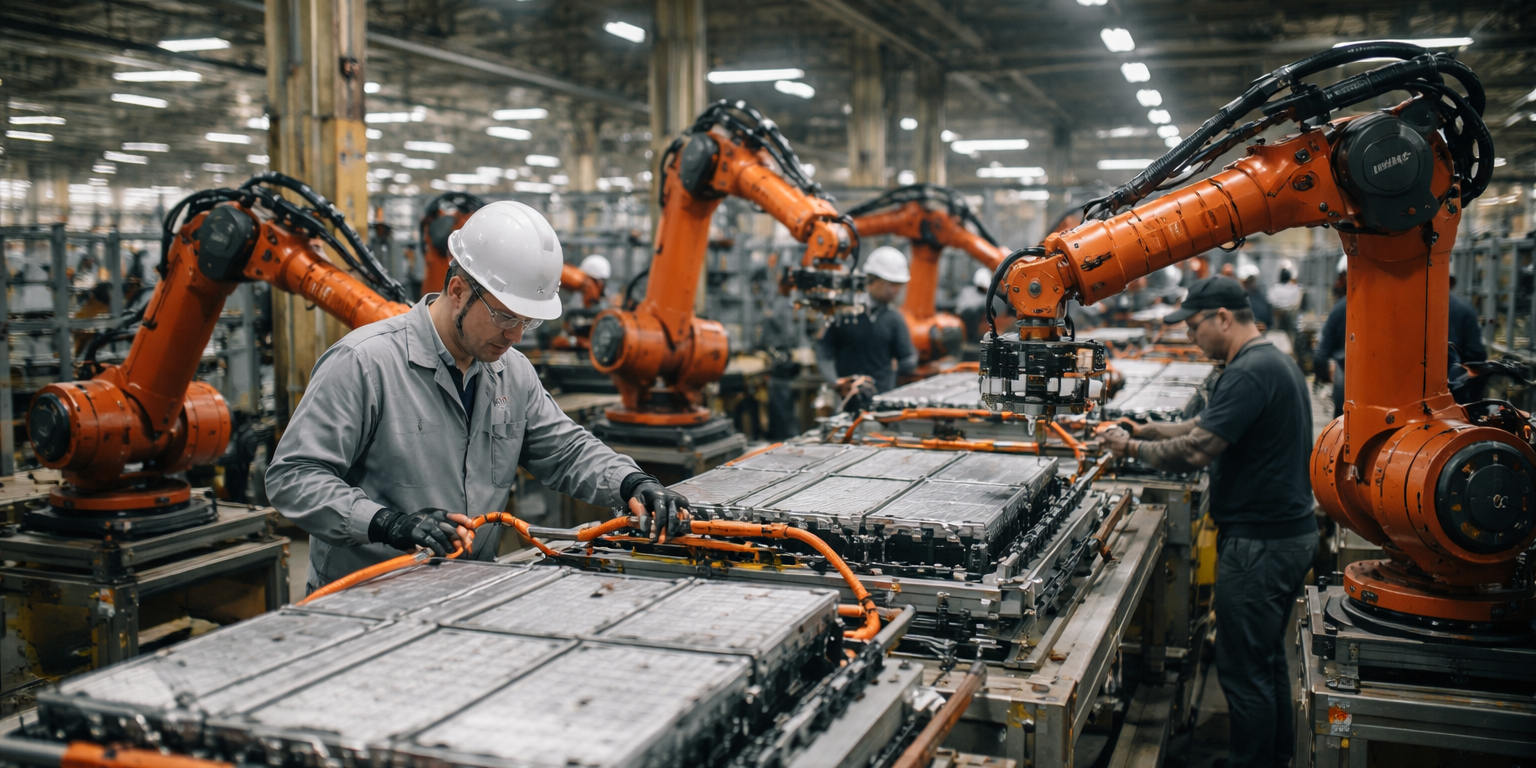
KTPO, a manufacturing facility in Ohio supplying major North American automakers, now operates under KUKA's Automation Management Platform, a centralized software layer designed to monitor and coordinate robotic cells across production lines. The deployment puts the German manufacturer's fleet management software into a high-volume automotive environment where downtime costs run into six figures per hour and coordination across hundreds of robotic units determines throughput. KUKA announced the installation without disclosing the number of robots under management, the specific automakers served by the facility, or the timeline from contract signature to go-live. The Ohio site joins a growing list of automotive plants where software platforms, rather than individual robot capabilities, define operational efficiency.
Automotive manufacturing has pushed robotics vendors beyond selling arms and controllers toward selling orchestration. KUKA's platform aggregates data from robotic welders, material handlers, and inspection units regardless of whether they carry KUKA badges or competitor nameplates. The software provides plant managers with a single interface to track utilization rates, schedule predictive maintenance, and reroute production tasks when a cell goes offline. For automakers running mixed fleets—a reality in plants built over decades with equipment from ABB, Fanuc, Yaskawa, and KUKA—this interoperability determines whether a software investment delivers return or becomes shelfware. KTPO's adoption suggests the platform has cleared internal validation on compatibility and uptime impact, two hurdles that have stalled similar deployments elsewhere.
The Ohio facility operates in a region where automotive suppliers face pressure to increase output without corresponding capital expenditure on new hardware. Software upgrades offer a path to extract more capacity from existing robotic assets, a calculation that has driven adoption of fleet management platforms across the Midwest manufacturing corridor. KUKA has positioned its Automation Management Platform as infrastructure that scales with production volume, adding cells and integrating new equipment types through configuration rather than custom integration work. The company has not published case studies quantifying productivity gains at KTPO or other deployments, leaving adopters to evaluate the platform based on vendor demonstrations and third-party assessments. For engineers evaluating similar systems, the absence of published performance data from reference customers remains a gap.
KUKA's software strategy reflects broader industry movement toward recurring revenue models as hardware margins compress. The Automation Management Platform operates on a licensing structure, though KUKA has not disclosed whether KTPO's agreement includes per-robot fees, facility-wide licensing, or usage-based pricing. Competitors including ABB's Ability platform and Siemens' industrial software portfolio pursue similar models, creating a market where automakers negotiate not just for robotic hardware but for the software stack that keeps those robots coordinated. The shift has implications for procurement departments accustomed to capital expenditure budgets rather than ongoing software subscriptions. It also changes the competitive landscape: a vendor with superior fleet management software can retain customers even when rivals offer cheaper or faster individual robots.
The deployment arrives as North American automotive production faces uncertainty around tariffs, electrification timelines, and labor agreements. Plants capable of flexible reconfiguration—shifting between model lines or adjusting to component shortages—carry strategic value that fixed automation cannot match. Software platforms that enable rapid retasking of robotic cells without reprogramming or mechanical modification address this need directly. KTPO's adoption of KUKA's platform suggests the facility is positioning for production volatility, where the ability to redeploy automation assets across different vehicle programs matters more than peak throughput on a single line. For the robotics industry, it reinforces that software integration, not robot speed or payload, increasingly drives purchasing decisions at Tier 1 suppliers.
What to Watch: Monitor whether KUKA publishes quantified performance metrics from KTPO or other Automation Management Platform deployments, particularly uptime improvements and integration timelines for non-KUKA robots. Track competitive responses from ABB and Fanuc, both of which have fleet management offerings but have not publicized comparable North American automotive deployments in recent quarters. Watch for signals that KTPO expands the platform to additional facilities or integrates autonomous mobile robots under the same management layer, a logical next step if initial results justify broader rollout. Pricing model disclosures from KUKA or rival vendors would clarify total cost of ownership for plants evaluating similar systems.