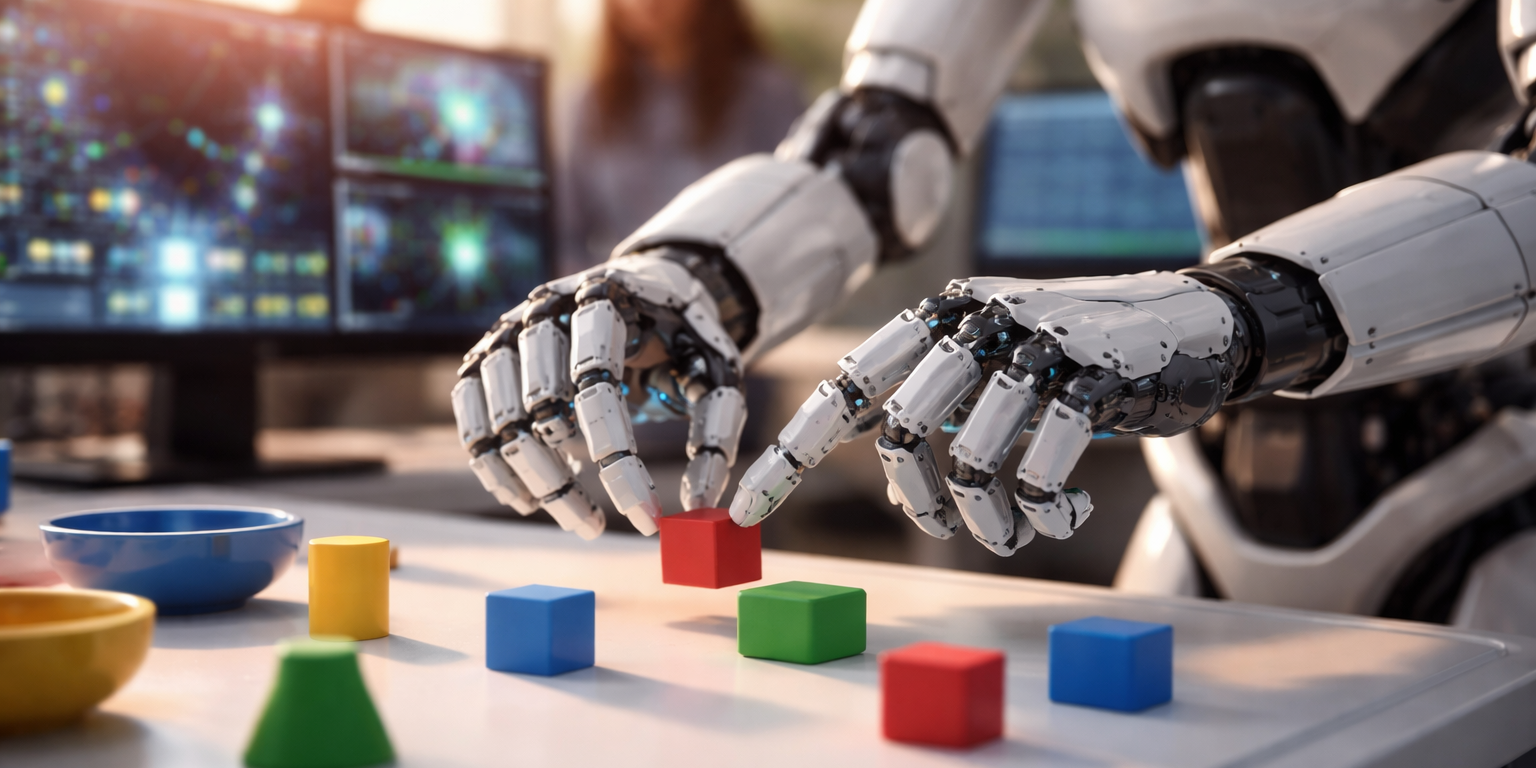
A humanoid developed by a South Korean company executed a full K-pop dance routine after learning the choreography exclusively from video analysis, demonstrating an imitation learning capability that could reshape how robots acquire motor skills. The robot reproduced synchronized arm movements, hip rotations, and coordinated footwork from a viral dance sequence without manual programming or motion capture equipment. Engineers trained the system using vision-based learning algorithms that extract movement patterns from standard video files, then translate those patterns into motor commands the humanoid's actuators can execute. The demonstration arrives as the global humanoid sector focuses intensely on embodied AI and the challenge of teaching robots complex physical tasks without exhaustive programming.
South Korea maintains a smaller but technically sophisticated robotics sector compared to China's manufacturing-focused giants like Unitree, Fourier Intelligence, and UBTECH. Korean firms historically concentrated on industrial automation, with Hyundai's 2021 acquisition of Boston Dynamics marking the country's most visible humanoid investment. The dance-learning robot's developer has not widely disclosed technical specifications, but the video-based training method suggests a departure from reinforcement learning approaches that require extensive simulation or physical trial-and-error. Computer vision systems parse video frames to identify joint positions and movement trajectories, then algorithms generate motion plans that account for the robot's physical constraints, balance requirements, and actuator limitations. Getting this translation layer accurate enough for dynamic movements like dance represents significant progress in closing the simulation-to-reality gap that plagues many imitation learning systems.
The K-pop choreography chosen for the demonstration involves rapid tempo changes, weight transfers, and upper-body isolation moves that test a humanoid's ability to coordinate multiple degrees of freedom simultaneously. Most humanoid walking demonstrations emphasize stability and navigation over expressive movement, making dance a useful benchmark for control system responsiveness and whole-body coordination. Companies like Tesla and Figure AI have shown humanoids performing workplace tasks like parts sorting and box moving, but those motions involve simpler kinematic chains than dance requires. The Korean system's ability to learn from unstructured video data rather than purpose-built training sets could prove valuable in applications where demonstrating desired behaviors is easier than programming them. Service robots in hospitality or elder care, for instance, might learn tasks by watching human workers rather than requiring roboticists to code each motion sequence.
Video-based imitation learning carries limitations that temper its near-term commercial impact. The approach works best for visible, above-ground movements where camera angles capture full-body motion, making it less suitable for manipulation tasks involving tactile feedback or occluded hand positions. Robots still require substantial compute resources to process video, extract skeletal models, and plan feasible motions in real-time or near-real-time. The Korean demonstration does not specify training duration, computational requirements, or how many video examples the system needed before successfully replicating the dance. Those details matter for assessing scalability. Chinese humanoid makers currently lead in manufacturing cost reduction and deployment volume, with models from Unitree and Fourier priced between $16,000 and $30,000 for research-grade units. South Korean engineering has traditionally emphasized precision and novel control methods over mass production, positioning firms to contribute algorithmic advances even as Chinese manufacturers dominate unit shipments. The question becomes whether learning-from-video can be packaged into middleware that multiple hardware platforms adopt, or whether it remains a research capability tied to specific robotic architectures.
What to Watch: Track whether the Korean developer publishes technical papers detailing the video-processing pipeline and motion-planning algorithms, which would signal academic collaboration and peer review. Monitor partnerships between South Korean robotics firms and entertainment companies, as K-pop studios have infrastructure for motion capture and choreography databases that could accelerate training data collection. Watch for announcements from Hyundai's Boston Dynamics division on vision-based learning integration with Atlas or Spot platforms, which would validate the approach's commercial viability. Pay attention to compute requirements disclosed in any technical releases, as edge deployment versus cloud dependency will determine practical application scope.