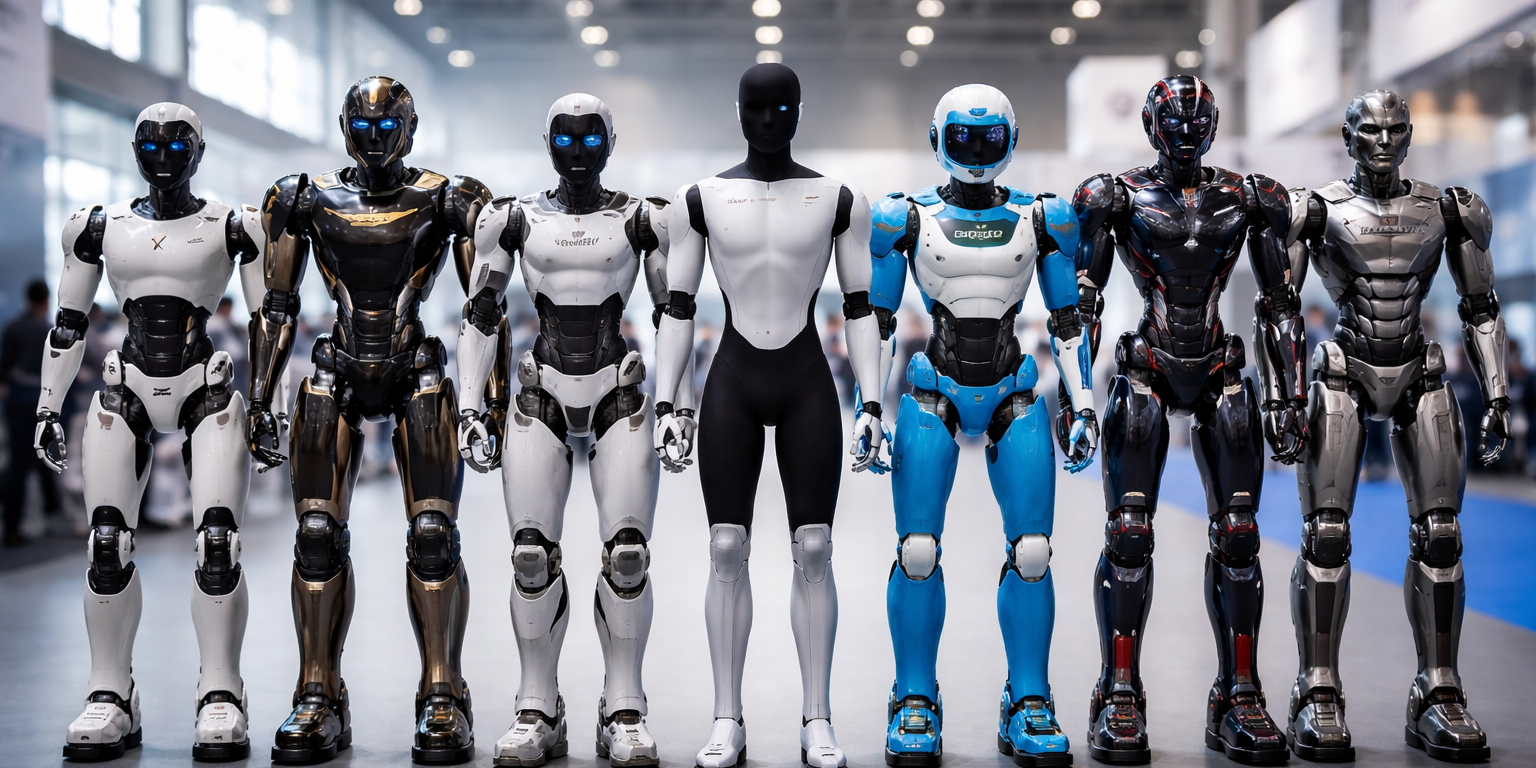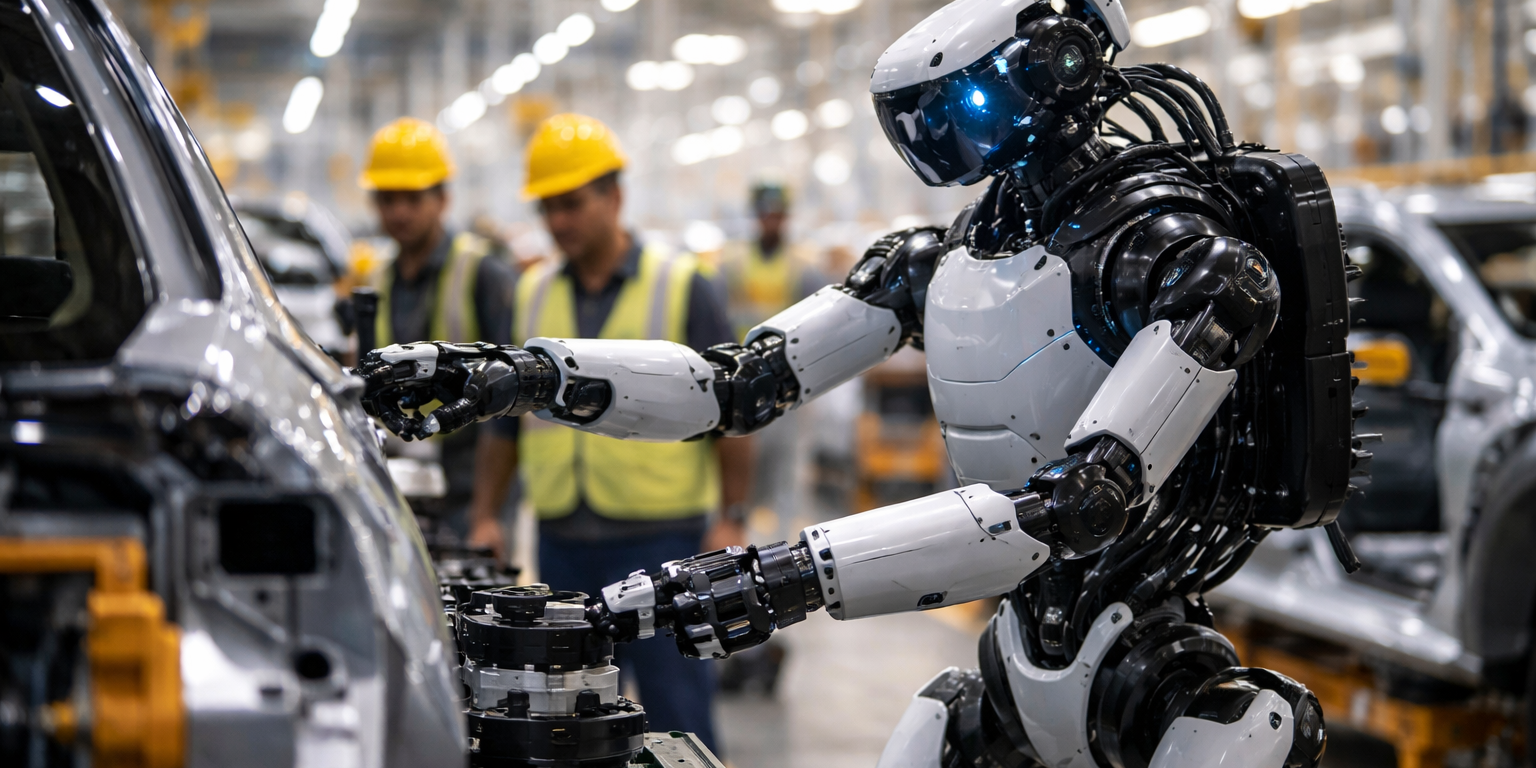

A Japanese robotics start-up arrived at a machine tool exhibition in Tamil Nadu this week hunting for something more valuable than customers: manufacturers who can build humanoid robots at scale. Jinki-Ittai, a Tokyo-based company developing bipedal platforms for industrial environments, is meeting with potential Indian production partners at INTEC 2026 in Coimbatore, a city whose precision engineering clusters have attracted growing attention from overseas robotics firms facing capacity constraints in their home markets. The company's presence at a regional trade show in southern India, rather than at established robotics venues in Tokyo or Shenzhen, signals how quickly the economics of humanoid production are shifting as platforms move from laboratory curiosities to products requiring manufacturing infrastructure that can deliver thousands of units annually.
Jinki-Ittai joins a lengthening roster of robotics companies looking beyond their domestic industrial bases for contract manufacturing relationships. Japan's robotics sector, despite its technical sophistication, faces demographic headwinds that constrain its manufacturing workforce and drive up labor costs for assembly-intensive products like humanoid robots. A single humanoid platform can require 40 to 60 hours of assembly time depending on actuator count and integration complexity, making labor costs a meaningful component of unit economics even before considering materials and components. India's automotive and aerospace supply chains, concentrated in clusters like Coimbatore and Pune, offer precision machining and assembly capabilities at labor rates roughly one-fifth of Japanese equivalents. That cost differential matters when a company is moving from building dozens of prototypes to delivering hundreds or thousands of commercial units. The calculus becomes even more compelling for firms targeting price points below $50,000 per unit, where manufacturing location can determine whether a business model pencils out.
Coimbatore itself has evolved into an unexpected hub for precision manufacturing, anchored by machine tool builders, pump manufacturers, and aerospace component suppliers serving both domestic and export markets. The city's engineering colleges produce approximately 15,000 graduates annually, creating a technical workforce familiar with CAD/CAM systems, CNC machining, and quality management protocols that robotics assembly requires. Several Indian contract manufacturers have already entered the robotics supply chain, producing components and subsystems for international clients, though few have taken on complete humanoid platform assembly. That gap represents both an opportunity and a challenge for companies like Jinki-Ittai. Finding a partner capable of maintaining the tolerances and quality control that humanoid robots demand—where misalignment of a hip actuator by two millimeters can compromise gait stability—requires vetting manufacturing processes more rigorously than typical consumer electronics or automotive subassembly work. The question isn't whether Indian manufacturers have the machine tools, but whether they have the systems integration experience and quality culture that bipedal platforms require.
The timing of Jinki-Ittai's partner search coincides with a broader inflection point in humanoid robotics commercialization. At least six companies globally now have humanoid platforms in pilot deployments at customer sites, moving the technology from research labs into environments where manufacturing scalability becomes the binding constraint on growth. Figure AI's partnership with BMW, Agility Robotics' deployments at logistics facilities, and Apptronik's pilots with industrial customers all depend on production capacity that exceeds what internal assembly lines can deliver. Chinese robotics firms have moved aggressively to build this capacity domestically, with companies like Unitree operating factories capable of producing thousands of quadruped and humanoid units annually. Japanese firms face a more constrained domestic landscape and must either build new production facilities—capital-intensive and time-consuming—or identify offshore partners who can execute to specification. India represents a middle path: lower labor costs than Japan, better IP protection than some Southeast Asian alternatives, and an English-language business environment that simplifies contract negotiations and quality documentation.
What to Watch: Monitor whether Jinki-Ittai announces a specific manufacturing partnership within 90 days of INTEC 2026, which would indicate successful identification of a qualified partner. Track similar announcements from other Japanese robotics firms, as one company establishing a production relationship in India often opens the path for others to follow the same model. Watch for Indian contract manufacturers publicizing robotics capabilities, particularly those with automotive or aerospace heritage that can credibly demonstrate the precision and process control humanoid assembly requires. Pay attention to whether Indian government incentive programs, such as the Production Linked Incentive scheme for advanced manufacturing, get extended to cover robotics assembly, which would accelerate the business case for offshore production partnerships.