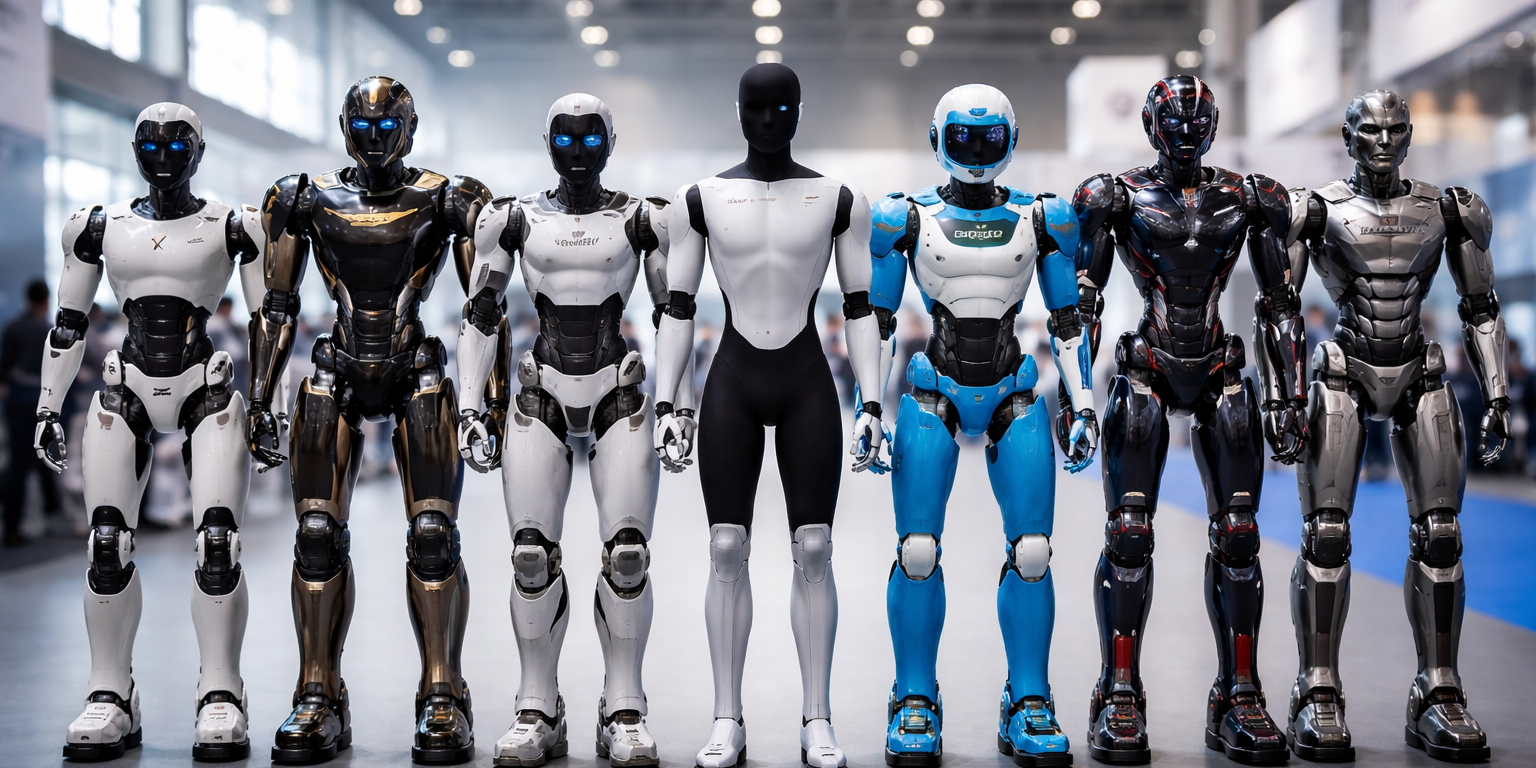
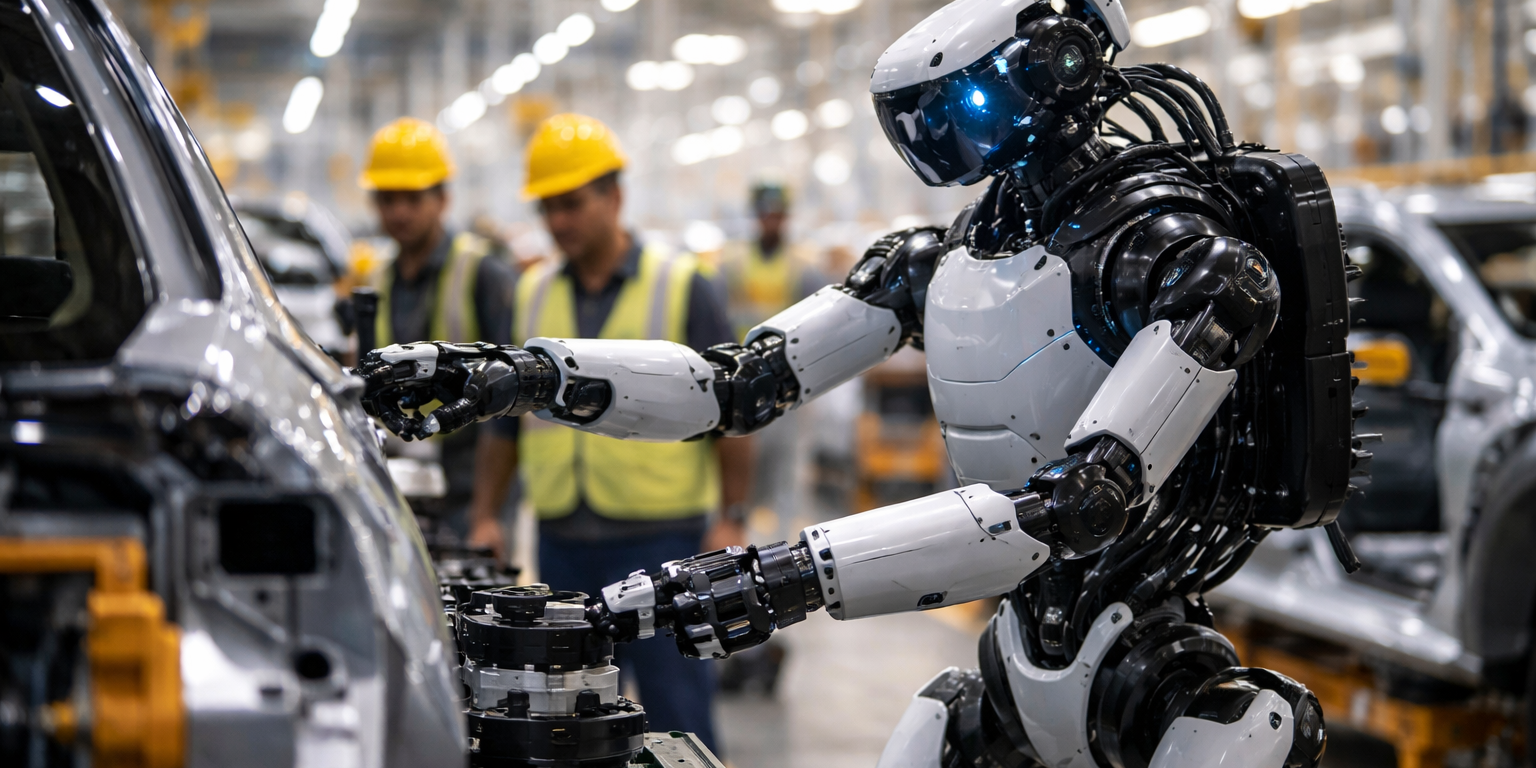
Humanoid robots threaded needles and executed synchronized dance routines at the Humanoids Summit Tokyo last week, a technical showcase that marks Japan's clearest response yet to China's production blitz in the robotics sector. The needle-threading demonstrations represented the most demanding fine motor control publicly displayed by commercial humanoid platforms, with developers achieving sub-millimeter precision in tasks that have eluded most international competitors. No production timelines or pricing emerged from the event, but the technical focus itself signals a strategic bet: Japanese manufacturers will compete on capability rather than cost, carving out industrial niches where Chinese volume plays cannot follow. The summit drew domestic developers almost exclusively, a notable contrast to the international exhibitions common in robotics conferences, suggesting coordination around a national competitiveness strategy.
The technical pivot comes after 18 months of relentless Chinese scaling in humanoid production. Unitree and Fourier Intelligence have shipped hardware at price points that undercut Japanese platforms by 40 to 60 percent, compressing development cycles and achieving production volumes that dwarf Japan's boutique manufacturers. Chinese firms optimized for warehouse logistics, hospitality service, and basic manipulation tasks where speed to market and unit economics matter more than precision. That left an opening: applications demanding the servo control and sensor integration that Japanese robotics cultivated over decades in industrial automation. Surgical assistance, electronics assembly, and laboratory work all require the kind of repeatability and fine motor control that needle threading demonstrates. Threading a needle demands visual acuity, haptic feedback, motion planning at sub-millimeter tolerances, and real-time error correction. Getting a humanoid to do it reliably proves the underlying control architecture can handle tasks Chinese platforms have not targeted.
The demonstrations also revealed how fragmented the humanoid ecosystem is becoming. Where the industry once imagined general-purpose platforms, distinct capability tiers now appear inevitable. Volume-oriented Chinese humanoids will dominate roles where mobility and basic manipulation suffice: moving boxes, delivering items, simple assembly. Japanese specialty systems will target surgical suites, semiconductor fabs, and pharmaceutical labs where precision justifies premium pricing. This bifurcation mirrors earlier robotics sectors, where FANUC and KUKA maintained high-margin positions in automotive welding and precision assembly even as lower-cost alternatives flooded simpler applications. If Japanese manufacturers can demonstrate reliable needle threading in production environments within the next 12 to 18 months, they establish a technical moat that protects margins and justifies the development costs their Chinese competitors avoided by targeting easier applications first. The risk: precision advantages prove too narrow or too expensive to sustain a viable market segment.
The summit's timing aligns with internal Japanese government debates over expanded robotics subsidies. Tokyo has watched Chinese industrial policy pour capital into humanoid development through direct investment, subsidized manufacturing, and guaranteed government procurement. Japanese robotics firms, many mid-sized companies without access to comparable capital, have lobbied for matching support. The needle-threading showcase provides political cover for subsidy programs by demonstrating technical differentiation rather than mere protectionism. Whether government support materializes, and at what scale, will determine if Japan's precision strategy succeeds or becomes a footnote as Chinese manufacturers eventually climb the capability ladder. Chinese firms have historically moved upmarket faster than incumbents expected, and servo control technology is not proprietary. The window for Japanese manufacturers to establish defensible market positions may be shorter than the summit's confident demonstrations suggested. The humanoid market is splitting into tiers, but those tiers remain fluid, and cost advantages have a way of eroding technical moats over time.
What to Watch: Monitor whether Japanese developers announce production partnerships or manufacturing timelines for precision-focused humanoids in medical or electronics sectors by mid-2025. Track Chinese manufacturers like Unitree and Fourier Intelligence for any announcements targeting higher-precision applications, which would directly challenge Japan's strategic positioning. Watch for Japanese government subsidy programs specifically earmarked for humanoid development, likely tied to domestic production requirements, expected in fiscal policy discussions over the next quarter.