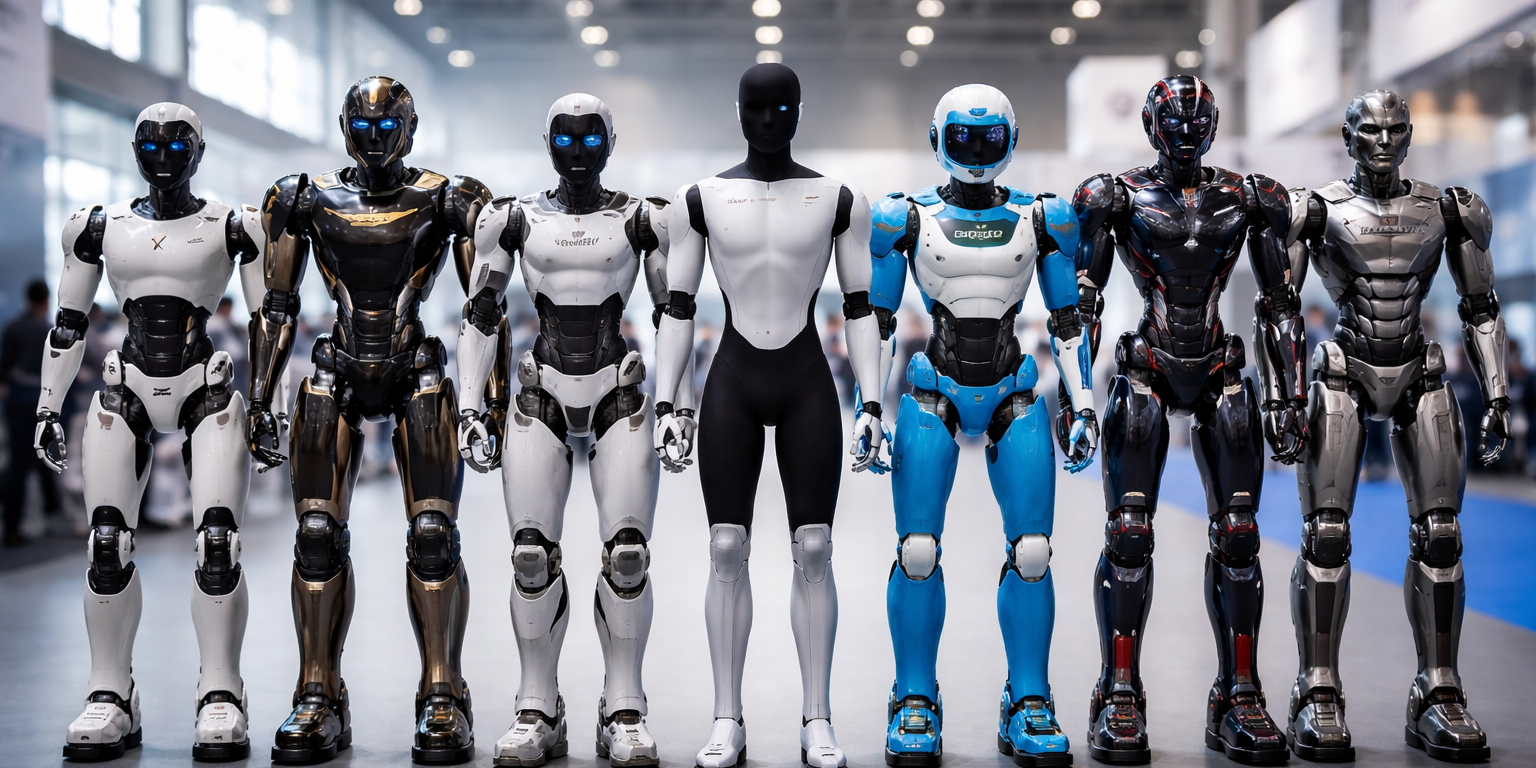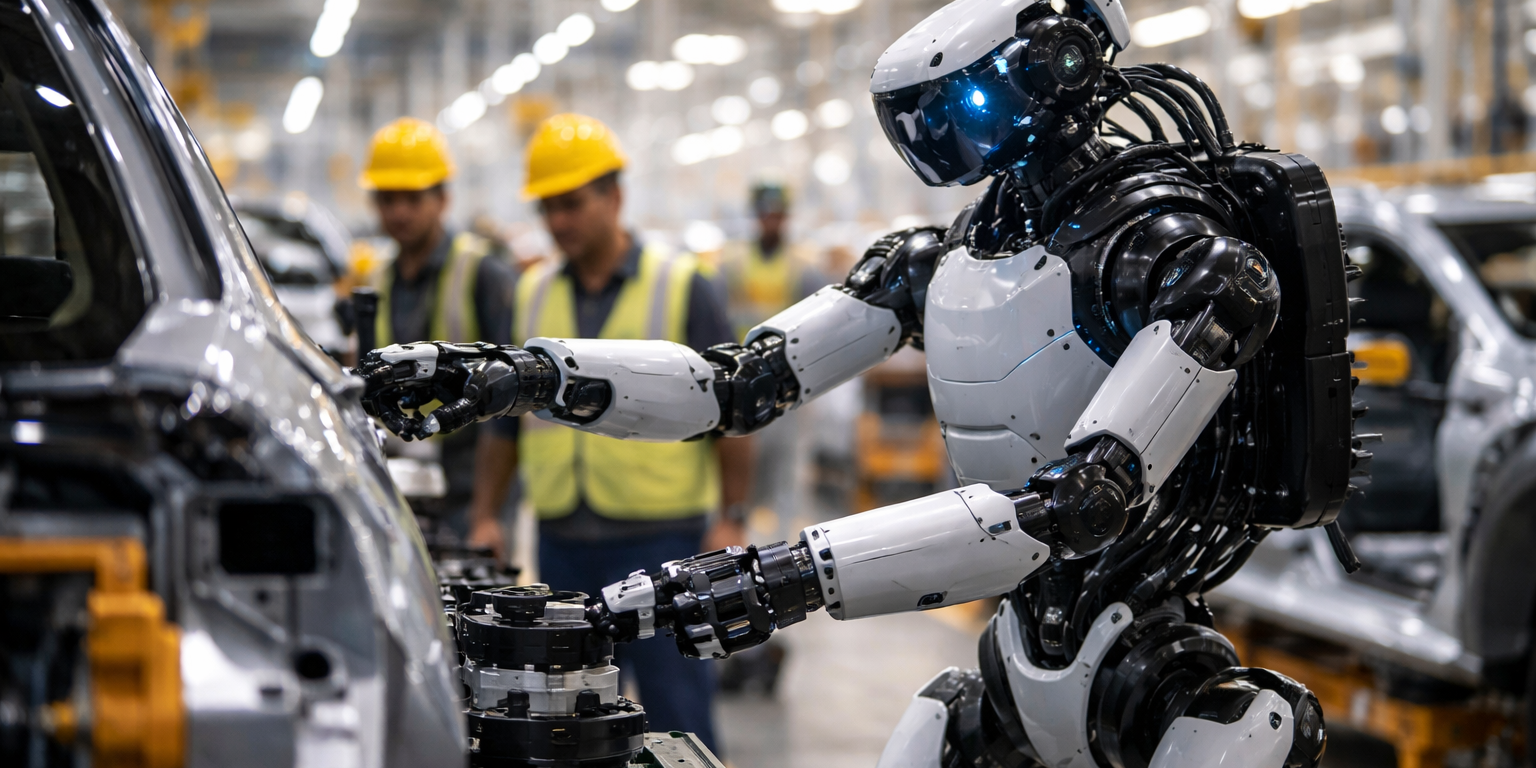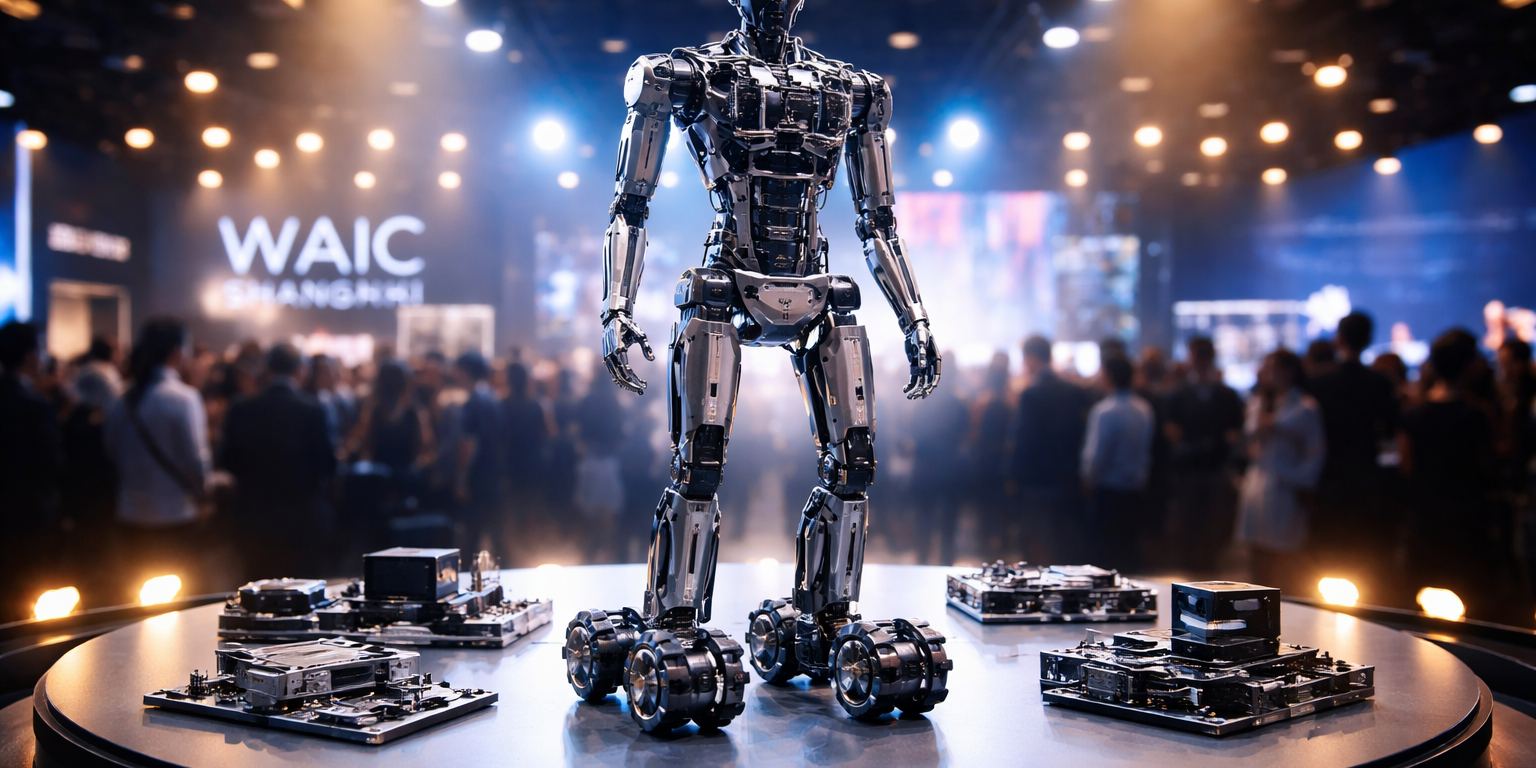
A Chinese AMR developer known primarily for warehouse logistics has repositioned its navigation technology as the foundation layer for humanoid robots. IPLUSMOBOT introduced the NERA product line at the World Artificial Intelligence Conference in Shanghai, offering what the company frames as the first standardized chassis and control system purpose-built to transfer proven autonomous mobile robot capabilities into bipedal, wheeled humanoid, and quadruped platforms. The NERA-P omnidirectional chassis and NERA-C controller represent an attempt to solve a persistent problem in embodied AI: most humanoid developers are building navigation, localization, and motion control from scratch, duplicating effort across dozens of startups with little shared infrastructure.
IPLUSMOBOT has deployed more than 12,000 AMRs in industrial environments since its founding in 2016, accumulating what CEO and founder Zhang Lu describes as a library of edge cases in real-world navigation. The company operates primarily in electronics manufacturing, automotive assembly, and third-party logistics, where its robots handle material transport in facilities with dense human traffic, irregular floor surfaces, and unpredictable obstacles. That operational dataset now feeds the NERA platform, which Zhang positions as a way to bypass the two- to three-year development cycles most humanoid companies face when building stable locomotion. The NERA-C controller runs a proprietary software stack that integrates SLAM-based mapping, dynamic obstacle avoidance, and multi-agent coordination, functions IPLUSMOBOT has refined across 8.7 million operating hours in production environments. The NERA-P chassis supports payloads up to 200 kilograms and offers four-wheel independent steering, designed to handle the weight distribution and center-of-gravity shifts inherent in humanoid torso and arm assemblies.
The architecture reflects a bet that the robotics industry will fragment into horizontal layers rather than continue as a vertically integrated market. IPLUSMOBOT is not developing a humanoid robot itself. Instead, the company aims to serve as a tier-one supplier to humanoid developers who would rather focus on upper-body manipulation, vision systems, and task planning than reinvent odometry and path planning. The NERA platform ships with APIs that expose low-level control parameters for developers who need custom tuning, while also offering pre-configured profiles for common use cases like factory floor navigation and outdoor delivery. Zhang has stated that IPLUSMOBOT is in active discussions with three unnamed humanoid manufacturers in China and two in Europe, with pilot integrations expected to begin in the fourth quarter of 2026. The company has not disclosed pricing, though industry sources estimate the NERA-C controller and accompanying software license will run between $8,000 and $12,000 per unit at volume, roughly 15 to 20 percent of the bill of materials for a mid-range humanoid platform.
This move arrives as humanoid robotics shifts from demonstration to deployment, with companies like Figure AI, 1X Technologies, and Unitree Robotics all targeting commercial pilots in 2026 and 2027. None of those companies has publicly committed to third-party chassis platforms, and most are building proprietary locomotion stacks tightly coupled to their actuator designs. IPLUSMOBOT's pitch is that separating locomotion from manipulation reduces risk and shortens time to market, particularly for startups without deep expertise in SLAM or motion planning. The company points to the automotive industry's adoption of tier-one suppliers like Bosch and Continental as evidence that robotics will follow a similar trajectory. Whether humanoid developers will accept that analogy depends largely on how well the NERA platform handles the dynamic balance and real-time responsiveness required for legged robots, a challenge that differs significantly from the wheeled AMRs where IPLUSMOBOT built its reputation. Early adopters will need to validate whether navigation algorithms trained on pallet jacks and conveyor belts translate cleanly to robots that shift their center of mass with every arm movement.
What to Watch: IPLUSMOBOT plans to demonstrate NERA integration with an unnamed quadruped platform at the China International Industry Fair in November 2026, which will be the first public test of whether the system can handle dynamic gaits and uneven terrain. Track whether any of the three Chinese humanoid developers in pilot discussions likely including Fourier Intelligence, UBTECH Robotics, or Agibot publicly adopt NERA components by year-end. Also monitor whether IPLUSMOBOT files for patents related to humanoid-specific balance compensation algorithms, which would signal deeper technical ambition beyond repackaging existing AMR software.