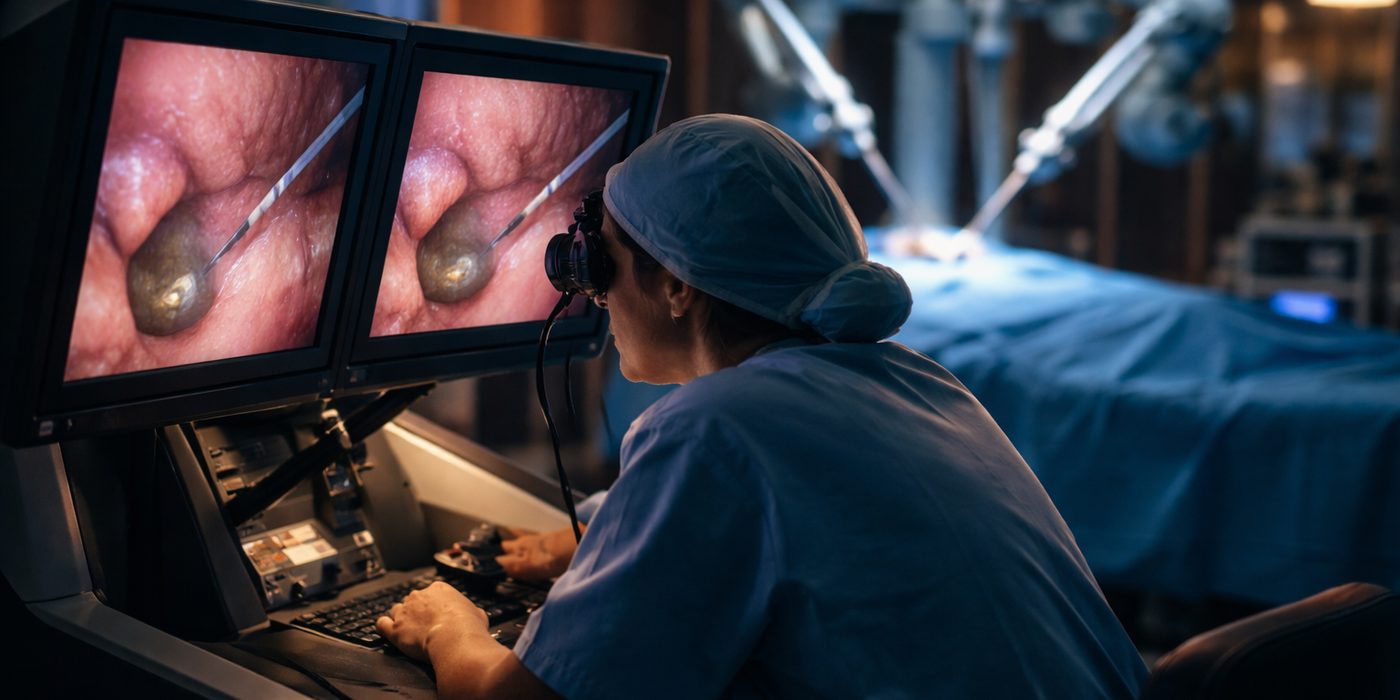

A beat that didn't count. Intuitive Surgical reported third-quarter results above analyst expectations on Tuesday, and its shares still dropped, because the thing the market wanted most never arrived: a raise. Management narrowed its 2026 guidance for worldwide da Vinci procedure growth instead of lifting it, and for a stock priced for perfection, that distinction was enough to trigger a sell-off. The company's bread-and-butter da Vinci system remains the engine of the business, with procedure volume driving the recurring instruments, accessories, and service revenue that make up the bulk of its sales. When that engine's forecast tightens without moving up, Wall Street reads caution.
The mechanics of the reaction matter more than the headline. Narrowing guidance typically means a company has gained visibility into the back half of the year and is trimming the extremes of its range. That can signal confidence in the midpoint, but it also removes the upside scenario that bulls had been holding onto. Intuitive's model is unusual in robotics: it sells a high-priced capital system, then earns the larger share of its money over years of per-procedure consumables. That razor-and-blade structure means investors track procedure growth the way software analysts track net revenue retention. A range that stops short of the high end implies the company isn't seeing the surge that elevated expectations demanded.
Context explains the pressure. Over the past several years, Intuitive has compounded procedure growth at rates that few medical device companies can match, expanding da Vinci's footprint from a handful of specialties into general surgery, urology, gynecology, and thoracic work, and pushing steadily into international markets. Its newer da Vinci 5 platform, which added force feedback and substantially more computing power than its predecessor, has been rolling out to hospital customers and is central to the company's upgrade cycle. That success built a valuation that assumes sustained double-digit procedure expansion. The larger the base, the harder each incremental point of growth becomes, and the market punishes any hint that the curve is flattening, even when the absolute numbers remain strong.
For the broader robotics industry, the episode is a useful stress test of how public markets value robotic systems at scale. Intuitive is the benchmark against which every surgical robotics entrant is measured, from Medtronic's Hugo to Johnson & Johnson's Ottava and a growing field of smaller players chasing soft-tissue and orthopedic niches. Competitors watch Intuitive's procedure counts as a proxy for how much room exists in the market and how quickly hospitals adopt new platforms. A tighter growth range could be read two ways: as maturation that opens space for rivals, or as a temporary pause in a market still largely untapped. Engineers and investors alike should resist treating one day's stock move as a verdict on surgical robotics demand.
The sharper insight sits underneath the price action. A company that beats on revenue and earnings yet falls on guidance is telling the industry that growth expectations, not financial performance, now set the ceiling for robotics valuations. Intuitive's results show a business that is profitable, cash-generative, and entrenched in operating rooms worldwide. What it cannot do is outrun the narrative that its growth must keep accelerating. That dynamic will shape how every robotics company with a recurring-revenue model communicates with investors in 2026 and beyond, because the lesson is plain: in a market that rewards acceleration, holding steady reads as slowing down, and the penalty for that perception can arrive in a single trading session.
What to Watch Track Intuitive's full third-quarter filing and earnings call transcript over the coming days for the specific procedure-growth range, any commentary on da Vinci 5 placements, and updated capital-system installation counts. Watch whether analysts revise their 2026 and 2027 procedure models in the weeks ahead, since downward estimate changes would extend pressure on the shares. Monitor competitor updates from Medtronic on Hugo and Johnson & Johnson on Ottava through year-end for evidence of share gains in soft-tissue procedures. Finally, keep an eye on hospital capital-budget commentary heading into the fourth quarter, which will indicate whether system demand is holding steady or softening.