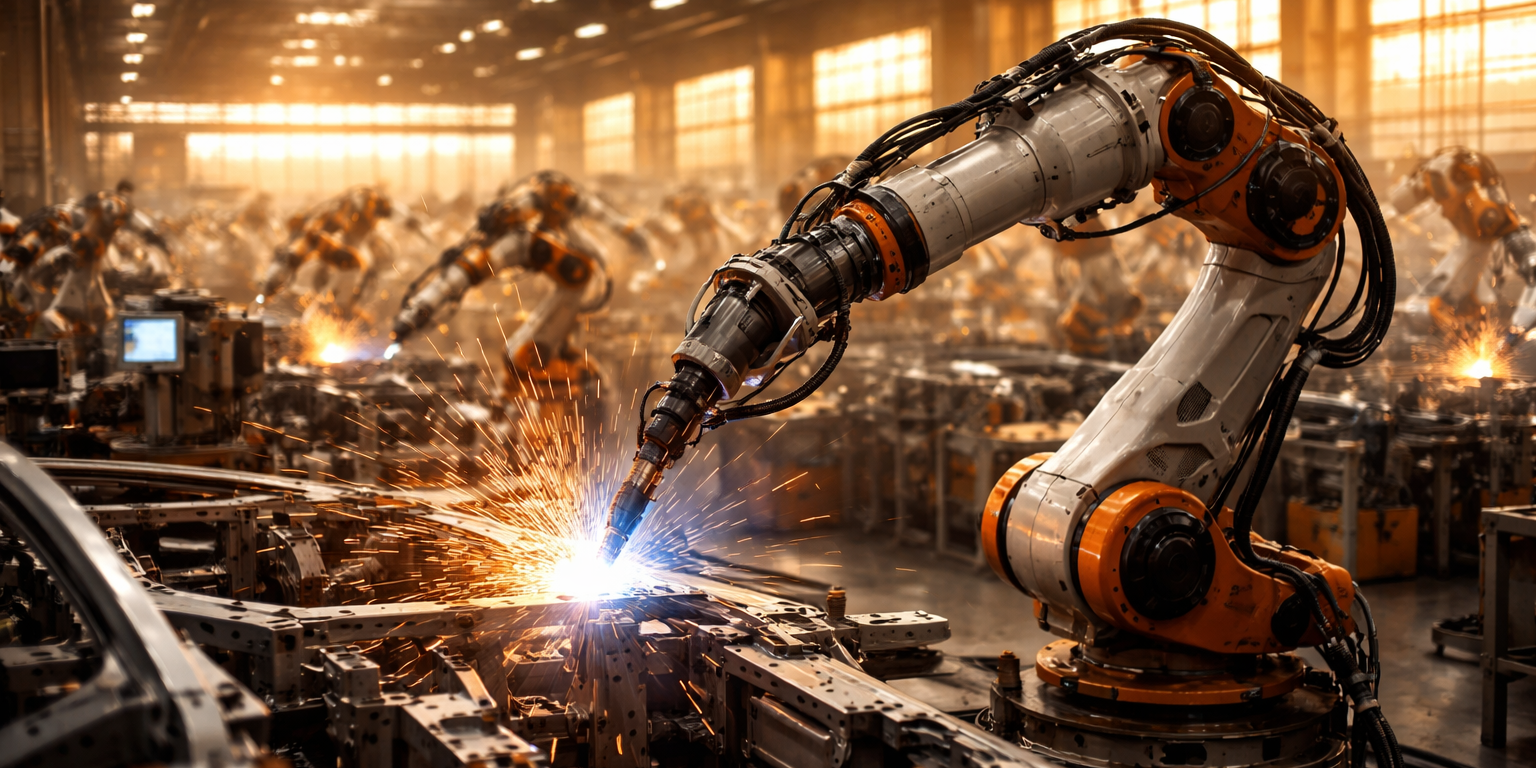
Industrial robot installations reached 592,000 units worldwide in 2025, marking the highest annual figure since the International Federation of Robotics began tracking the metric in 1993. The 14% year-over-year increase represents a sharp acceleration from the 7% growth rate recorded in 2024 and the 5% growth in 2023. Manufacturing executives cite persistent labor shortages as the primary driver, with unfilled positions in skilled trades reaching 3.8 million across G7 economies as of December 2025. The numbers validate what venture capital firms have been betting on since early 2024, when AI robotics startups began raising nine-figure rounds at unprecedented valuations. Those investments are now producing hardware that ships rather than prototypes that demo.
Automotive manufacturers led deployments with 187,000 new robot installations in 2025, followed by electronics assembly at 153,000 units and metal fabrication at 89,000 units. The automotive figure represents a 22% increase over 2024, driven primarily by electric vehicle production lines that require different welding, battery assembly, and quality inspection processes than traditional internal combustion vehicle manufacturing. Tesla deployed 14,200 robots across its Austin and Berlin gigafactories during the year, while Ford added 8,900 units to its North American facilities. General Motors followed with 7,600 installations, concentrated in its Michigan and Tennessee plants retooling for EV production. The electronics sector saw South Korea and Taiwan dominate installations, with Samsung and TSMC together accounting for 41,000 units deployed in semiconductor fabrication and consumer electronics assembly lines.
Geographic distribution shifted noticeably compared to historical patterns. China installed 243,000 industrial robots in 2025, maintaining its position as the largest single market but growing at just 8% year-over-year, the slowest pace since 2019. North America installed 97,000 units, a 31% jump that marks the sharpest regional increase on record. Mexico accounted for 28,000 of those installations as nearshoring accelerated automotive and aerospace manufacturing capacity shifts from Asia. The European Union installed 121,000 units, with Germany contributing 47,000 and Poland adding 19,000 as Eastern European nations attract manufacturing investment. Japan, historically a robotics powerhouse, installed 64,000 units domestically, up 11% but losing market share to faster-growing regions. The data reveals a clear pattern: robot adoption is accelerating fastest where labor shortages are most acute and where wage inflation makes automation ROI calculations more favorable.
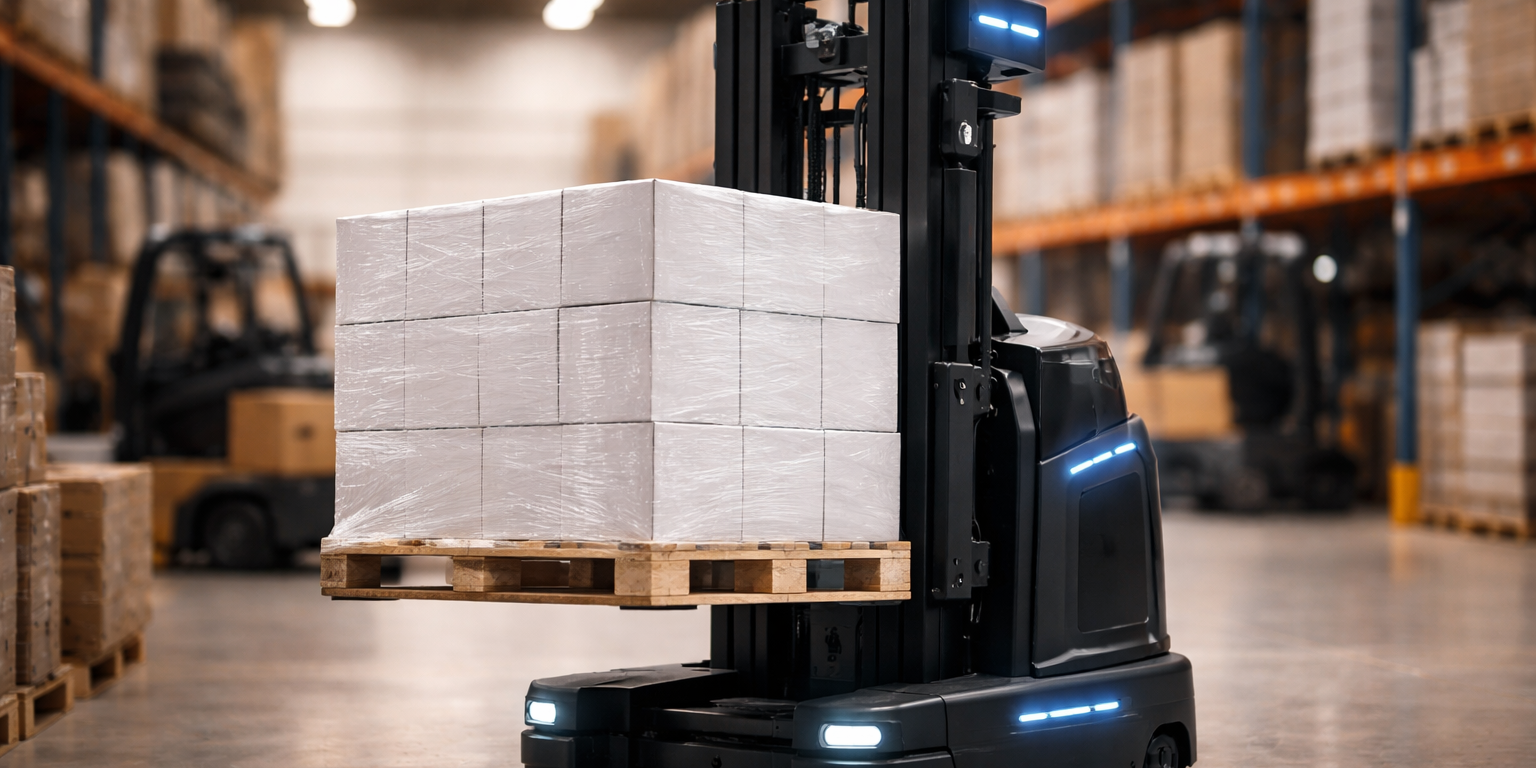
The technology underlying these installations has evolved substantially from the teach-pendant-programmed arms that dominated factories a decade ago. Roughly 38% of units installed in 2025 shipped with vision systems capable of object recognition and adaptive path planning, compared to 17% in 2023. AI-enabled force sensing and tactile feedback appeared in 22% of new installations, enabling robots to handle fragile or irregular parts that previously required human dexterity. Boston Dynamics sold 4,100 Stretch mobile robots for warehouse and logistics applications, while ABB reported that 64% of its 2025 robot sales included its YuMi collaborative robot line designed to work alongside human operators without safety cages. Fanuc disclosed that its CRX series collaborative robots, priced between $18,000 and $31,000 depending on payload capacity, accounted for 29% of unit sales in 2025, up from 12% in 2024. The price point matters: collaborative robots at under $35,000 per unit bring automation within reach of small and medium manufacturers that couldn't justify $80,000-plus industrial arms. Average selling prices across all industrial robot categories fell 9% in 2025 to $42,300 per unit, making the hardware more accessible while simultaneously pressuring gross margins for established manufacturers facing competition from Chinese suppliers like SIASUN and Estun Automation.
What to Watch: The International Federation of Robotics will release preliminary Q1 2026 installation data in late September 2026, which should indicate whether the acceleration is sustained or a one-year anomaly. Watch for earnings reports from ABB, Fanuc, and KUKA in October 2026 for commentary on order backlogs and delivery timelines, which have stretched to 14-18 weeks for popular models. Tesla's October 2026 AI Day may reveal specifics on its Optimus humanoid robot deployment timeline in its own factories, which could represent a new category of installation data starting in 2027. Track GM's Q4 2026 earnings call for updates on its partnership with Symbotic to deploy 20,000 warehouse automation robots across its parts distribution network by Q2 2027.