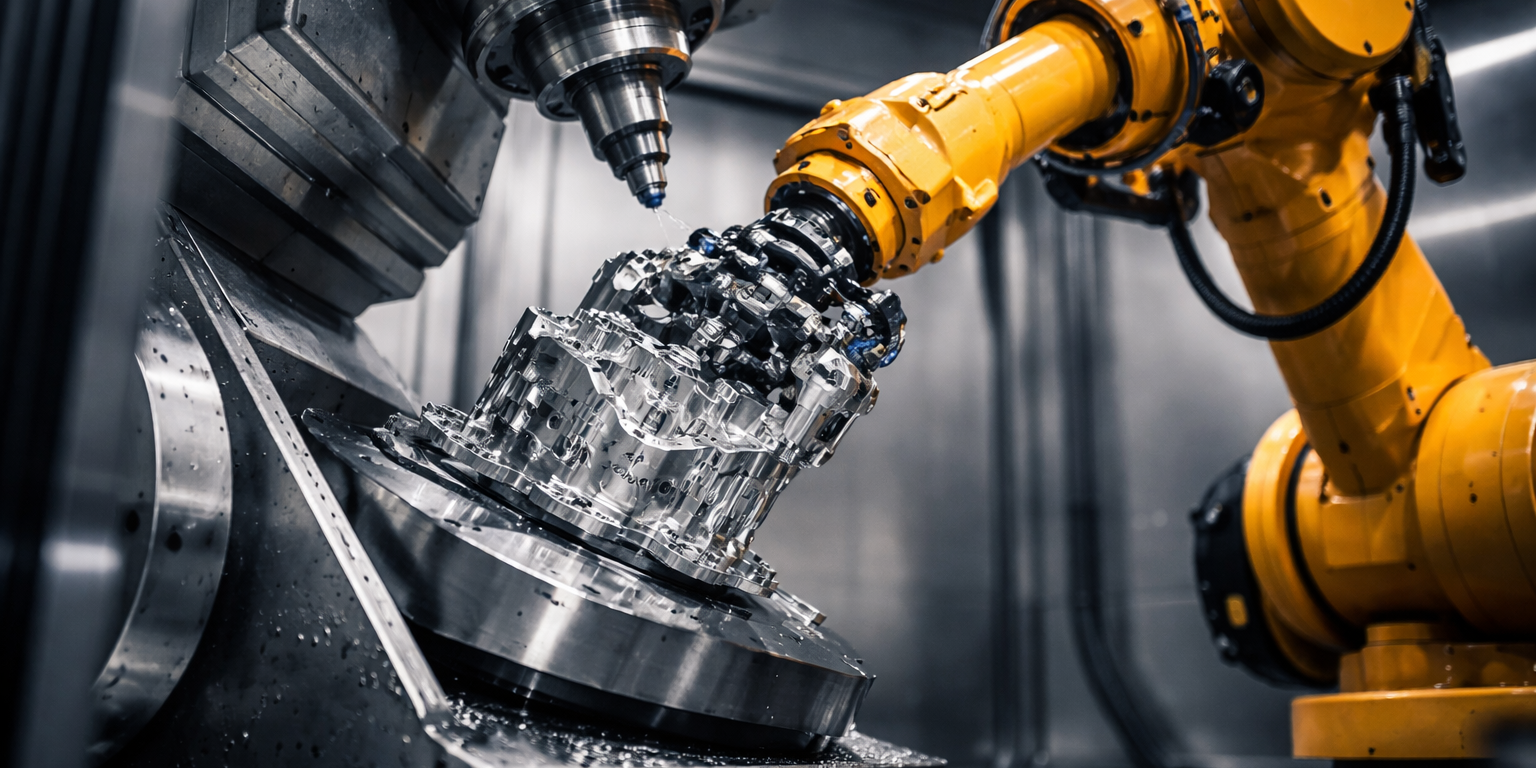
Global industrial PC output is forecast to grow 46% over the next eighteen months, climbing from approximately $6.1 billion in 2026 to $8.91 billion by the end of 2027, according to market research cited by industry sources. The expansion reverses a multi-year decline that began when pandemic-era supply chain disruptions forced manufacturers to delay capital equipment purchases. What changed: robotics systems now require substantially more computing power at the edge, and factories are installing vision-guided automation faster than general-purpose programmable logic controllers can handle the workload.
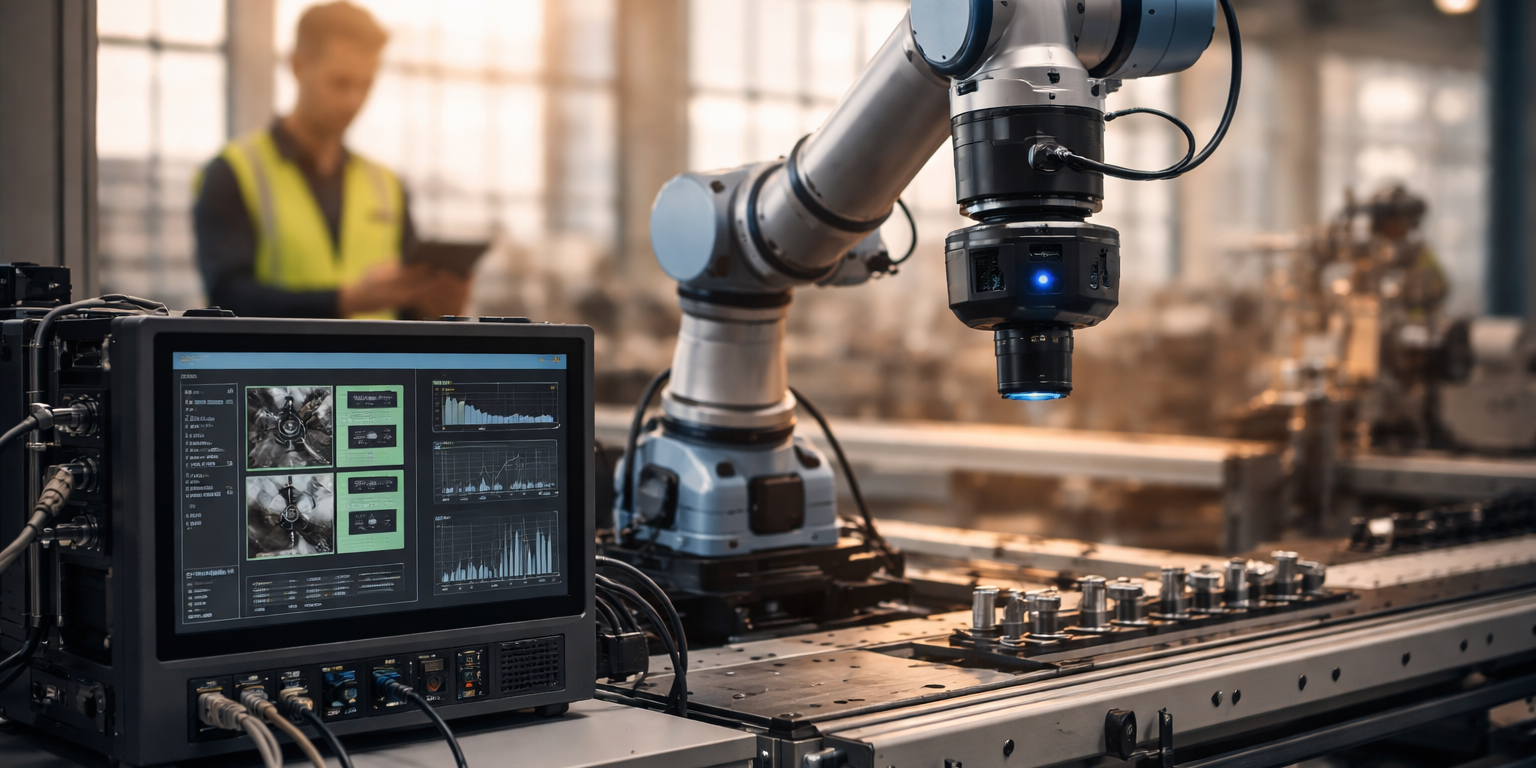
The IPC sector spent much of 2024 and early 2025 working through inventory corrections and weak enterprise demand. Traditional applications—human-machine interfaces for CNC machines, data acquisition systems for process control, embedded computers in packaging lines—saw replacement cycles extend as companies deferred upgrades. But smart manufacturing applications, particularly those involving collaborative robots with real-time vision processing and AI-driven quality inspection, cannot run on legacy hardware. A cobot performing bin picking needs to process stereoscopic camera feeds, run neural network inference for object recognition, and coordinate motion planning within millisecond latencies. That workload pushes industrial PCs into territory once reserved for workstations, with multi-core processors, dedicated GPU or neural processing units, and ruggedized thermal management to survive factory floors where ambient temperatures swing 40 degrees and vibration is constant.
Advantek, Advantech, and Kontron—three of the largest industrial PC manufacturers—have all introduced product lines in the past eight months featuring NVIDIA Jetson Orin modules or Intel Core Ultra processors with integrated AI accelerators. These systems typically carry price tags 60% to 80% higher than standard IPCs, but integrators report strong order flow from automotive tier-one suppliers and electronics assembly plants in Southeast Asia. One Japanese robotics integrator disclosed in a July earnings call that 70% of its new cobot deployments now require industrial PCs with at least 100 TOPS of AI inference capability, compared to fewer than 20% two years ago. The shift is not limited to new installations. Retrofits are accelerating as manufacturers discover that adding machine vision to existing robotic cells delivers faster ROI than replacing entire production lines. An industrial PC with GPU acceleration, mounted alongside a six-axis arm built in 2019, can enable pick-and-place operations that previously required custom fixturing and precise part positioning. The economics work because the camera system and compute module together cost less than $8,000, while redesigning tooling and conveyors for a rigid automation approach often runs six figures per cell.
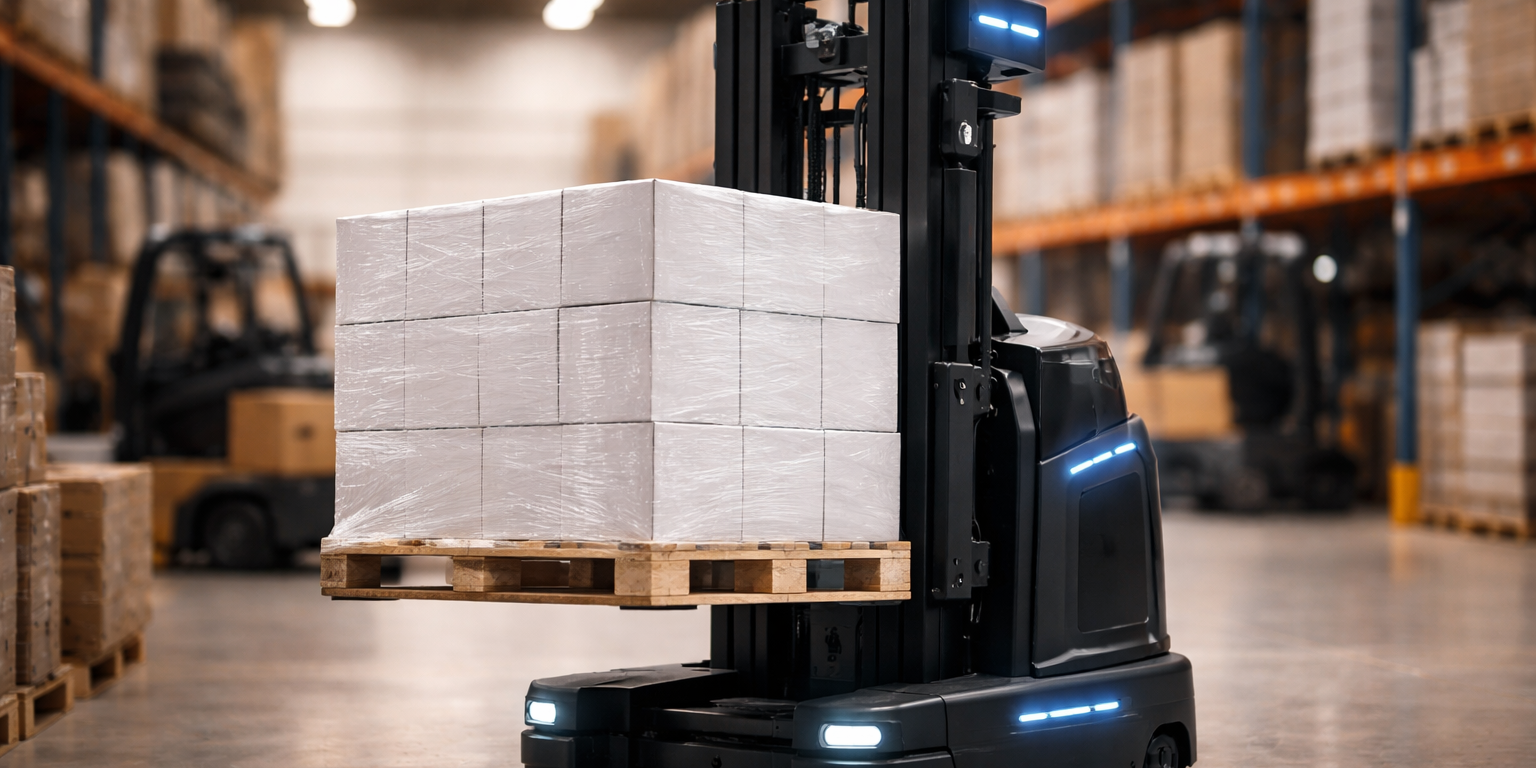
Defense and aerospace applications represent a smaller but faster-growing segment. Unmanned ground vehicles and autonomous inspection drones require fanless, MIL-STD-810 rated industrial PCs that can operate in dust, moisture, and electromagnetic interference while running simultaneous SLAM algorithms and object detection models. Several European defense contractors have specified IPCs with Arm-based processors for power efficiency in battery-operated platforms, a departure from the x86 architecture that has dominated industrial computing for two decades. The technical requirements are converging: a rugged IPC for a warehouse AMR and one for a tactical UGV now share similar thermal envelopes, shock resistance, and AI processing demands, even though the end applications differ vastly in regulatory and security constraints.
Supply chain considerations are reshaping the competitive landscape. North American and European manufacturers are increasingly specifying IPCs assembled outside China, even when it adds 15% to 25% to unit costs. Taiwan-based IPC makers have opened production lines in Vietnam and Mexico over the past eighteen months, while Germany's Beckhoff and Switzerland's Kontron expanded capacity in Eastern Europe. Lead times, which stretched to 26 weeks during the semiconductor shortage of 2022, have normalized to eight to twelve weeks for most standard configurations, though custom designs with specific I/O requirements or certifications still require longer planning horizons. Component availability remains uneven—certain industrial-grade SSDs and wide-temperature DRAM modules still experience periodic allocation, particularly for orders below 500 units.
What to Watch: Advantech is expected to release pricing and availability in October 2026 for its first RISC-V based industrial PC platform, targeting cost-sensitive automation applications in India and Brazil. Monitor whether automotive OEMs begin mandating AI-capable IPCs as standard in robotic cell specifications during 2027 contract negotiations, which would significantly expand total addressable market beyond current early-adopter deployments. Track whether Siemens and Rockwell Automation, which have historically favored proprietary industrial controllers, expand partnerships with third-party IPC manufacturers to address AI workloads their existing product lines cannot handle efficiently.