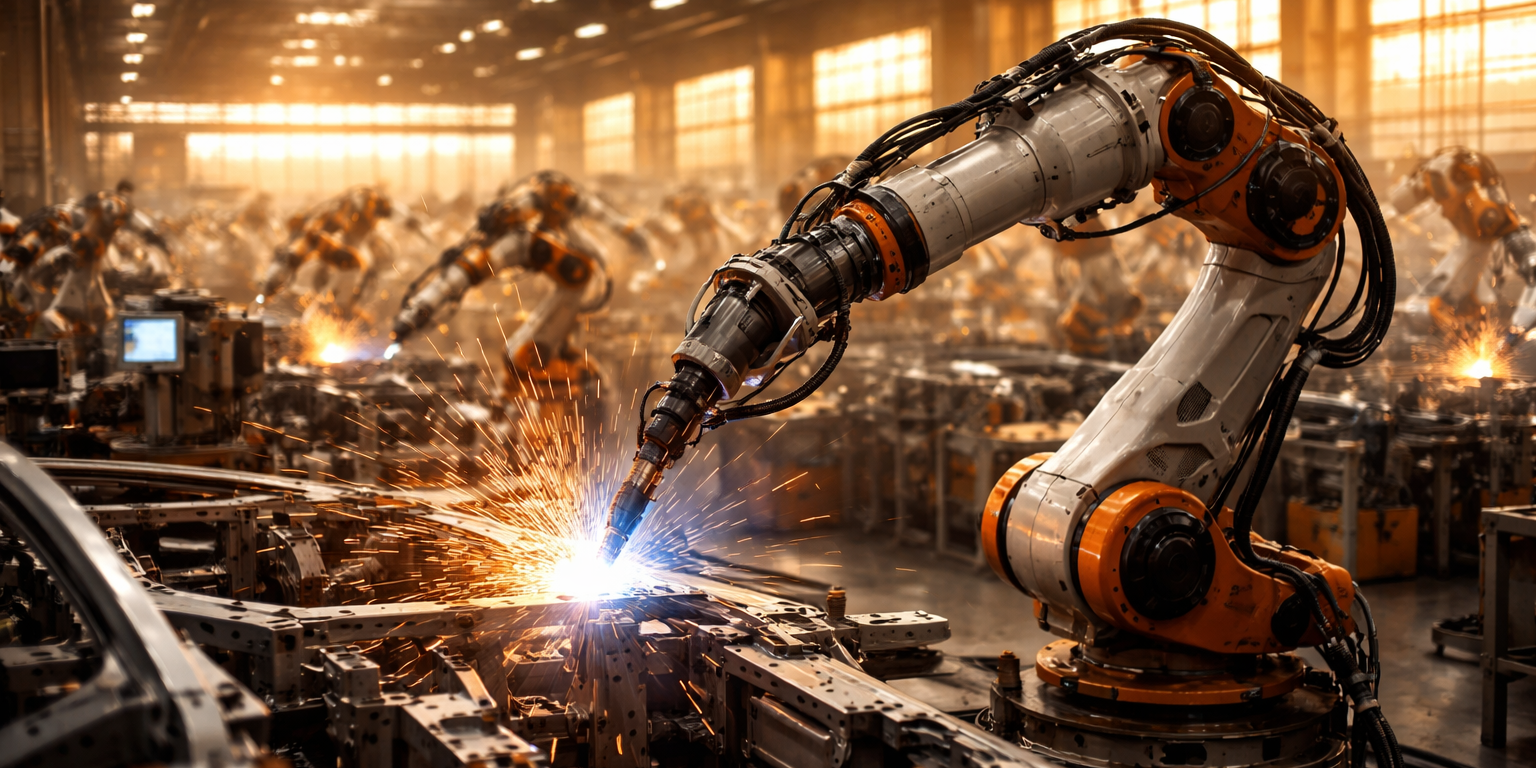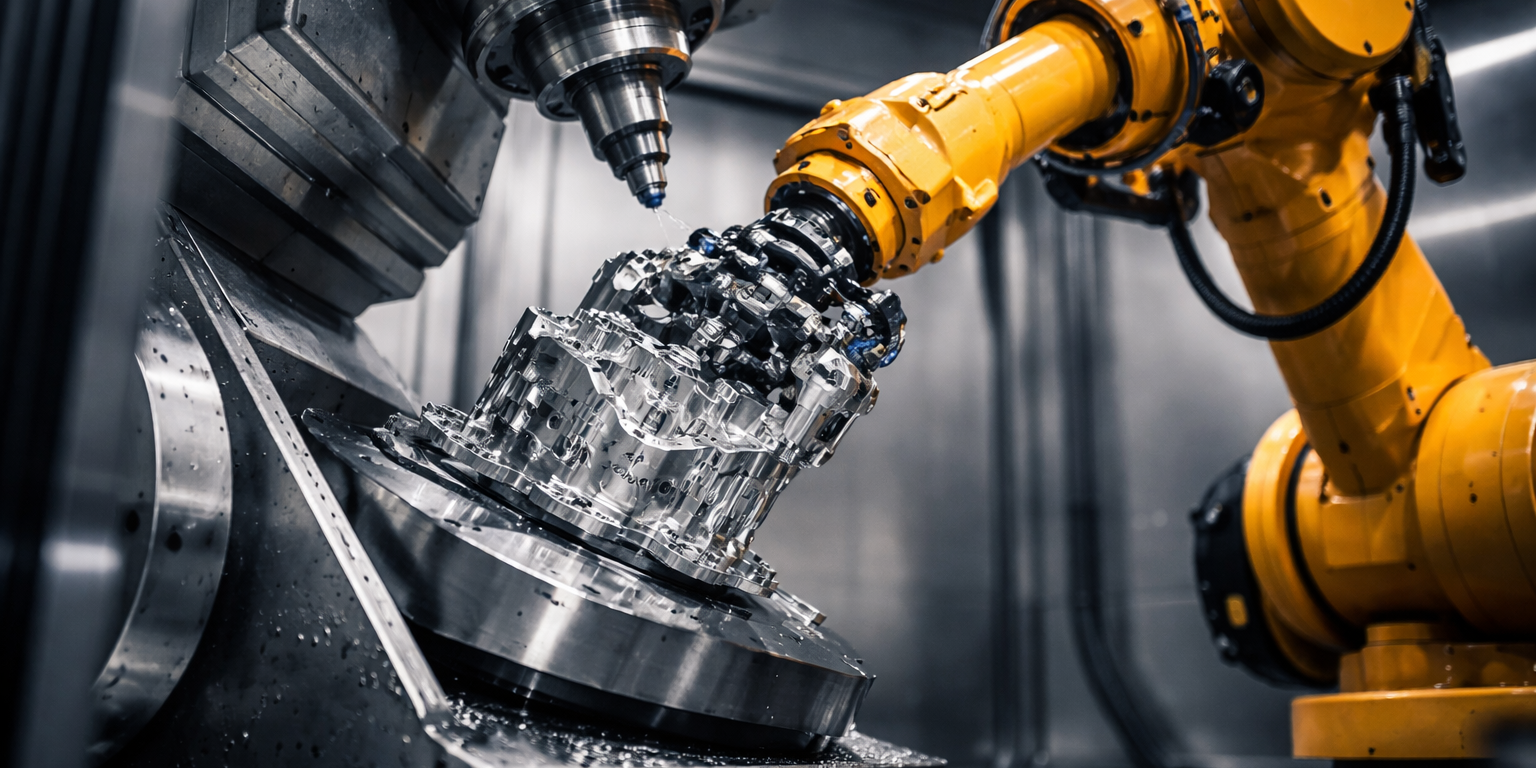
FANUC America has assembled an industry coalition to standardize how industrial robots interface with five-axis CNC machining centers, a technical challenge that has slowed automation adoption in precision manufacturing for years. The Rochester Hills-based automation supplier is providing reference designs, integration guidelines, and technical support to machine tool builders and software companies attempting to automate loading, unloading, and part inspection tasks that currently require skilled human operators. Five-axis machines can cut complex geometries in a single setup, but their compact work envelopes and rapid tool movements have made robotic integration expensive and time-consuming. FANUC's new program aims to reduce engineering costs by creating reusable integration templates that machine builders can adapt rather than designing from scratch. The company has not disclosed financial commitments or participation fees, but describes the initiative as open to any manufacturer or software developer working in the five-axis segment.
The technical problem is footprint and synchronization. Five-axis machining centers tilt and rotate workpieces during cutting operations, which means robots must coordinate with machine tool movements in real time to avoid collisions while maintaining cycle time efficiency. Most current installations use custom integration work that can take twelve to eighteen months and cost $200,000 or more per machine model, according to figures cited at manufacturing automation trade shows earlier this year. That engineering expense has limited robotic tending primarily to high-volume production runs where the upfront cost can be amortized across thousands of parts. Smaller aerospace suppliers and medical device contract manufacturers, who often run batches of fifty to five hundred parts across dozens of different machine setups, have largely continued using manual loading. FANUC's reference designs address collision avoidance, toolpath synchronization, and part fixturing standards that can be adapted across different machine tool brands and configurations. The company is leveraging its CRX collaborative robot line and its CNC control systems, both of which already exist in its product portfolio, rather than developing new hardware specifically for this initiative.
The program arrives as aerospace supply chains face mounting pressure to increase output without proportional increases in skilled labor. Boeing's production rate targets for narrow-body aircraft have climbed back toward pre-pandemic levels, and Airbus recently confirmed plans to produce sixty A320-family aircraft per month by early next year. Both manufacturers have pushed suppliers to demonstrate automation roadmaps as a condition for long-term contracts. Five-axis machining is particularly common in turbine blade production, landing gear components, and structural fittings where complex contours must meet tight tolerances. Medical device manufacturers face similar pressures, particularly in orthopedic implants where patient-specific geometries are increasingly common and regulatory requirements demand complete traceability for every machining operation. FANUC is working with at least three major machine tool builders whose names have not been publicly released, along with CAD/CAM software providers including offerings that generate robot motion code directly from part geometry files. The software integration is critical because engineers currently must program robots separately from the machining toolpaths, a duplication of effort that adds time and introduces potential errors.
Industry observers note that Siemens and other European automation companies have pursued similar integration initiatives over the past eighteen months, but those efforts have typically remained within single corporate ecosystems rather than attempting cross-vendor standardization. FANUC's decision to structure this as an open program, rather than a proprietary solution, suggests the company believes standardization will expand the addressable market faster than a closed approach. The economics are straightforward: if integration costs drop below $75,000 per machine model and engineering timelines compress to four to six months, robotic tending becomes viable for mid-volume production that represents a substantially larger market than the high-volume segment currently automated. FANUC has approximately forty percent share of industrial robots in North American automotive plants, but far lower penetration in aerospace and medical manufacturing where part variety has historically made automation difficult to justify. This program appears designed to change that calculation by reducing the per-machine engineering burden through standardized interfaces and pre-validated motion libraries.
What to Watch: First announced partnerships between FANUC and named machine tool builders should emerge before December 2026, providing specifics on which five-axis platforms will receive standardized robot integration kits. Watch whether Mazak, DMG Mori, or Haas participate, as those three brands dominate North American aerospace machining. CAD/CAM vendors including Mastercam and Siemens NX will likely release robot motion modules in early 2027 if the initiative gains traction. Finally, track whether aerospace primes including GE Aerospace and RTX begin specifying FANUC-compatible five-axis cells in supplier RFQs, which would signal that the standardization effort has achieved industry acceptance.