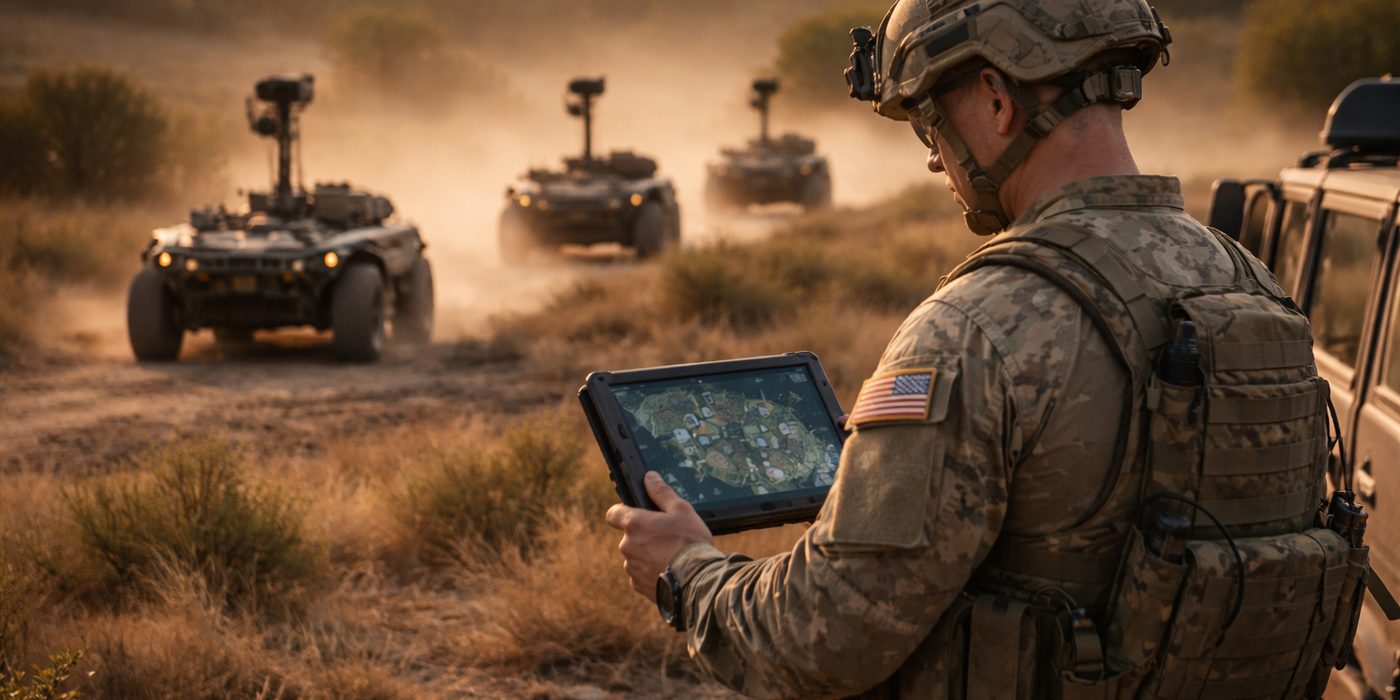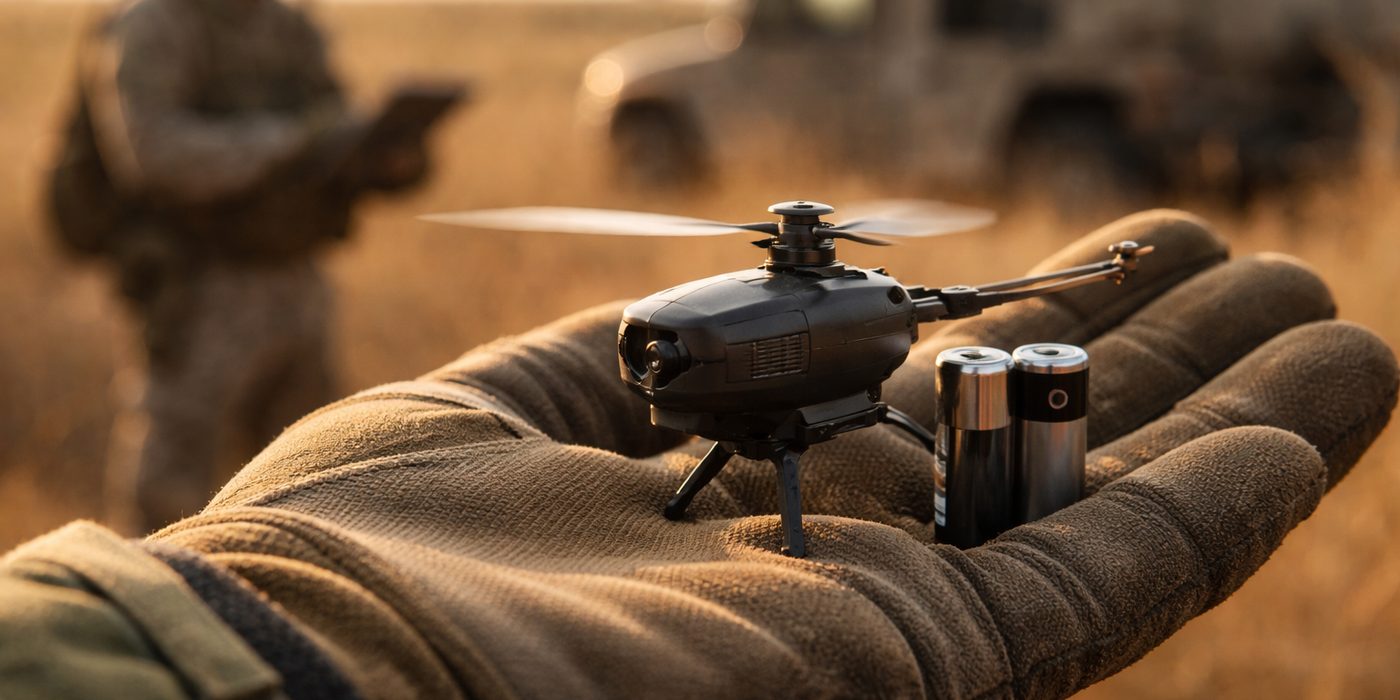

A company press release rarely doubles as a market thesis, but INDROTEK's October 30 disclosure comes close. The Vancouver-based robotics and defense firm used the release to argue that four priorities identified in the OVIN Report, namely commercial-to-defense adaptation, autonomous systems, testing and trusted supply chains, describe the business it already runs. The statement contains no new contract, no revenue figure and no deployment date. What it offers instead is a framing: that a small robotics company can claim relevance by aligning its existing operations with the vocabulary of a government-adjacent policy document. For investors parsing which small-cap names are credibly dual-use and which are simply borrowing the label, that framing deserves scrutiny.
The OVIN Report sits within a broader policy conversation about how commercial technology gets pulled into defense programs faster than traditional acquisition cycles allow. Dual-use is not a new idea, but the pressure to operationalize it has intensified as autonomous platforms, once the preserve of prime contractors, are increasingly built from commercial components by companies with no legacy defense footprint. The four priorities INDROTEK highlights are not arbitrary. Adaptation addresses the translation of a commercial product into something that meets military requirements. Autonomy is the capability layer. Testing is the bottleneck that determines whether any of it gets fielded. And trusted supply chains are the compliance filter that can disqualify an otherwise capable system.
The last two deserve more attention than the first two, because they are where small robotics firms most often stall. Building a capable autonomous platform is a solvable engineering problem. Proving it performs reliably across degraded conditions, with auditable component provenance, is a slower and more expensive exercise. Testing and evaluation infrastructure for autonomous systems remains uneven, and procurement officers tend to favor vendors who can demonstrate validated performance over those who promise it. Supply chain trust adds another layer of friction: sourcing restrictions on components from certain jurisdictions can force redesigns late in a development cycle, and robotics hardware, from actuators to compute modules to sensors, leans heavily on globally distributed suppliers. A company that names these two priorities as relevant is implicitly claiming it has either solved them or is positioned to.
Whether INDROTEK has done so is not answered by the release, and that gap is the story. Management describes the OVIN priorities as relevant to its existing operations, which is a softer claim than saying the company has qualified products, passed formal evaluations or secured defense customers. For senior engineers evaluating partnership or acquisition targets, the useful questions are concrete: what testing has been completed, under whose protocols, and with what documented results; where do critical components originate; and how much of the commercial product line carries over to defense use without re-architecture. Small firms operating in both markets also face a resource-allocation tension, since defense qualification work can consume engineering capacity that commercial customers expect to see directed at product roadmaps. The broader lesson for the sector is that alignment with a policy framework is an entry condition, not a competitive moat. Dozens of robotics companies can plausibly map their work onto the same four priorities. The ones that separate themselves will be those that attach verifiable evidence, from test data to supplier audits to signed agreements, to the claim.
What to Watch
Track whether INDROTEK follows this statement with a concrete disclosure, whether a named defense customer, a formal testing milestone or a supply chain certification, before the end of the first quarter of 2027. Watch the company's next financial filing for any segment-level breakdown separating defense revenue from commercial robotics revenue, since that split will show how real the dual-use positioning is. Monitor how other small-cap robotics issuers reference the OVIN Report in their own disclosures over the coming weeks; a cluster of similar statements would suggest the report is becoming a common reference point for investor communications. Finally, follow developments in autonomous-systems test and evaluation programs through early 2027, since expanded testing capacity is the most direct lever on how quickly commercially developed platforms can move toward fielding.