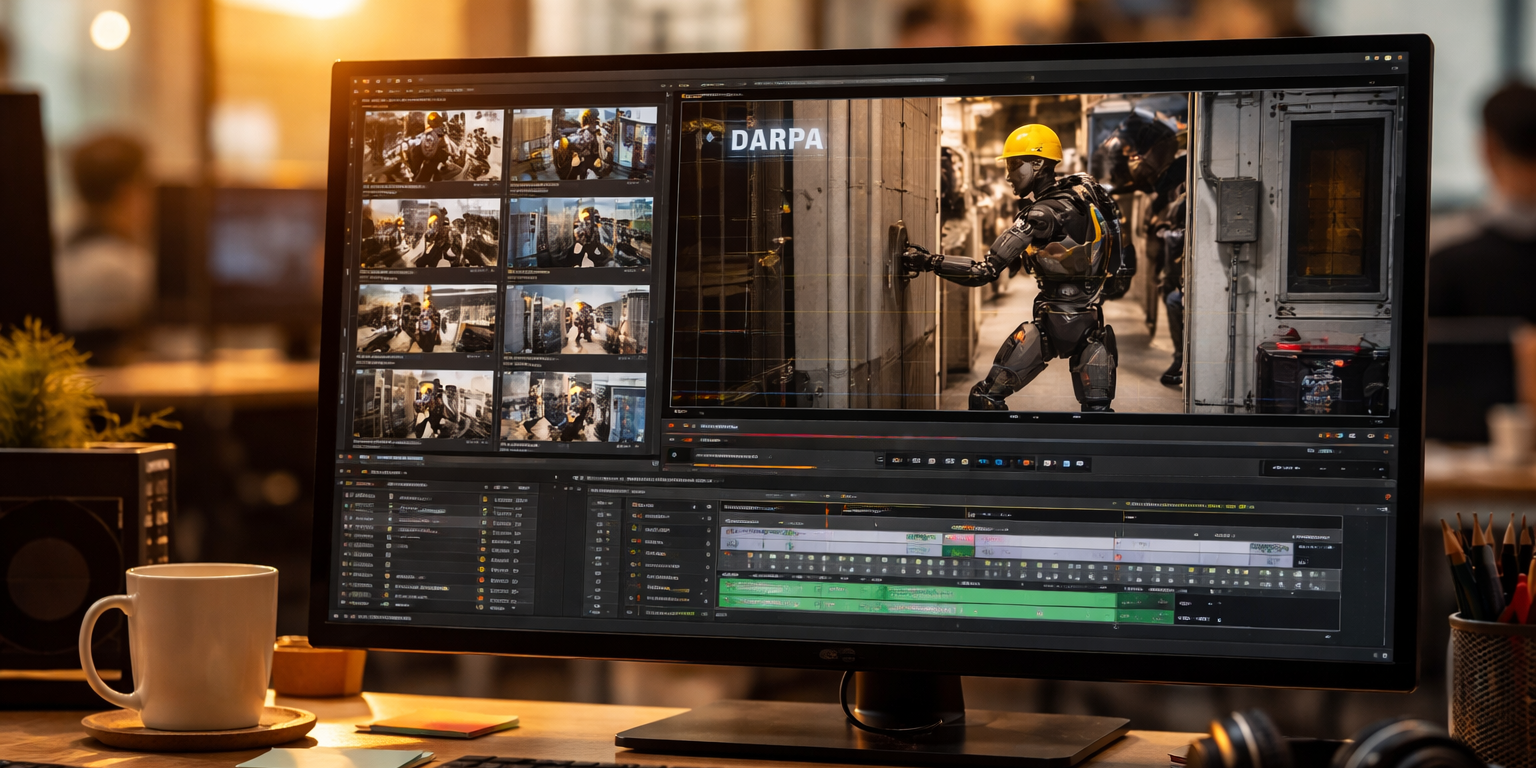
IEEE Spectrum published its weekly Video Friday robotics compilation on August 14, drawing particular attention to footage from DARPA challenge events. The publication, which has run the video series for over a decade, continues to serve as a curated digest for engineers tracking developments across humanoid robotics, manipulation systems, and autonomous platforms. According to the editorial note, DARPA challenges remain a focal point for the robotics community due to the technical difficulty of the tasks and the competitive pressure they create among development teams. The challenges historically push the boundaries of what's commercially viable by several years, making them a reliable indicator of where funded research priorities lie.
The timing of this particular roundup coincides with a busy conference calendar that will concentrate much of the humanoid robotics industry in three cities over six weeks. IROS 2026, scheduled for September 27 through October 1 in Pittsburgh, represents the largest gathering on the schedule. The International Conference on Intelligent Robots and Systems typically draws several thousand attendees and hundreds of paper presentations, serving as the primary academic venue where university labs debut research that later migrates into commercial products. Pittsburgh's selection as host city reinforces the region's position as a robotics hub, anchored by Carnegie Mellon University's Robotics Institute and a cluster of spinout companies including Agility Robotics, which maintains East Coast operations there. Just prior to IROS, the Humanoids Summit Seoul will convene on September 22-23, reflecting South Korea's significant investments in humanoid development through both government funding mechanisms and corporate R&D programs at Samsung, Hyundai, and LG. The Seoul event positions itself as a bridge between Asian manufacturing capabilities and Western research priorities, with a particular emphasis on supply chain integration for humanoid components.
Actuate 2026, the third event highlighted in the roundup, will take place August 18-19 in San Francisco. This represents a relatively new addition to the conference calendar, focusing specifically on actuator technology, sensor integration, and the mechanical engineering challenges that often receive less attention than software and AI developments in humanoid platforms. The San Francisco location places it squarely in venture capital territory, suggesting the event targets not just engineers but also investors evaluating where hardware innovation creates defensible competitive advantages. Actuator performance remains one of the primary bottlenecks in humanoid development, with torque density, power efficiency, and cost all requiring simultaneous optimization. Most current humanoid platforms rely on actuators originally designed for industrial robot arms, creating weight and power consumption penalties that limit runtime and payload capacity. The concentration of three major events within such a compressed timeframe indicates an industry that has reached sufficient maturity to support specialized conferences while still maintaining strong attendance at each.
The DARPA challenge footage featured in the Video Friday compilation serves as a reminder that government-funded competitions continue to drive capability development even as commercial humanoid deployment accelerates. DARPA's approach typically involves setting task requirements that exceed current capabilities by a meaningful margin, forcing teams to innovate rather than optimize existing solutions. Previous DARPA robotics challenges produced breakthroughs in bipedal locomotion over rough terrain, manipulation of unknown objects, and operations in communications-denied environments, all of which later appeared in commercial products. The Robotics Challenge held earlier this decade directly led to improvements in whole-body control algorithms now used by companies including Boston Dynamics and Apptronik. The relationship between challenge performance and commercial viability runs through multiple channels: winning teams often attract acquisition interest, specific technical solutions get published and replicated, and the public demonstrations create milestones that shape investor expectations about development timelines. For engineers evaluating career moves or research directions, DARPA challenge results provide validated proof points about which technical approaches actually work under pressure.
What to Watch: Monitor registration numbers and sponsor announcements for IROS 2026 in Pittsburgh as an indicator of which companies are prioritizing academic engagement versus pure commercial development. Track whether Actuate 2026 in San Francisco produces any announcements about new actuator partnerships between component suppliers and humanoid manufacturers, particularly in the 100-200W power range where cost-performance tradeoffs are most acute. Pay attention to any Seoul summit discussions about South Korean government procurement plans for humanoid platforms in manufacturing settings, as this could signal the first large-scale deployment commitments in Asia.