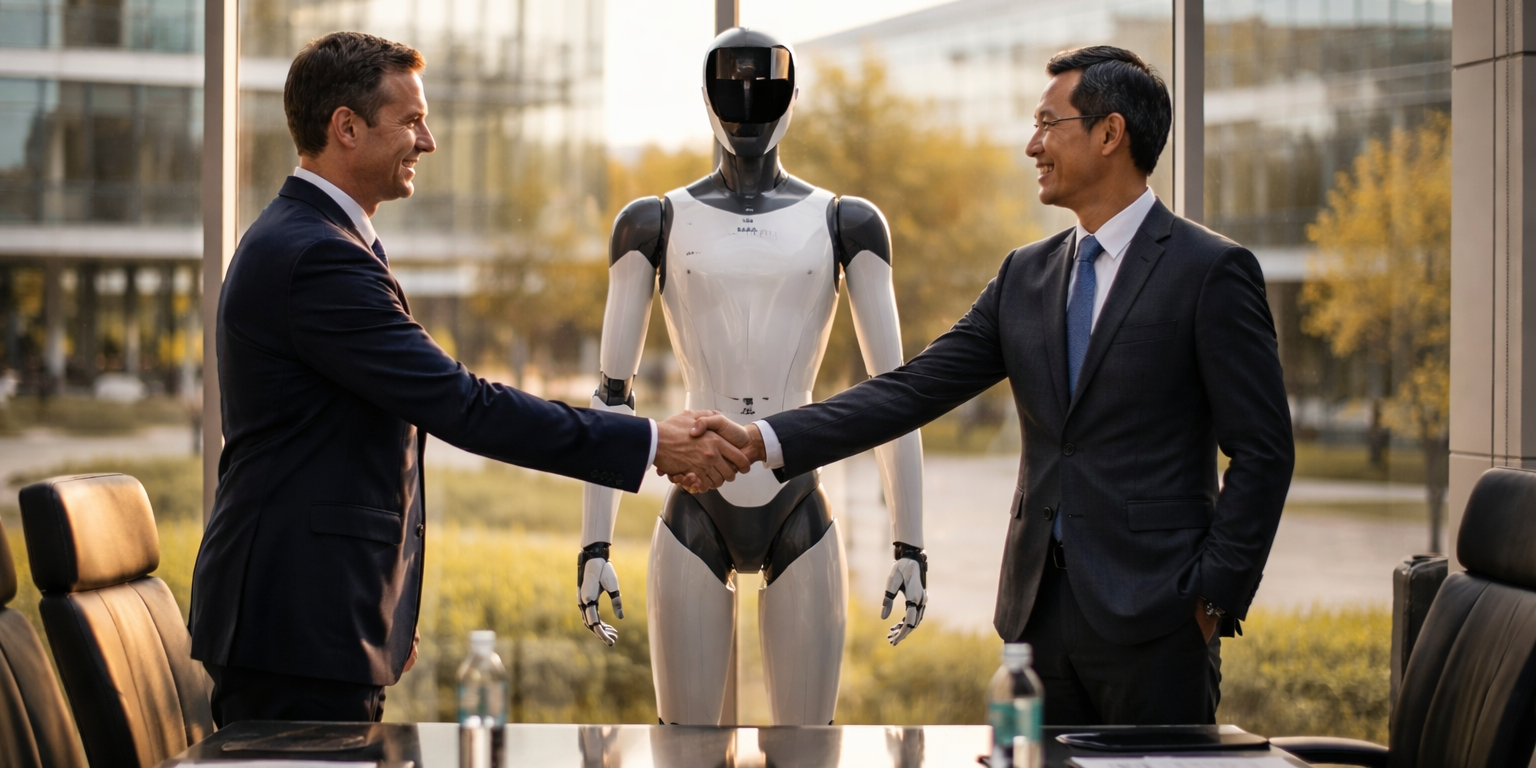
LG Corp. Chairman and CEO Kwang Mo Koo met NVIDIA founder Jensen Huang at the chipmaker's Santa Clara campus on August 13 to sign an agreement that positions the South Korean conglomerate as the latest major manufacturer betting on foundation models to accelerate humanoid development. The memorandum of understanding covers robotics, AI factories, and future mobility, but the centerpiece is a bipedal humanoid robot built on NVIDIA's Isaac GR00T platform, slated for unveiling in the first quarter of 2027. LG has not disclosed whether the robot will target manufacturing, logistics, or domestic applications, but the involvement of GR00T suggests the company expects the platform to handle generalized tasks rather than narrow industrial routines. The announcement comes seven months after NVIDIA introduced Isaac GR00T at its GTC developer conference in March 2026, positioning the foundation model as a training substrate for robots that must learn from human demonstration and adapt to unstructured environments.
LG's move into bipedal robotics follows years of investment in wheeled and tracked platforms, including the CLOi line of service robots deployed in hotels, airports, and retail spaces across South Korea and select international markets. The company shipped an estimated 4,200 CLOi units in 2025, according to figures compiled by Interact Analysis, placing it behind competitors like Pudu Robotics and Bear Robotics in the commercial service robot segment. A humanoid platform would represent a significant technical escalation. Bipedal locomotion introduces dynamic balancing challenges absent in wheeled systems, and NVIDIA's GR00T framework addresses those challenges through reinforcement learning models trained on simulation data generated in Isaac Sim, the company's physics-based environment. GR00T-trained robots demonstrated the ability to navigate uneven terrain, manipulate objects with varying compliance, and recover from external disturbances during NVIDIA's March demonstrations, though all footage released to date has featured prototype hardware from partners like Boston Dynamics and Agility Robotics rather than production-ready systems.
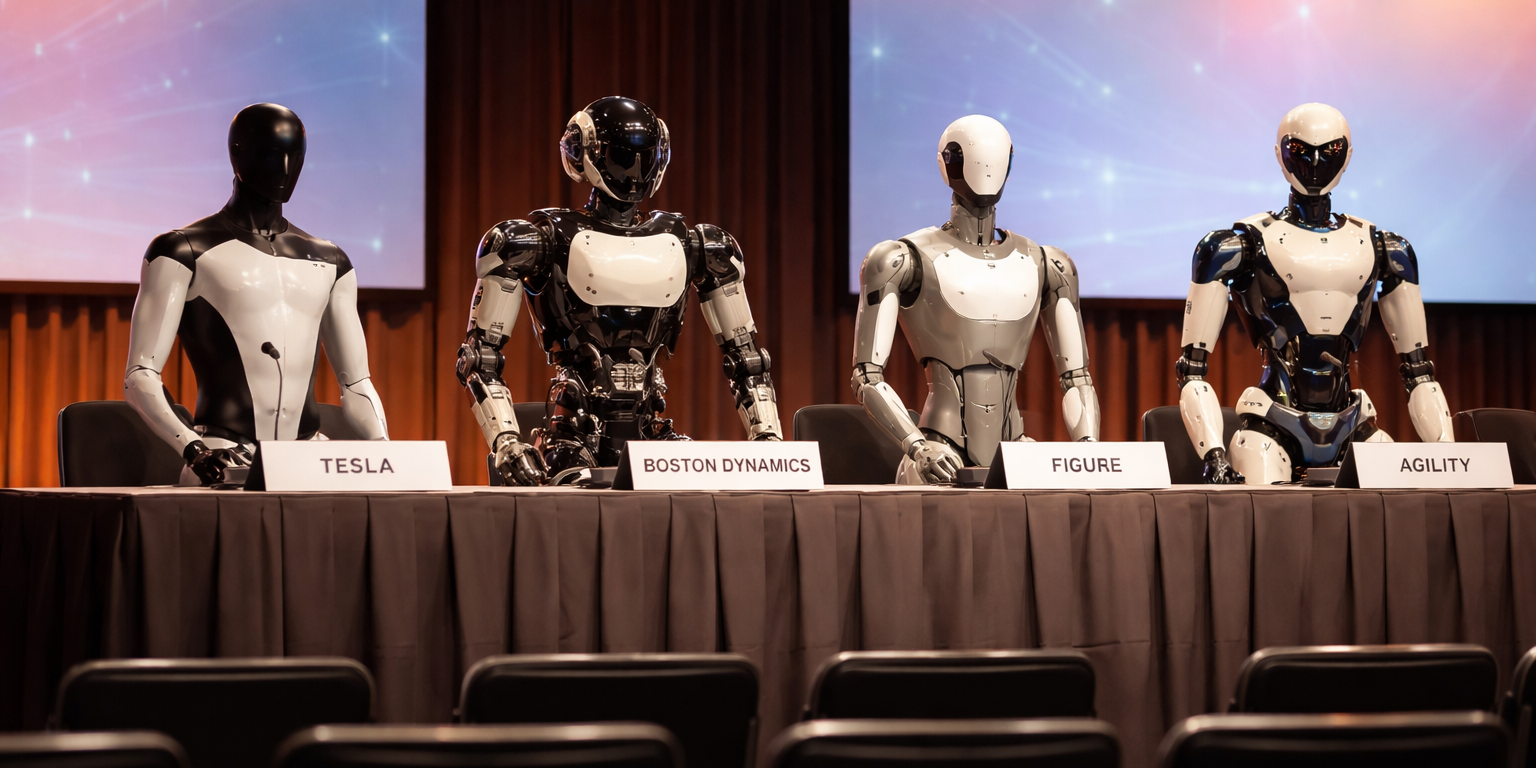
The timing of LG's announcement places the company in direct competition with a cohort of humanoid developers that have moved from prototype to pilot deployment over the past eighteen months. Figure AI announced in June 2026 that its Figure 02 humanoid had logged more than 10,000 task hours at a BMW manufacturing facility in South Carolina, handling parts kitting and subassembly insertion. Tesla disclosed in its Q2 2026 earnings call that 47 Optimus Gen 3 units were operating across three factories in Texas and California, primarily in battery module handling and quality inspection roles. Sanctuary AI secured a partnership with Magna International in May 2026 to deploy its Phoenix platform in automotive interiors production. All three companies have cited foundation models as critical to reducing training time, though each has developed proprietary architectures rather than adopting GR00T. LG's decision to build on NVIDIA's platform could accelerate time to market if the company leverages pre-trained behaviors from GR00T's simulation library, but it also ties the robot's capabilities to NVIDIA's roadmap and licensing terms, which have not been publicly detailed.
The memorandum signed by Koo and Huang extends beyond robotics to include AI factories and future mobility, language that suggests LG may integrate GR00T-trained systems into its automotive and smart home divisions. LG Electronics, the group's consumer and industrial products arm, has supplied battery systems and infotainment modules to General Motors, Stellantis, and Hyundai, and the company announced in April 2026 that it was developing an autonomous shuttle platform in partnership with Mobileye. NVIDIA's automotive division, which generated $1.3 billion in revenue during Q2 2026, has positioned its DRIVE Thor system-on-chip as the compute backbone for vehicles requiring both autonomous driving and in-cabin AI features. If LG's humanoid platform shares compute architecture with its automotive projects, the company could reduce hardware development costs and cross-pollinate training data between domains. The AI factories component of the agreement likely refers to LG's adoption of NVIDIA's DGX systems for internal model training, a pattern seen in partnerships NVIDIA has struck with Samsung, Foxconn, and Pegatron over the past two years.
The robotics industry has seen foundation model adoption accelerate through 2026, driven by the promise of transferring learned behaviors across robot morphologies and task domains without manual reprogramming. Physical Intelligence, a startup backed by Khosla Ventures and Sequoia Capital, released its π0 model in July 2026, demonstrating a single policy that could control wheeled, legged, and fixed-base manipulators after training exclusively in simulation. Covariant, which raised a $222 million Series D in February 2026, has deployed its RFM-1 foundation model in warehouse pick-and-place systems at customers including Crate & Barrel and Bonprix, claiming a 60 percent reduction in task training time compared to previous reinforcement learning pipelines. Google DeepMind published research in June 2026 showing that its RT-2-X model, trained on data from 22 robot types, could execute novel manipulation tasks with a 74 percent success rate on first attempt, up from 32 percent for models trained on single-robot datasets. NVIDIA's GR00T enters this landscape as a commercial offering rather than a research artifact, with the company positioning Isaac Sim and its associated compute infrastructure as a turnkey solution for manufacturers that lack the resources to build training pipelines in-house.
What to Watch: LG has not confirmed which manufacturing or service sectors will receive the humanoid platform after its Q1 2027 unveiling, but the company's existing customer relationships in hospitality and retail make those likely early deployment targets. NVIDIA's GTC 2027 conference, scheduled for March 16-20 in San Jose, could serve as the public debut venue given the partnership's timing and the event's historical role as a showcase for Isaac platform developments. Track whether LG discloses hardware partners for actuators and sensors, as the company has historically sourced critical components from external suppliers rather than vertically integrating production. Any announcements from LG's automotive division regarding DRIVE Thor integration will signal whether the humanoid project shares compute infrastructure with the company's mobility ambitions.