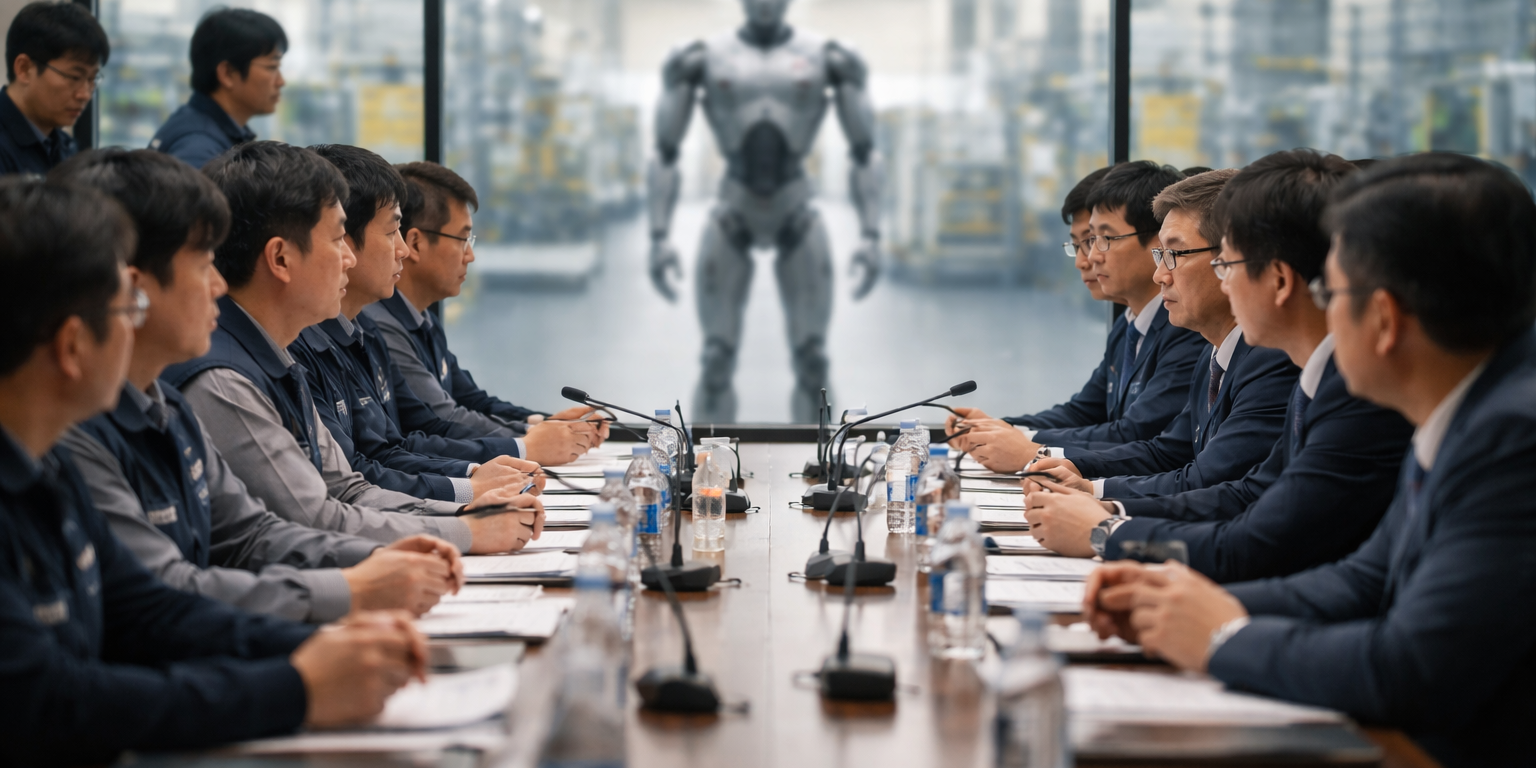
Hyundai Motor Company has informed its organized labor representatives that planned deployments of humanoid robots in manufacturing facilities will not be included in ongoing contract negotiations, according to statements released by both the company and the Korean Metal Workers Union. The automaker's position directly challenges a union demand, first issued in early 2026, that any introduction of autonomous humanoid systems on assembly lines be negotiated as part of the collective bargaining process. The union has represented more than 46,000 Hyundai workers across South Korea since the 1980s and has historically wielded significant influence over workplace policy at the conglomerate. Hyundai declined to specify which humanoid platforms it is evaluating or provide a timeline for pilot programs, citing competitive sensitivity.
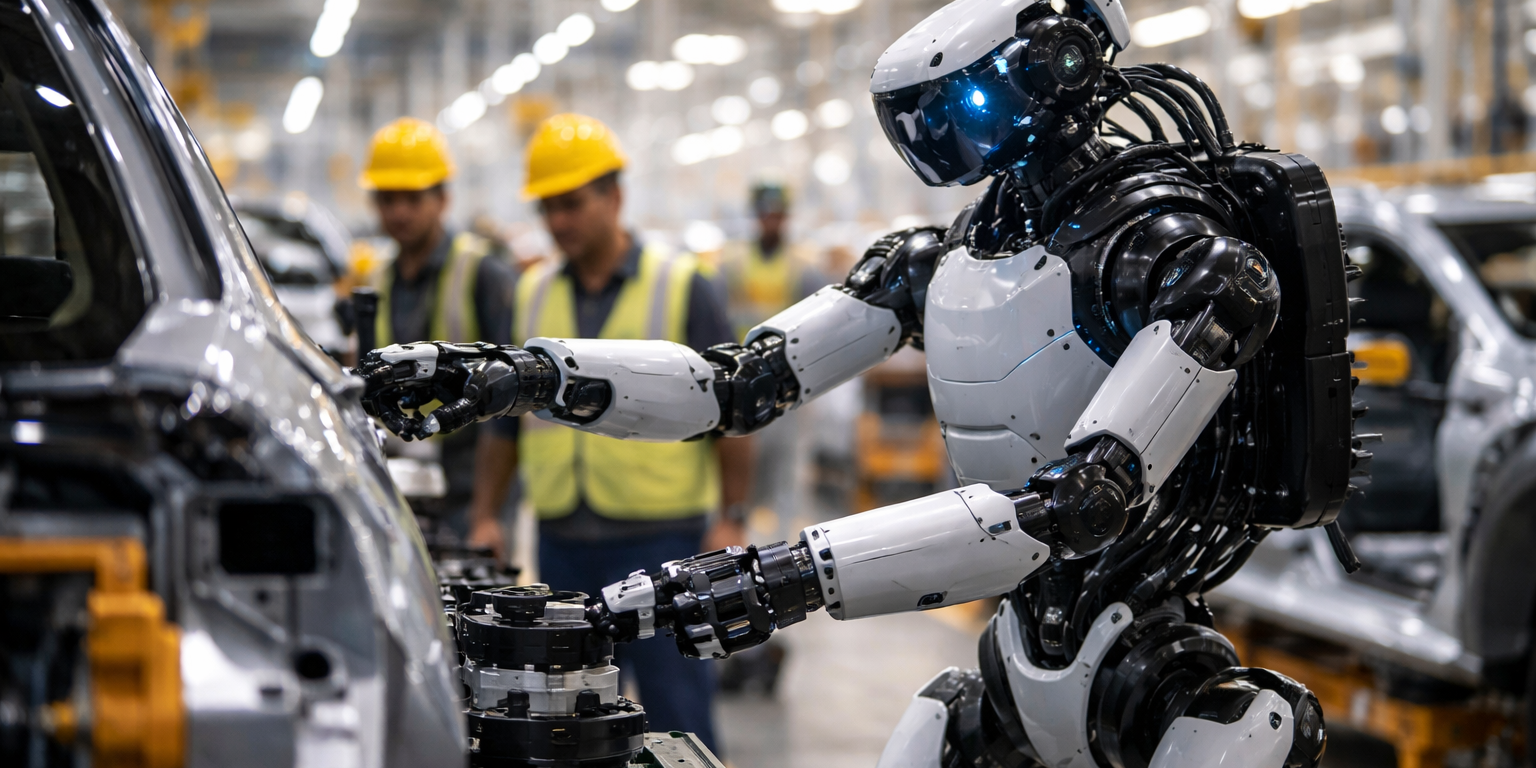
The dispute centers on a fundamental question now surfacing across the manufacturing sector: whether deployment of humanoid robots constitutes a change in working conditions subject to labor negotiation, or a capital investment decision reserved for management. Hyundai's reasoning, according to company representatives, is that humanoid systems fall under the same category as traditional industrial arms and automated guided vehicles, which have been introduced without union approval for decades. The Korean Metal Workers Union counters that bipedal robots capable of performing tasks historically done by humans cross a threshold that older automation did not. Union leadership points to the dexterity and adaptability of recent humanoid designs, arguing these machines are fundamentally different from fixed-position welding robots or conveyor systems. The union has not announced specific actions in response to Hyundai's stance, but has signaled that the issue will remain a priority in future negotiations.
Hyundai's interest in humanoid robotics is well-documented. The company acquired Boston Dynamics in 2021 for approximately $1.1 billion and has since invested heavily in both the robotics firm's quadruped Spot platform and its Atlas humanoid research program. In March 2024, Boston Dynamics publicly demonstrated an electric version of Atlas designed for commercial applications, and industry observers have speculated that Hyundai facilities could serve as early deployment sites. Separately, Hyundai has partnered with Sanctuary AI, Apptronik, and other humanoid developers through investment and pilot agreements. The automaker has not confirmed which platforms are under consideration for factory use, though executives have stated publicly that humanoid robots could address labor shortages in repetitive or physically demanding roles. South Korea faces one of the steepest demographic declines in the industrialized world, with the working-age population expected to contract by nearly 30 percent over the next three decades. That reality gives Hyundai a strong business case for automation, but also heightens union concerns about job security.
The collision between humanoid robotics and organized labor is no longer hypothetical. In the United States, the United Auto Workers has raised similar objections to Tesla's use of Optimus prototypes at its Fremont and Austin facilities, though those plants are not unionized. Mercedes-Benz faced pushback from IG Metall in Germany after announcing trials of Apptronik's Apollo humanoid at its Sindelfingen factory, leading to an agreement that robots would augment rather than replace workers in the near term. BMW, by contrast, secured works council approval for Figure AI trials at its Spartanburg plant by guaranteeing no layoffs tied to robot deployment through 2028. Hyundai's hardline position suggests the company believes it can proceed without similar accommodations, possibly banking on South Korea's less stringent co-determination laws compared to Germany. The risk for Hyundai is a protracted labor dispute at a time when the company is ramping production of electric vehicles and cannot afford extended work stoppages. The union, for its part, faces the challenge of drawing a line on automation without appearing to obstruct technological progress that could keep Hyundai competitive against Chinese rivals who are deploying robots at scale.
What to Watch: Hyundai's next quarterly earnings call, scheduled for October 2026, may provide clarity on whether the company intends to move forward with humanoid trials despite union opposition. The Korean Metal Workers Union holds its annual congress in late September, and observers expect a formal policy resolution on humanoid robotics to emerge from that gathering. Additionally, any announcement from Boston Dynamics regarding commercial availability of its electric Atlas platform will be scrutinized for hints about deployment timelines at Hyundai facilities.