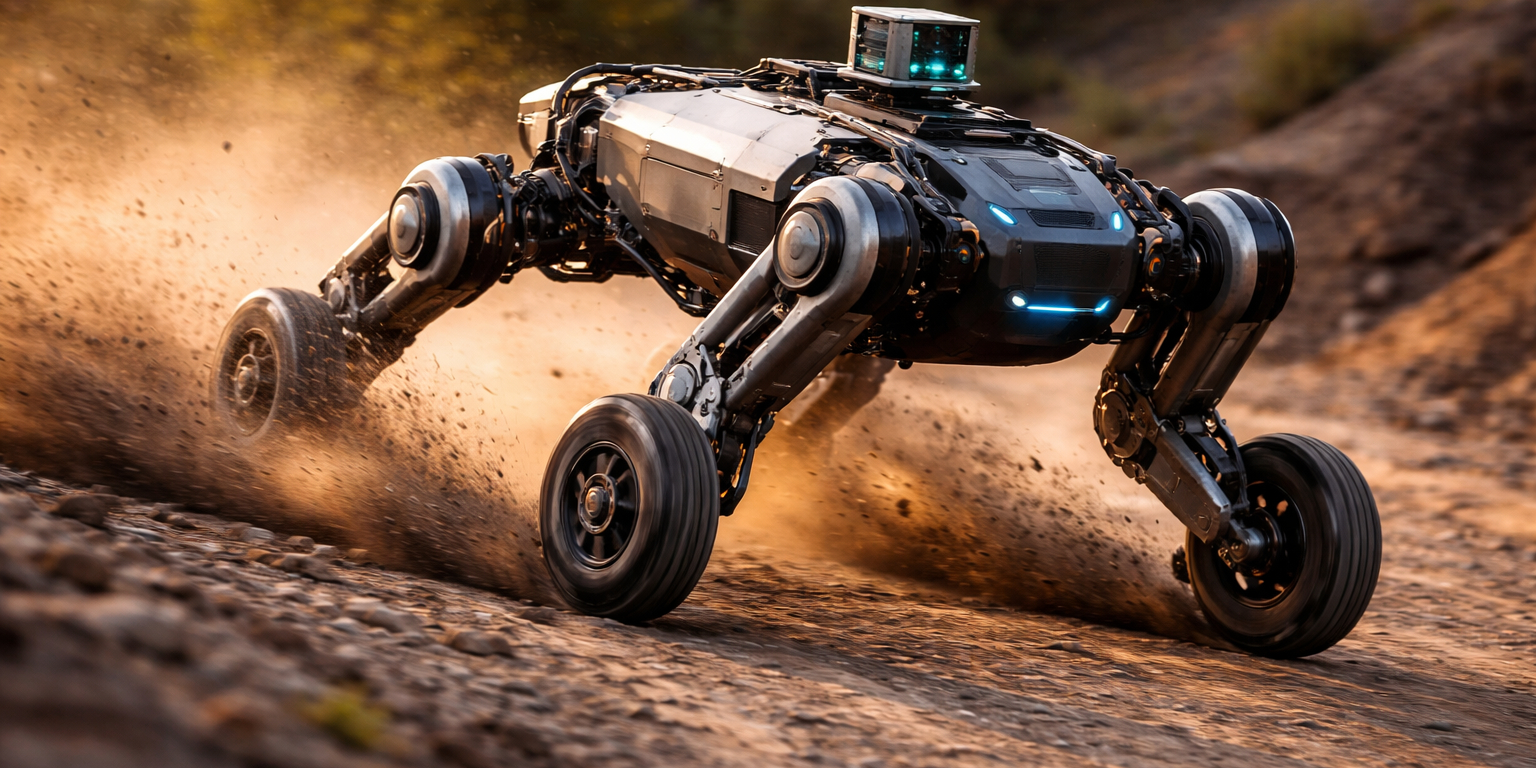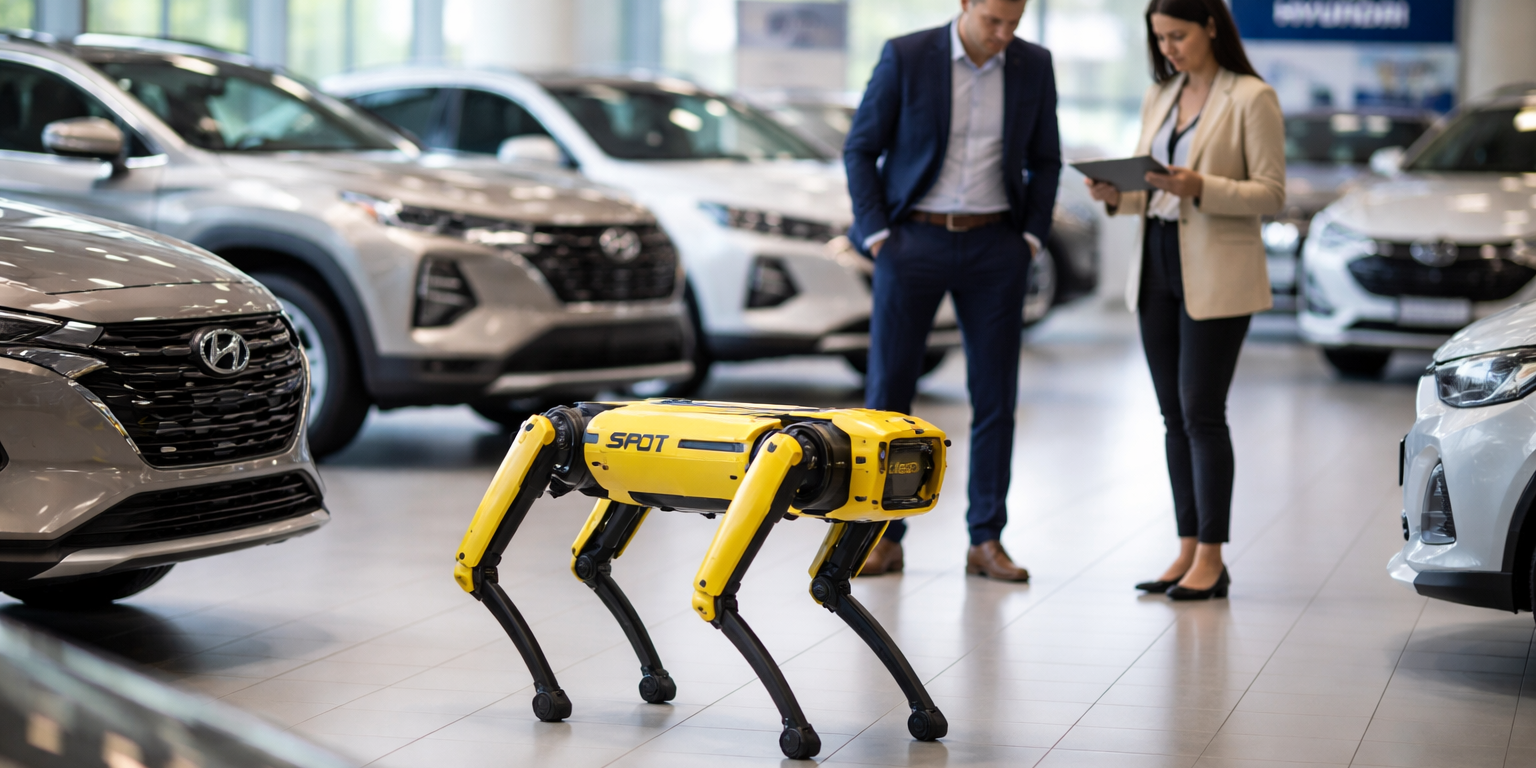
Hyundai Motor Group plans to sell Boston Dynamics robots through the same dealerships that currently move sedans and SUVs, a distribution approach that would mark a sharp departure from how the robotics industry has historically reached customers. The automaker's CEO disclosed the strategy in recent remarks, framing the dealership network as an underutilized asset capable of moving both Atlas humanoid robots and Spot quadrupeds into commercial and potentially residential markets. The proposal raises immediate questions about service infrastructure, sales training, and whether customers accustomed to negotiating lease terms on crossovers will respond to robotic systems priced in the six-figure range. Hyundai acquired Boston Dynamics from SoftBank in 2021 for $1.1 billion, a transaction that placed one of the world's most recognizable robotics brands under the control of an automotive conglomerate with more than 1,200 dealerships in North America alone.
Boston Dynamics has spent decades refining its hardware but has struggled to scale commercial deployments beyond niche industrial applications. Spot, the company's quadruped robot, sells for approximately $74,500 per unit and has found traction in facility inspections, construction site monitoring, and hazardous environment surveys. Atlas, the bipedal humanoid platform, remains primarily a research tool, though Boston Dynamics executives have hinted at commercial readiness timelines stretching into 2027 and beyond. Hyundai's dealership plan appears designed to solve a distribution problem that has vexed the entire humanoid robotics sector: how to move products that require demonstration, customization, and ongoing service relationships into the hands of buyers who may lack in-house robotics expertise. Auto dealerships already maintain service bays, parts inventories, and staff trained to explain complex mechanical systems to customers who range from fleet managers to individual consumers. Whether that infrastructure translates to robotics remains an open question, but Hyundai's vertical integration gives it room to experiment in ways pure-play robotics companies cannot.
The automotive industry has been circling robotics for years, primarily as a customer rather than a seller. Factory floors across Detroit, Stuttgart, and Ulsan already bristle with industrial arms from ABB, KUKA, and Fanuc, machines that weld chassis components and install windshields with millimeter precision. Hyundai's pivot positions the company as both user and vendor, a dual role that could inform product development in ways that benefit its manufacturing operations while generating a new revenue stream. The company has invested heavily in Boston Dynamics' engineering roadmap since the acquisition, reportedly funneling resources into manipulation capabilities and battery life improvements that would make humanoid platforms viable for warehouse work and logistics operations. Those environments overlap heavily with automotive supply chain challenges, creating a feedback loop where Hyundai's internal needs drive features that also appeal to external buyers. The dealership distribution model could also serve as a testbed for service models. If a logistics company in Ohio buys three Atlas units through a local Hyundai dealership, does that dealership handle repairs, or does Boston Dynamics dispatch technicians from a centralized hub? The answers will shape gross margins and customer satisfaction in equal measure.
Competitors are watching closely. Figure AI, which raised $675 million in a Series B round earlier in 2026, sells directly to enterprise customers and has shown little interest in consumer channels. Tesla's Optimus program remains tightly coupled to the company's factories, with Elon Musk indicating that external sales, if they happen at all, will occur through Tesla's existing retail footprint rather than third-party dealers. Agility Robotics, whose Digit humanoid already operates in Amazon and GXO Logistics facilities, has built a sales team focused on Fortune 500 logistics operators, not retail experimentation. Hyundai's dealership gambit represents a fundamentally different theory: that robotics adoption will accelerate when potential buyers can see, touch, and negotiate financing on machines in familiar settings, much as they do with vehicles. The strategy carries risk. Dealership sales staff lack robotics training, and the customer demographics for a $200,000 humanoid robot differ sharply from those browsing the Tucson inventory. But the automotive sector has successfully sold commercial trucks, fleet vehicles, and specialized equipment through dealerships for decades, suggesting the model isn't inherently unworkable. Hyundai's willingness to experiment reflects both the scale of its dealership network and the pressure to justify its billion-dollar bet on Boston Dynamics. Revenue from robotics remains a rounding error compared to vehicle sales, but the company has signaled that it expects Boston Dynamics to reach profitability by decade's end, a target that will require moving far more units than the company's current production supports.
What to Watch: Monitor whether Hyundai announces pilot dealerships by the fourth quarter of 2026, particularly in markets with high industrial activity like the Midwest or Texas. Track Boston Dynamics' Atlas production ramp and any public pricing announcements, which have remained conspicuously absent despite growing interest from logistics operators. Watch for competing automotive manufacturers, especially those with robotics investments like Honda or GM's Cruise subsidiary, to comment on or mimic the dealership distribution strategy. Finally, pay attention to service agreements and warranty structures Hyundai files with regulators, as these will reveal how the company plans to handle post-sale support and whether dealerships bear any liability for robot performance.