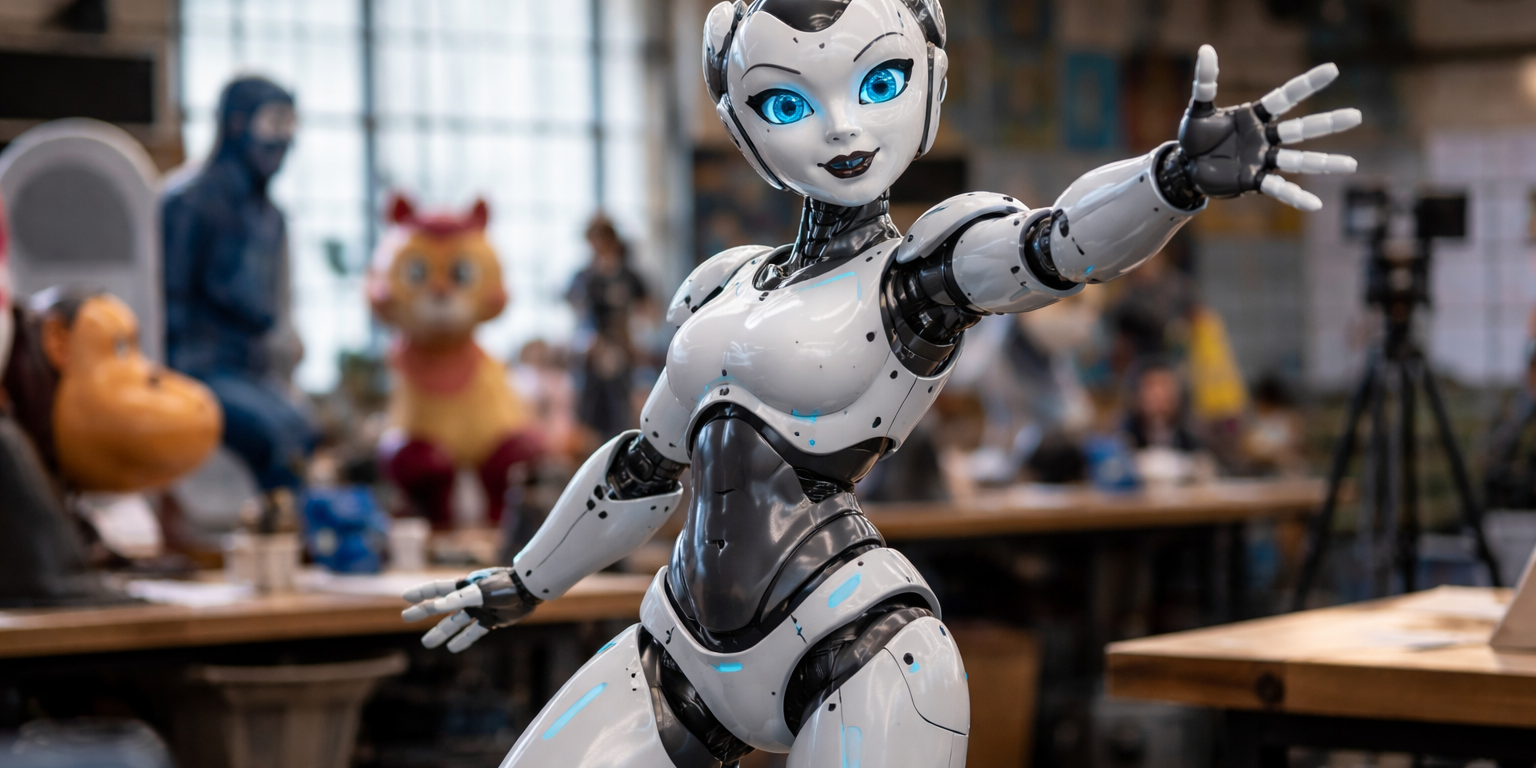
AI2 Robotics pulled in roughly $735 million last week at a valuation approaching $3 billion, marking one of the most substantial funding events in the humanoid robotics sector to date. The Shenzhen-based company manufactures wheeled humanoid robots, a design choice that sidesteps the significant locomotion challenges facing bipedal systems while still offering anthropomorphic upper-body manipulation. The round arrived amid a broader capital surge into humanoid platforms, with investors betting that general-purpose robots will eventually find commercial traction despite uncertain near-term deployment prospects. AI2's CEO has notably refrained from promising consumer applications anytime soon, a departure from the more ambitious timelines floated by some competitors. The valuation places AI2 among the most highly valued private robotics companies globally, even though the firm has yet to demonstrate large-scale commercial deployments outside of controlled pilot programs.
The humanoid robotics market has absorbed an extraordinary volume of capital over the past eighteen months. Apptronik, the Austin-based company known for its Apollo humanoid, raised significant funding earlier in 2026, joining a cohort that includes Figure AI, 1X Technologies, Sanctuary AI, and Agility Robotics in collectively drawing billions from venture firms, strategic corporates, and sovereign wealth funds. Unlike traditional industrial robotics, where return on investment calculations are well understood, humanoid platforms remain largely unproven in real-world operational environments. The thesis driving investment centers on versatility: a bipedal or wheeled humanoid can theoretically navigate human-built infrastructure and operate tools designed for human hands, eliminating the need for specialized automation in lower-volume tasks. But that versatility comes at a steep cost. Current humanoid prototypes range from $150,000 to over $250,000 per unit, and most require substantial on-site engineering support. AI2's wheeled design may reduce mechanical complexity and improve reliability, but it also limits the robot's ability to traverse stairs, uneven terrain, or other vertical obstacles common in warehouses, retail stores, and residential settings.
Despite the funding enthusiasm, executives across the sector have grown more cautious in their public statements about deployment timelines. AI2's CEO explicitly declined to forecast when the company's robots might reach consumer households, a reflection of the sobering technical realities the industry now confronts. Manipulation tasks that appear simple to humans—folding laundry, loading a dishwasher, or organizing groceries—demand perception, dexterity, and real-time decision-making that current systems cannot reliably execute. Most humanoid developers are instead targeting structured industrial and logistics environments, where tasks are more predictable and failure modes easier to manage. Companies like Agility Robotics have focused narrowly on material handling in warehouses, while Figure AI has announced pilot programs with automotive manufacturers. AI2's wheeled platform suggests a similar industrial focus, trading mobility range for mechanical simplicity and durability. The company has not disclosed specific customer names or deployment volumes, but industry observers note that Shenzhen's proximity to Chinese manufacturing hubs and the country's aggressive robotics adoption policies could provide AI2 with a substantial domestic market before any Western expansion.
The capital influx into humanoid robotics contrasts sharply with the more measured funding environment for other automation categories. Traditional industrial arms, mobile robots, and collaborative robots have all seen flat or declining venture investment as the market matures and consolidates. Humanoid platforms, by contrast, remain speculative bets on a future where general-purpose robots become economically viable. Investors are effectively funding a multi-year research and development cycle with no guarantee of commercial success. The AI2 round, like those before it, reflects confidence that advances in machine learning, computer vision, and actuator technology will eventually converge to produce a system that can be deployed profitably at scale. But the gap between current capability and that vision remains wide. Even optimistic projections place widespread humanoid deployment in industrial settings at least three to five years out, with consumer applications likely a decade or more away. AI2's leadership appears to recognize this reality, which may explain the tempered rhetoric around timelines even as the company secures near-unicorn valuation.
What to Watch: Monitor whether AI2 Robotics announces pilot deployments with named manufacturing or logistics partners in China before year-end, which would validate the wheeled humanoid approach in real-world settings. Track funding rounds from U.S.-based competitors like Apptronik and Sanctuary AI through Q4 2026, as sustained capital inflows will determine which companies can afford the extended R&D cycles required. Watch for technical benchmarks from any humanoid developer demonstrating reliable, unsupervised task execution over multi-week periods, as this would mark a significant inflection point for commercial viability. Finally, pay attention to any strategic investments or acquisitions by major industrial automation incumbents like ABB, KUKA, or Fanuc, which could signal established players hedging against disruption from humanoid platforms.