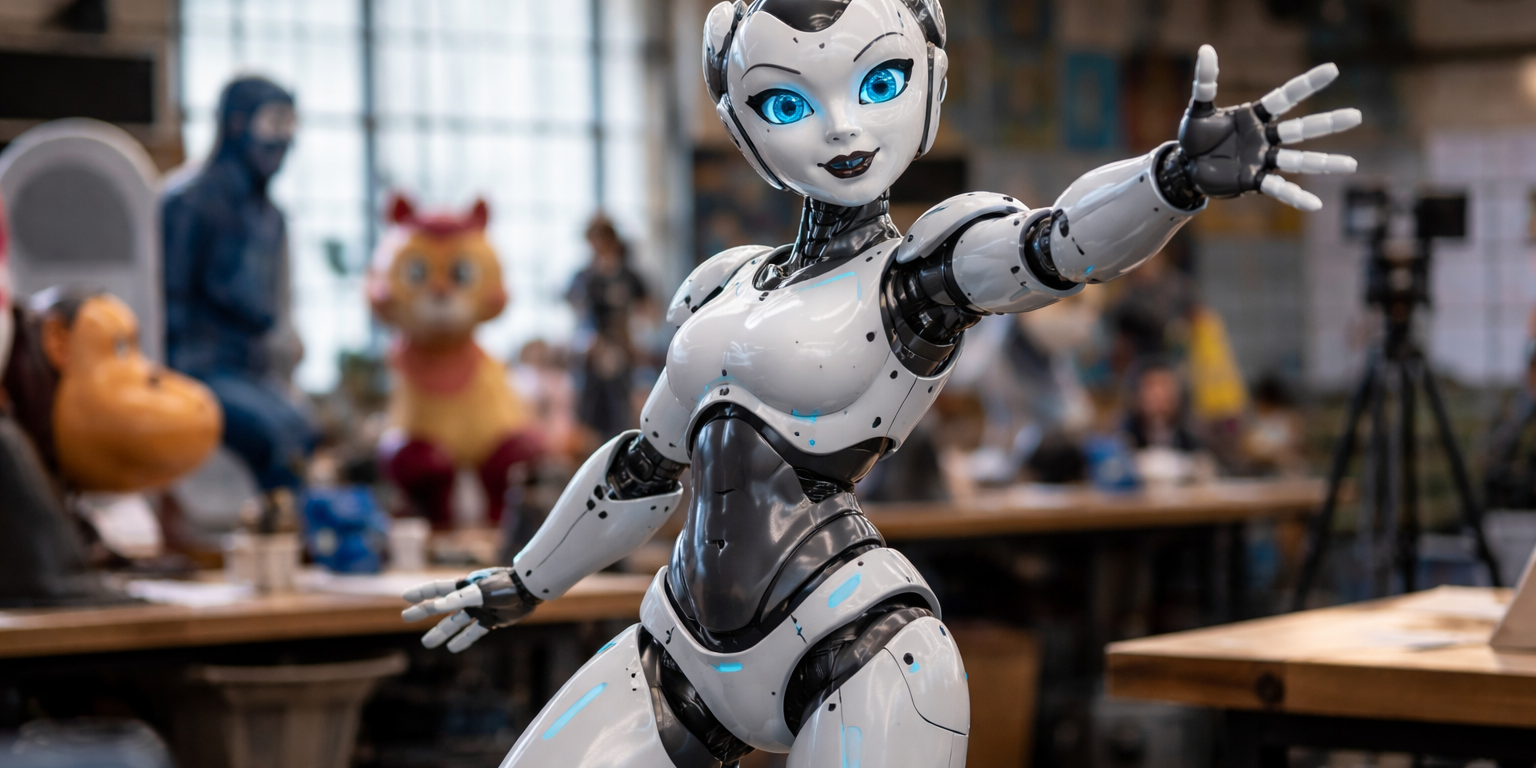

Travis Kalanick closed a $1.7 billion financing round for ATOMS, a robotics startup he founded after leaving Uber in 2017 and spending nearly a decade investing in CloudKitchens and other infrastructure ventures. The capital represents one of the largest early-stage commitments to a robotics company in the industry's history, surpassing the $675 million Figure AI raised at a $3.2 billion valuation earlier this year. Kalanick has kept ATOMS operating in stealth mode since its formation, revealing little about its technical approach beyond broad statements about automating physical work across industrial settings. The company name itself—an acronym whose meaning Kalanick has not publicly disclosed—offers no clarity on whether ATOMS focuses on manipulation, mobility, perception systems, or some combination of all three.
Kalanick's return to building a company rather than simply funding them marks a shift for the entrepreneur who transformed urban transportation before a contentious exit from Uber's leadership. Between 2017 and 2024, he poured capital into CloudKitchens, a network of commissary facilities designed for delivery-only restaurants, and made smaller bets on real estate technology and logistics software. Those investments reflected a consistent thesis: software alone cannot solve the messiest problems in physical infrastructure. ATOMS appears to take that conviction to its logical conclusion, applying capital and engineering resources directly to the robots, conveyors, sensors, and control systems that move goods through factories and warehouses. Industry observers note that Kalanick's experience scaling Uber's operations in hundreds of cities—managing thousands of vehicles, drivers, and logistics variables in real time—translates more directly to industrial robotics than to consumer AI or SaaS products. The $1.7 billion war chest gives ATOMS runway to develop hardware in-house, acquire smaller robotics firms with proven technology, or both.
The financing arrives as industrial automation attracts unprecedented attention from venture capitalists and corporate investors. Labor shortages in manufacturing, rising wage pressure in logistics, and supply chain fragility exposed by pandemic disruptions have combined to make robotics a strategic priority for Fortune 500 manufacturers and third-party logistics providers. Companies like Boston Dynamics, which Hyundai acquired for $1.1 billion in 2021, have demonstrated that mobile manipulation robots can perform tasks ranging from pallet moving to quality inspection in live production environments. Startups including Robust AI, Pickle Robot, and Dexterity have raised nine-figure rounds to deploy piece-picking and case-handling systems in warehouses operated by FedEx, DHL, and major retailers. ATOMS enters this competitive landscape with financial resources that dwarf most rivals but without publicly demonstrated technology or customer deployments. Kalanick has not revealed whether ATOMS builds general-purpose platforms, vertical-specific solutions for industries like automotive or pharmaceuticals, or enabling technologies like vision systems and motion planning software that other integrators could license.
The implications for the robotics supply chain and talent market are immediate. A $1.7 billion raise signals that ATOMS will compete aggressively for engineers with experience in manipulation, computer vision, and real-time control systems—skills in short supply as companies from Tesla to Amazon expand their own robotics divisions. The financing also raises questions about ATOMS' go-to-market strategy. CloudKitchens demonstrated Kalanick's willingness to own physical infrastructure and operate it as a service rather than selling discrete products. If ATOMS follows that model, it could deploy fleets of robots in customer facilities under performance-based contracts, retaining ownership of the hardware and collecting recurring revenue tied to throughput or uptime metrics. Such an approach would differentiate ATOMS from equipment manufacturers like FANUC and ABB, which sell robots outright, and from newer players like Covariant, which licenses AI software to run on third-party hardware. Alternatively, ATOMS might target horizontal infrastructure—components, subsystems, or platforms that multiple industries could adopt—similar to how NVIDIA provides compute modules that dozens of humanoid robot makers now integrate. Without public statements from Kalanick or ATOMS executives, industry analysts are left parsing hiring patterns and patent filings for clues about the company's technical direction.
What to Watch: Monitor ATOMS' hiring velocity on LinkedIn for concentrations in specific engineering disciplines—if the company recruits heavily in perception and grasping, expect manipulation-focused products; if it adds logistics software talent, integration with warehouse management systems may be the priority. Track whether Kalanick appears at industry events like MODEX 2027 or IMTS 2026, either as a speaker or exhibitor, which would signal commercial readiness. Watch for partnership announcements with Tier 1 automotive suppliers, contract manufacturers, or 3PL operators, any of which could provide early deployment sites and validation. Pay attention to CloudKitchens' robotics footprint—if ATOMS technology appears in those facilities first, it would confirm a strategy of using Kalanick's existing infrastructure portfolio as a captive customer base.