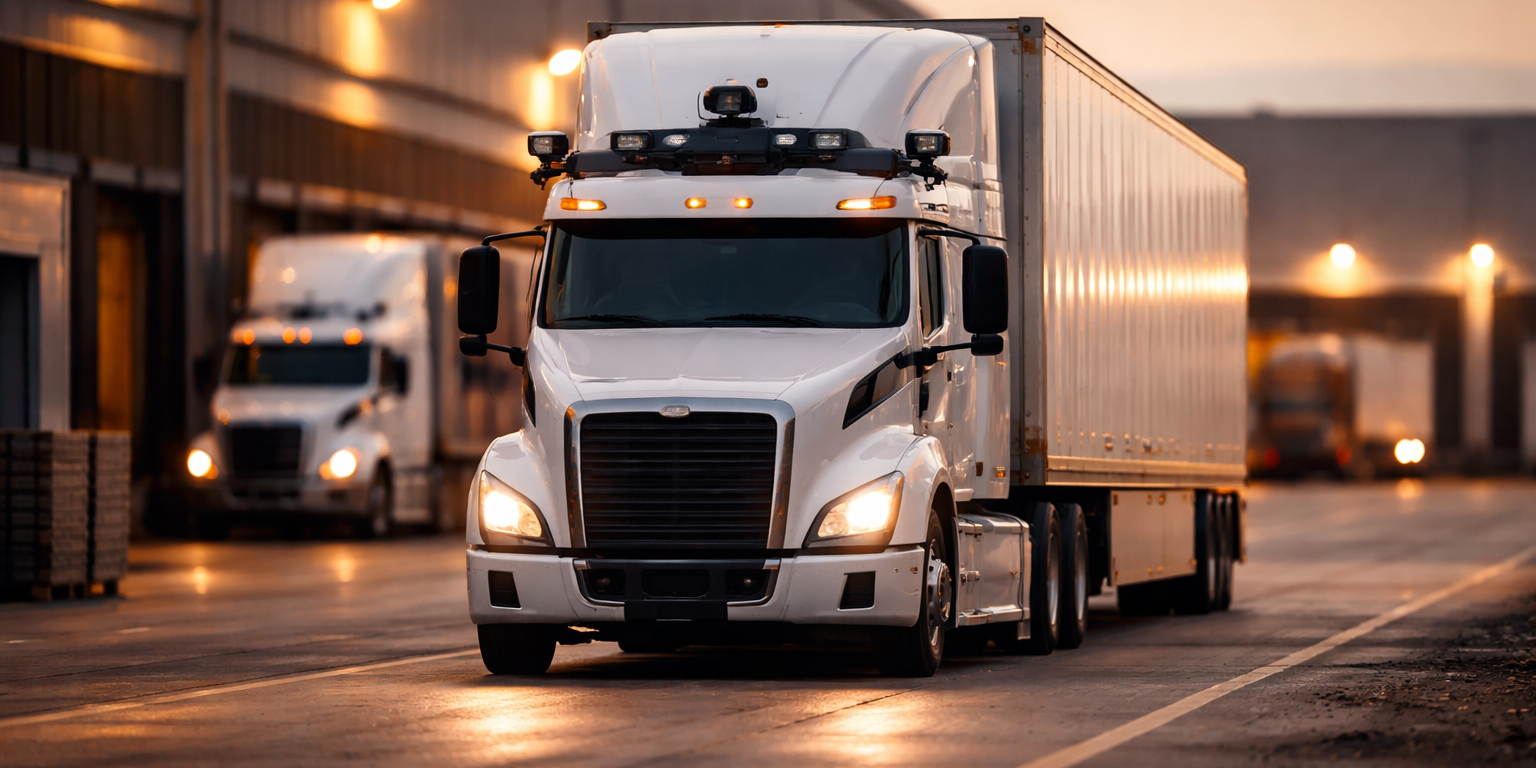
Humble Robotics has secured $24 million in Series A funding to develop autonomous systems for Class 8 freight trucks operating in short-haul and middle-mile logistics corridors. The Palo Alto-based company disclosed the round this week but did not name lead investors or participating firms. The capital will fund sensor integration, simulation infrastructure, and pilot deployments with unnamed logistics partners scheduled to begin testing in the second quarter of 2026. The company claims its approach differs from competitors by focusing on geofenced routes between distribution centers rather than long-haul interstate highways, a strategy designed to reduce regulatory complexity and accelerate revenue generation.
The autonomous trucking sector has attracted more than $14 billion in cumulative investment since 2015, according to PitchBook data, yet commercial deployments remain limited to controlled pilot programs. TuSimple, once valued at $8.5 billion, delisted from Nasdaq in 2024 after abandoning its U.S. operations. Aurora Innovation continues to operate driverless trucks on Interstate 45 between Dallas and Houston under a partnership with FedEx, representing one of the few sustained revenue-generating programs in the industry. Kodiak Robotics operates similar routes in Texas and has begun expansion into Florida. Humble Robotics enters this landscape with a narrower operational scope, betting that repetitive regional routes with predictable traffic patterns will prove easier to monetize than coast-to-coast freight hauling. The company has not disclosed whether it develops proprietary vehicle platforms or retrofits existing truck models with autonomous hardware.
The logistics industry faces documented labor constraints that Humble Robotics and its competitors aim to exploit. The American Trucking Associations reported a shortage of approximately 78,000 drivers in 2023, a figure projected to exceed 160,000 by 2030 as retirement rates outpace new commercial driver's license acquisitions. Average annual turnover at large truckload carriers reached 94 percent in the first half of 2024, according to industry surveys. Driver compensation has climbed accordingly, with median pay for long-haul truckers exceeding $62,000 annually, up 18 percent since 2020. These economics create pressure on carriers to reduce per-mile labor costs, particularly on predictable short-haul routes where autonomous systems can operate without sleeper cabs or hours-of-service limitations. Humble Robotics has not published cost-per-mile projections or disclosed pricing models for its technology, leaving open questions about capital expenditure requirements and payback periods for potential customers.
The technical architecture underpinning Humble Robotics' platform remains largely undisclosed. Successful autonomous freight systems typically integrate lidar arrays, radar units, camera clusters, and high-definition mapping with perception algorithms capable of identifying lane markings, traffic signals, pedestrians, and unpredictable road debris. Companies like Waymo Via and Aurora use custom compute platforms processing sensor data at rates exceeding one gigabyte per second. Simulation environments allow developers to test edge cases across millions of virtual miles before road deployment. Humble Robotics has not published technical papers detailing its sensor fusion approach, machine learning frameworks, or simulation methodologies. The company's website offers minimal technical specification, focusing instead on labor shortage narratives and sustainability claims tied to optimized routing and fuel efficiency. Industry observers note that credible autonomous developers typically publish safety case frameworks and disengagement rate data to build trust with regulators and customers. Humble Robotics has not yet released such documentation.
What to Watch: Humble Robotics is expected to announce pilot partners and specific deployment routes in Q2 2026. Monitor whether the company publishes disengagement data or applies for California DMV autonomous testing permits, which require public disclosure of safety metrics. Watch for technical hires from established players like Aurora, Waymo, or TuSimple, which would signal the depth of in-house engineering capability. Track whether major logistics operators such as J.B. Hunt, Schneider National, or XPO participate in trials, as carrier endorsements significantly influence investor confidence and regulatory acceptance in autonomous freight.