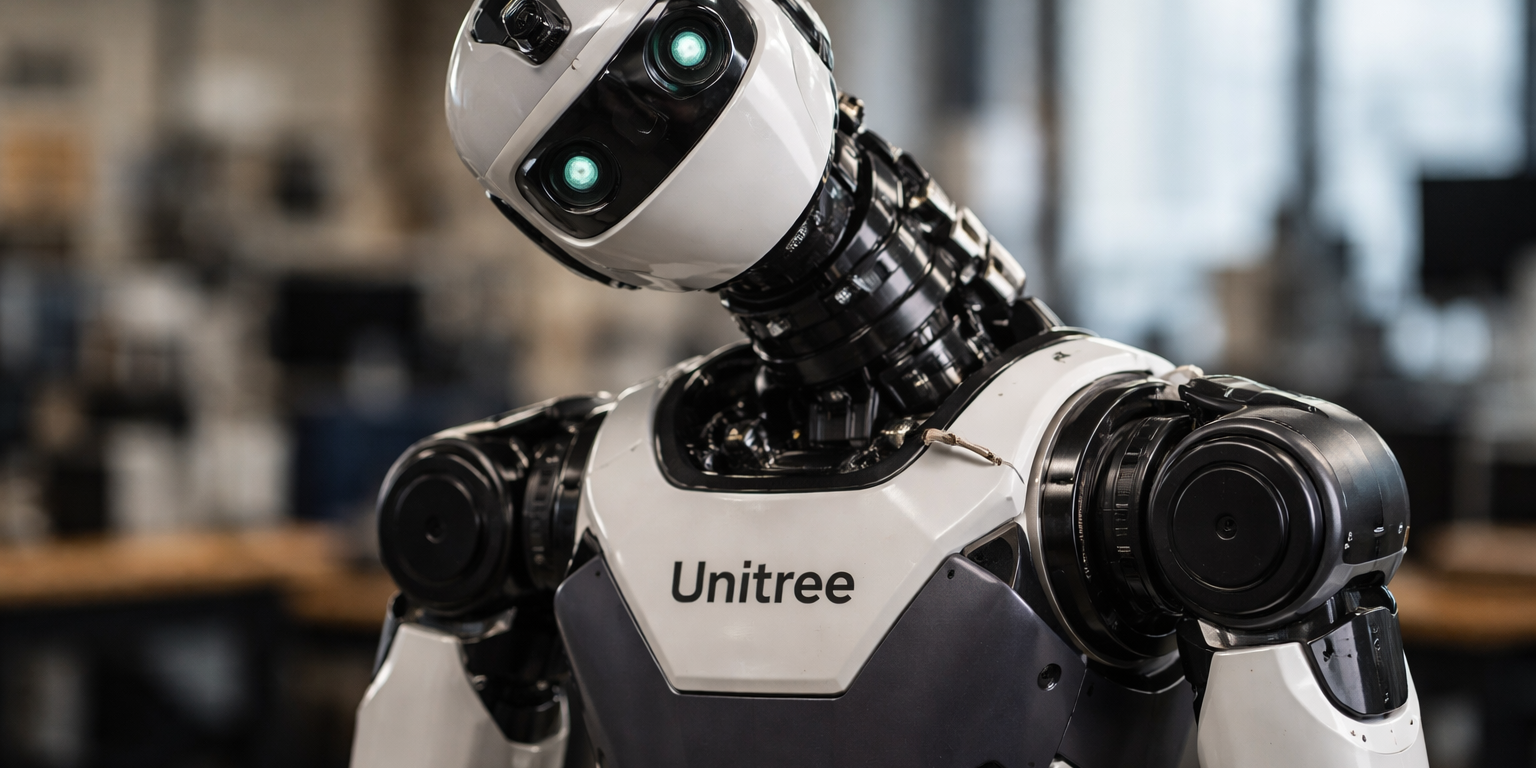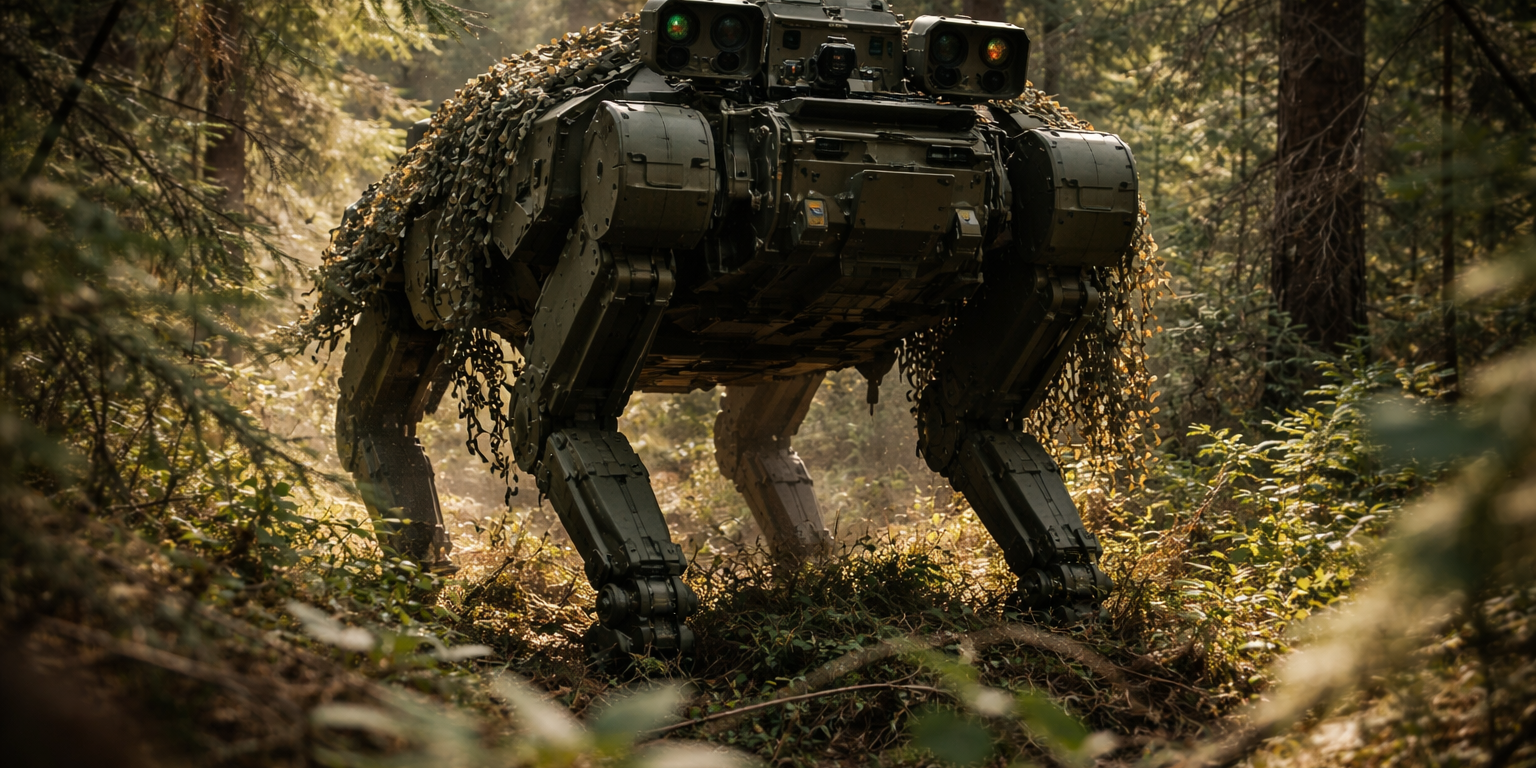
Military robots equipped with EdgeRunner AI's neural network successfully completed reconnaissance missions in recent field trials after all external communications were severed, according to technical documents reviewed by multiple defense contractors. The onboard processing capability eliminates the dependency on Starlink satellite links or cloud computing that has defined the current generation of semi-autonomous battlefield systems. For defense robotics programs, the implications are immediate: autonomous ground vehicles and aerial drones can now sustain complex operations in environments where jamming, terrain masking, or adversary electronic warfare would previously have rendered them inoperable.
EdgeRunner AI, founded in Palo Alto in 2023, developed the system specifically to address what Pentagon planners call the "lost link" problem. Current military robots typically offload sensor processing and decision-making to remote servers, a design choice driven by weight constraints and thermal management challenges in small platforms. When connectivity drops, most platforms either abort the mission or enter a holding pattern. EdgeRunner's approach runs the entire neural network locally using custom silicon optimized for inference rather than training. The company has not disclosed power consumption figures, but industry engineers estimate the system draws between 15 and 40 watts depending on sensor load, roughly equivalent to existing onboard computers already present in many tactical robots. The defense applications team at EdgeRunner has focused on ground vehicles between 50 and 400 pounds, a category that includes explosive ordnance disposal robots, reconnaissance platforms, and resupply drones.
The technical architecture differs sharply from civilian autonomous systems deployed in warehouses or on highways. EdgeRunner's network prioritizes mission completion over safety margins, a trade-off acceptable in military contexts but unthinkable in commercial robotics. The system uses what the company describes as a "degraded operations" mode: when input quality falls below threshold levels due to smoke, dust, or sensor damage, the robot continues moving based on prior map data and inertial guidance rather than stopping to await human instruction. Multiple defense contractors have tested the technology under non-disclosure agreements, with at least two programs incorporating EdgeRunner processing into prototypes scheduled for demonstration events in late 2026. The appeal to military buyers is straightforward. Adversaries have demonstrated sophisticated electronic warfare capabilities in multiple theaters, and reliance on continuous satellite connectivity creates a single point of failure. An autonomous platform that can complete a patrol route, identify targets, or return to base without any external input changes the calculus for mission planning in contested environments.
Broader adoption depends on certification timelines and integration costs. Military robotics programs move through structured testing phases that typically span 18 to 36 months from prototype to field deployment. EdgeRunner has not announced contracts with prime defense contractors, though the company's investor list includes several venture firms with established defense portfolios. The competitive landscape includes both established players like Shield AI, which focuses on aircraft autonomy, and newer entrants targeting ground systems. The regulatory environment remains fluid, particularly around autonomous weapons systems, but processing that enables mobility and reconnaissance without direct fire control faces fewer policy hurdles. For robotics engineers, the technical challenge EdgeRunner claims to have solved centers on model compression and inference speed. Neural networks capable of real-time sensor fusion and path planning generally require thousands of parameters and multiple forward passes per second, creating thermal and power budgets incompatible with small battery-powered platforms. Achieving acceptable performance without cloud offloading typically requires purpose-built accelerators rather than general-purpose processors. EdgeRunner has filed multiple patent applications covering network pruning techniques and hardware-software co-design methods, though the company has not published peer-reviewed benchmarks comparing its system to alternatives.
What to Watch: EdgeRunner AI is expected to demonstrate its system at the Association of the United States Army conference in October 2026, potentially with a named prime contractor partner. Monitor patent filings from competing firms, particularly those related to offline inference and battlefield autonomy. Track Department of Defense solicitations in the third and fourth quarters of 2026 for language around "denied, degraded, intermittent, and limited" (DDIL) communications environments, which signals requirement shifts favoring onboard processing. Finally, observe whether any of the major defense electronics suppliers announce acquisitions of venture-backed autonomy startups, a pattern that has accelerated as traditional contractors seek to integrate AI capabilities developed outside their core engineering teams.