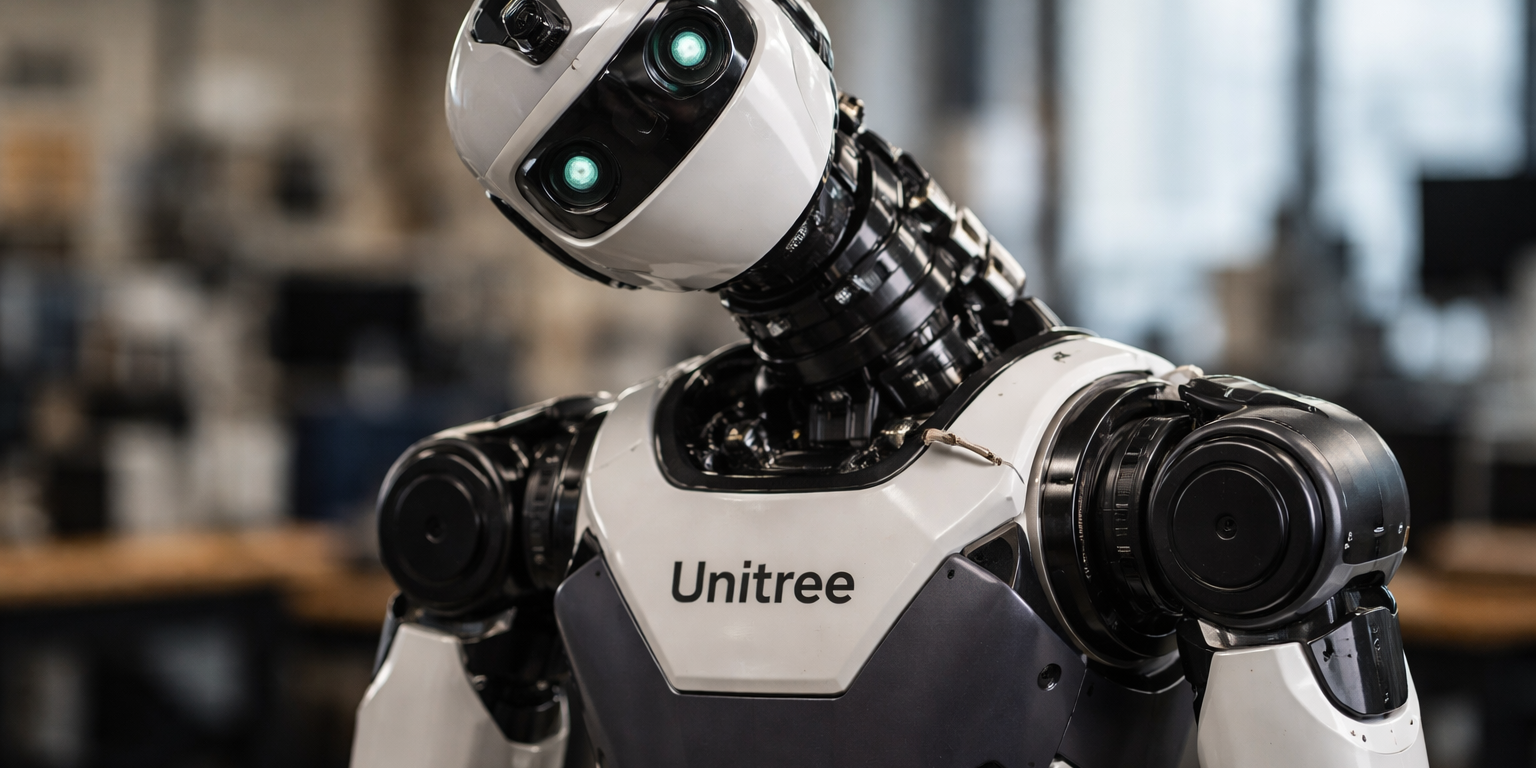
Unitree Technology has filed for an initial public offering on Shanghai's STAR Market that could value the robotics manufacturer at more than 50 billion yuan ($7.4 billion), according to documents reviewed by Citic Securities. The Hangzhou-based company, which produces quadruped robots and humanoid platforms, would enter public markets at a valuation roughly triple that of comparable Western robotics firms on a revenue multiple basis. Citic Securities is serving as lead underwriter on the offering, which has not yet received final regulatory approval from the China Securities Regulatory Commission. The filing comes as Chinese robotics companies face mounting pressure to demonstrate commercial traction after years of subsidy-driven development.
Unitree built its reputation on low-cost quadruped robots that undercut Boston Dynamics pricing by as much as 90 percent. The company's Go2 model retails for approximately $1,600, compared to roughly $75,000 for Boston Dynamics' Spot. That pricing strategy drove unit sales past 30,000 robots across industrial inspection, public safety, and research applications by mid-2025, according to company disclosures cited in the IPO documents. More recently, Unitree shifted focus toward humanoid development with its G1 platform, unveiled in summer 2025 at a starting price of $16,000 for the base configuration. The G1 competes directly with offerings from Shenzhen-based Fourier Intelligence and Figure AI in the United States, though Unitree has yet to disclose meaningful commercial deployments beyond pilot programs. The company's revenue for fiscal 2025 reached approximately 3.2 billion yuan ($471 million), heavily concentrated in quadruped sales to domestic Chinese customers, with export sales representing less than 15 percent of total revenue.
The valuation Unitree is seeking reflects both the scale it has achieved in hardware manufacturing and the Chinese government's explicit prioritization of humanoid robotics as a strategic industry. Beijing's Ministry of Industry and Information Technology designated humanoid robots a key development area in its November 2023 policy framework, targeting mass production capabilities by 2027. That directive triggered a wave of capital into Chinese robotics startups, with total venture investment in the sector exceeding $4.8 billion in 2024 alone. Unitree has been a primary beneficiary, raising a reported $300 million across multiple rounds from investors including Matrix Partners China, Northern Light Venture Capital, and state-backed funds tied to Zhejiang provincial development programs. The company now operates two manufacturing facilities in Hangzhou with combined annual capacity exceeding 100,000 units, according to IPO filings. Whether it can fill that capacity with paying customers rather than subsidy-driven orders remains the central question for prospective investors.
Unitree's public market debut arrives at a precarious moment for robotics valuations globally. Figure AI, which raised $675 million at a $3.2 billion valuation in February 2025, has seen its internal valuation marks decline in subsequent secondary transactions, according to sources familiar with the company's cap table. Agility Robotics, the Oregon-based humanoid maker backed by Amazon, shelved IPO plans in late 2025 after roadshow feedback suggested a valuation closer to $1.8 billion rather than the $3 billion the company sought. Even Boston Dynamics, acquired by Hyundai Motor Group in 2021, has resisted pressure to pursue a separate listing despite Spot sales reportedly exceeding 2,000 units annually. The broader robotics hardware sector trades at a median enterprise value-to-revenue multiple of approximately 4.2x for publicly listed firms, based on a survey of ten comparable companies including Symbotic, Teradyne's robotics divisions, and Japan's Fanuc. At the midpoint of its targeted valuation, Unitree would trade closer to 15x trailing revenue, a premium the company will need to justify with either dramatic margin expansion or a credible path to humanoid commercialization at scale. Chinese retail investors have shown appetite for technology IPOs tied to government industrial policy, but institutional allocations will likely hinge on evidence that Unitree can compete in markets beyond China, where geopolitical restrictions on robotics and AI technology continue to tighten.
What to Watch: Monitor whether Unitree secures CSRC approval for its Shanghai listing before the October 2026 National Day holidays, as that would position the company for a fourth-quarter debut. Watch for detailed unit economics on the G1 humanoid in updated S-1 filings, particularly gross margins and customer concentration data, which were notably absent from preliminary documents. Track whether Western institutional investors participate in the global tranche of the offering, as their involvement would signal confidence that Unitree can navigate export control headwinds. Finally, observe competitive responses from Fourier Intelligence and UBTECH, both of which are reportedly preparing their own IPO filings for late 2026 or early 2027.