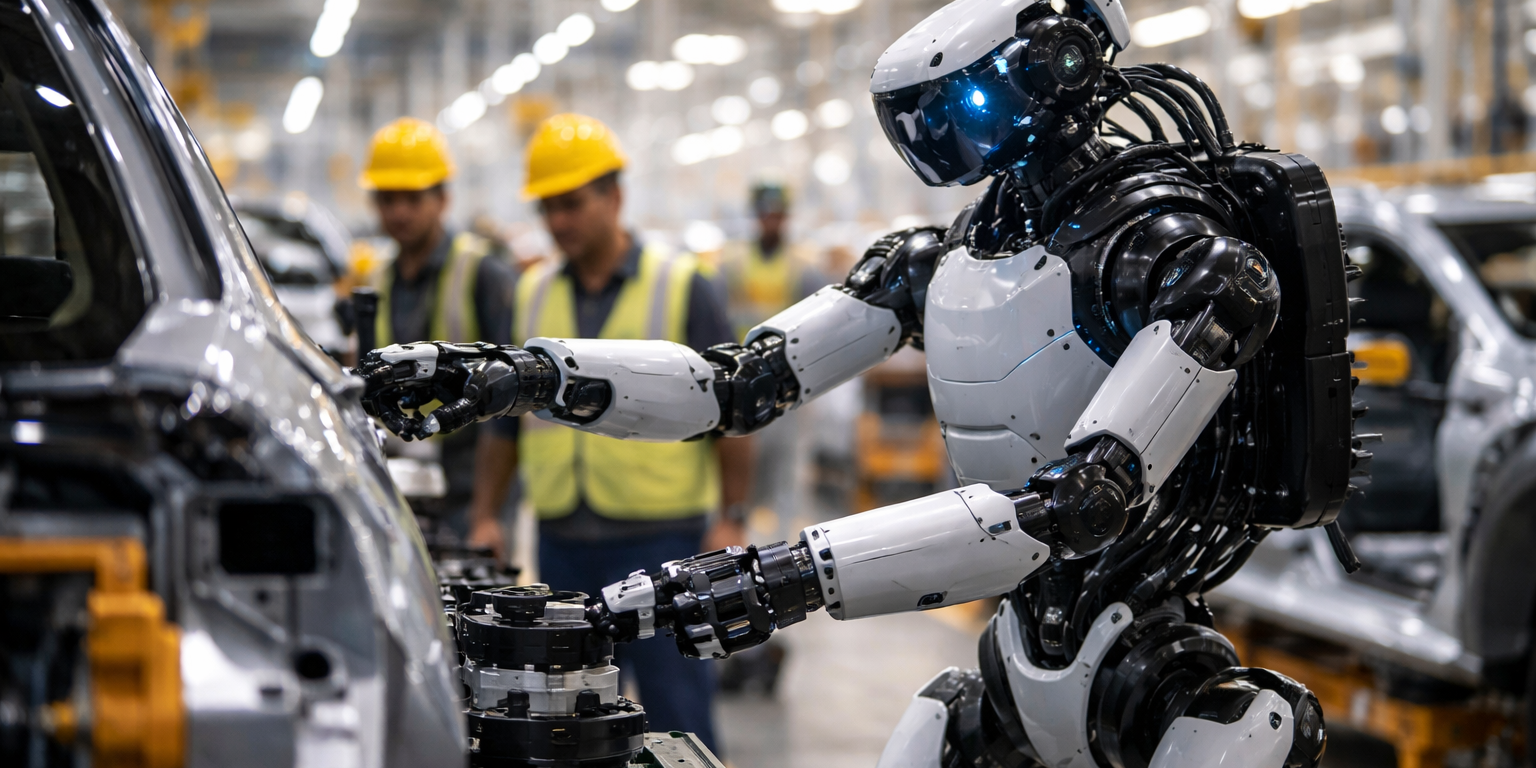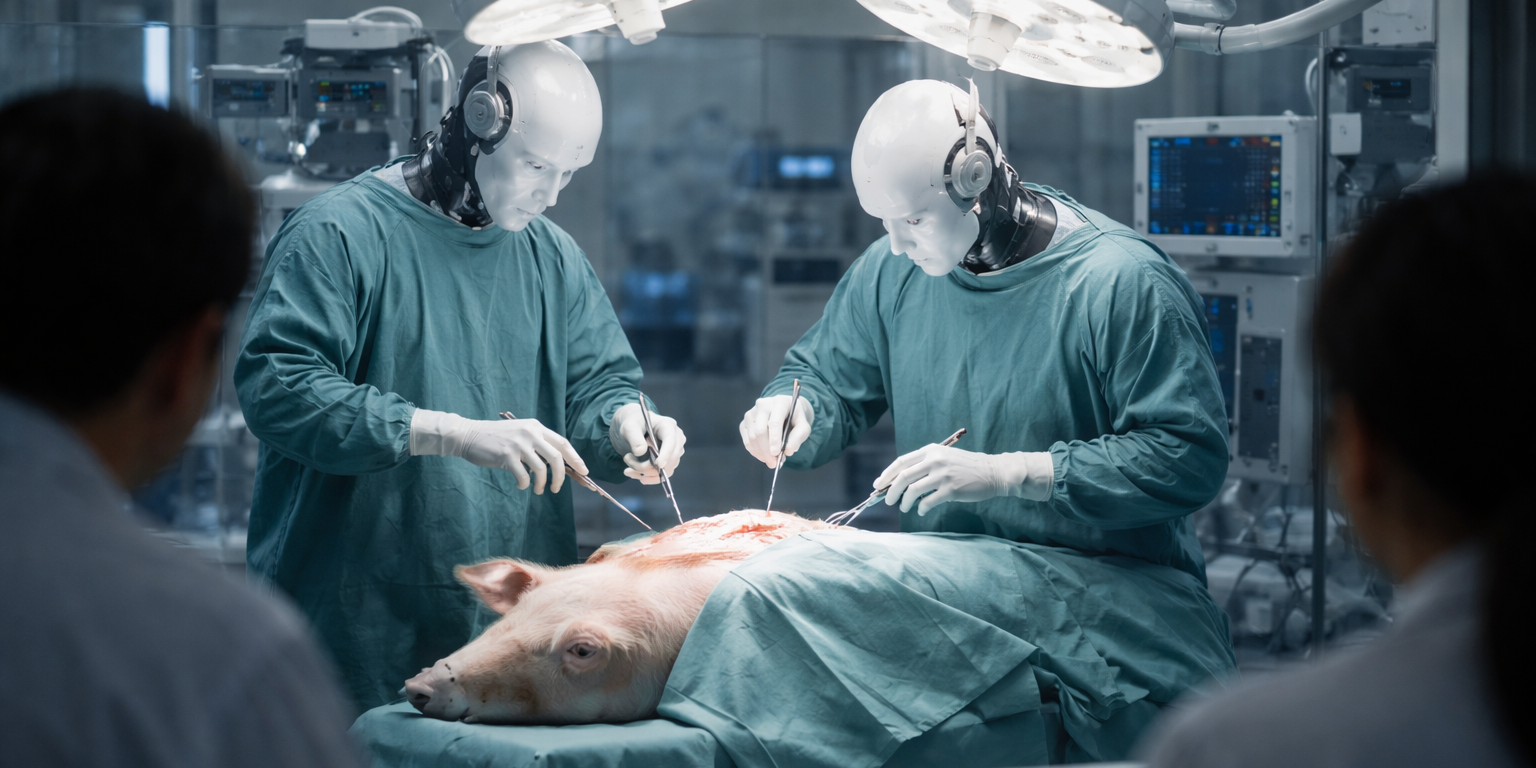
Two humanoid robots performed surgical procedures on live pigs without human intervention at a Chinese research laboratory, executing incisions, sutures, and tissue manipulation that remained within acceptable clinical parameters throughout the procedures. The trial represents the first time bipedal, human-shaped robots have operated on living subjects rather than cadavers or synthetic models, according to researchers involved in the project. Both machines completed their assigned tasks while maintaining sterile protocols, though specific success metrics for the procedures have not been disclosed publicly.
The robots operated under supervision but without direct human control during the surgeries, relying on pre-programmed motion sequences combined with real-time sensor feedback to adjust for tissue response and bleeding. Engineers familiar with surgical robotics development note that the humanoid form factor introduces unnecessary complexity compared to purpose-built surgical arms like those used in da Vinci systems, which have performed millions of procedures since receiving FDA clearance in 2000. The choice to use bipedal robots suggests the research team is exploring general-purpose platforms capable of operating in environments designed for human surgeons, rather than optimizing for surgical performance alone. That approach aligns with broader humanoid development philosophy prioritizing adaptability over task-specific efficiency, though it compounds challenges in achieving the sub-millimeter precision required for delicate surgical work.
The researchers indicated human trials could follow these animal studies, though no timeline or regulatory pathway was specified. In the United States, any surgical robot must clear FDA's rigorous premarket approval process, which typically requires extensive animal testing, human cadaver studies, and then phased human trials demonstrating safety and efficacy compared to existing standards of care. Europe's Medical Device Regulation imposes similar requirements. China's National Medical Products Administration has accelerated approval timelines for certain medical technologies in recent years, but autonomous surgical systems would likely face intense scrutiny given the life-critical nature of the application. The assertion that human surgeries could proceed directly from pig trials without intermediate validation steps raises questions about which regulatory framework the researchers intend to pursue.
Surgical robotics represents a $7 billion global market expected to exceed $14 billion by 2028, according to market research firm Global Market Insights. Intuitive Surgical dominates with its da Vinci platform, but competitors including Medtronic, Johnson & Johnson, and Stryker have introduced systems targeting specific procedures. None of these established players have pursued humanoid form factors, instead developing specialized robotic arms that mount to operating tables or ceiling rails. CMR Surgical in the UK and Momentis Surgical in India have brought compact cart-based systems to market in the past three years, maintaining the dedicated-hardware approach. The humanoid angle appears confined to research settings where teams are testing general-purpose platforms across multiple domains rather than optimizing for surgical outcomes specifically. That raises questions about whether the Chinese project is genuinely pursuing clinical deployment or demonstrating humanoid capability breadth for other strategic purposes.
Critical technical challenges remain unresolved. Surgical robots must achieve positional accuracy within 0.1 millimeters while filtering out the operator's hand tremors and scaling movements for microsurgery. Haptic feedback systems give surgeons tactile sensation of tissue resistance, instrument tension, and suture tightness. Latency between input and robotic response must stay below 100 milliseconds to prevent overshooting and tissue damage. Whether the humanoid platforms used in these pig surgeries incorporate these capabilities or operated with reduced precision requirements suited to experimental rather than clinical standards has not been clarified. The difference matters significantly when evaluating whether this represents a genuine step toward clinical deployment or a research milestone demonstrating humanoid dexterity in a controlled laboratory setting with relaxed success criteria.
What to Watch: Monitor Chinese regulatory filings for any premarket approval applications related to humanoid surgical systems, which would indicate serious clinical intent rather than pure research. Track whether the research team publishes peer-reviewed results with quantitative performance metrics including complication rates, procedure duration, and precision measurements compared to human surgeons or established robotic platforms. Watch for responses from Intuitive Surgical, Medtronic, and other surgical robotics incumbents regarding humanoid form factors, particularly whether any announce exploratory programs or dismiss the approach as impractical for clinical deployment.