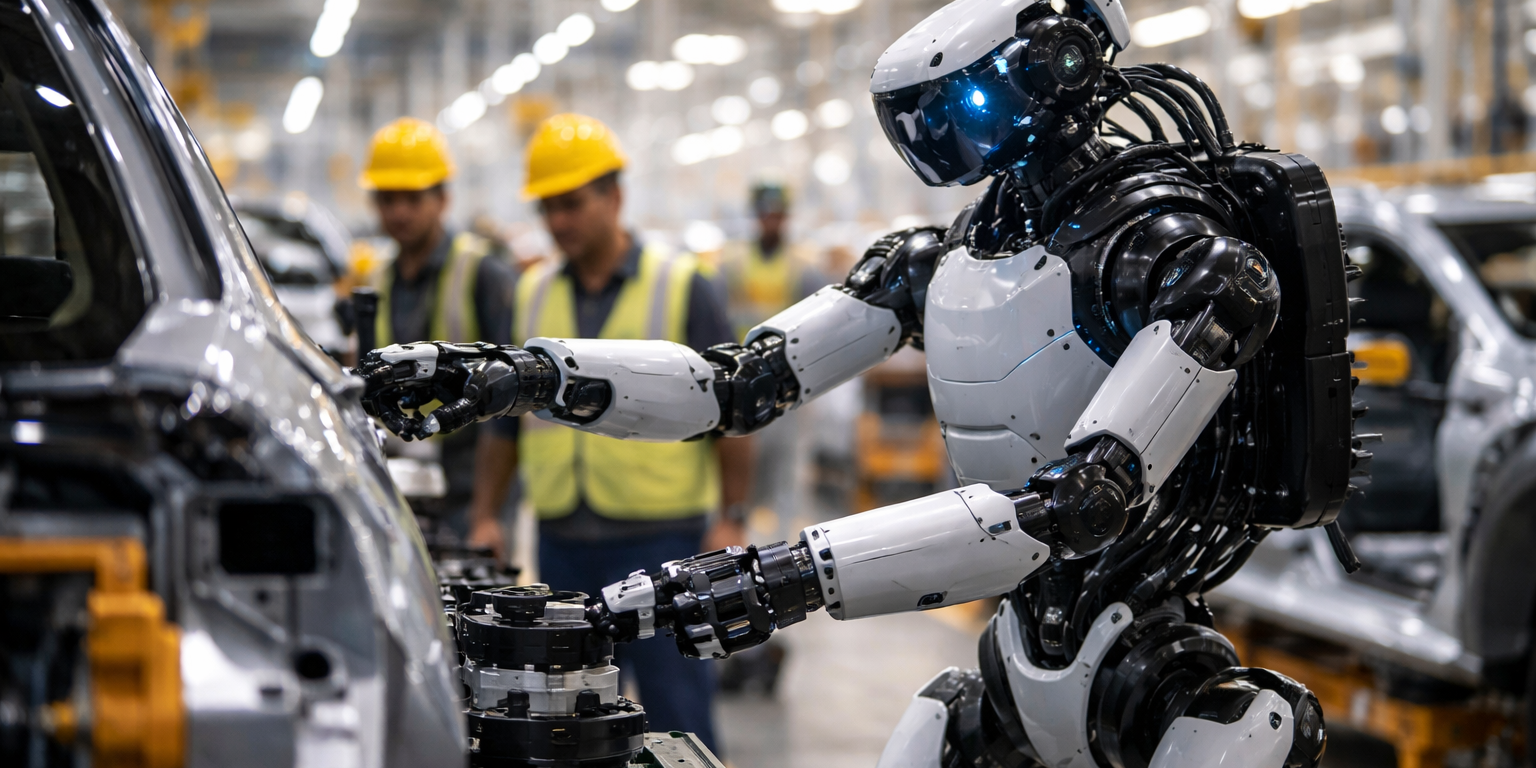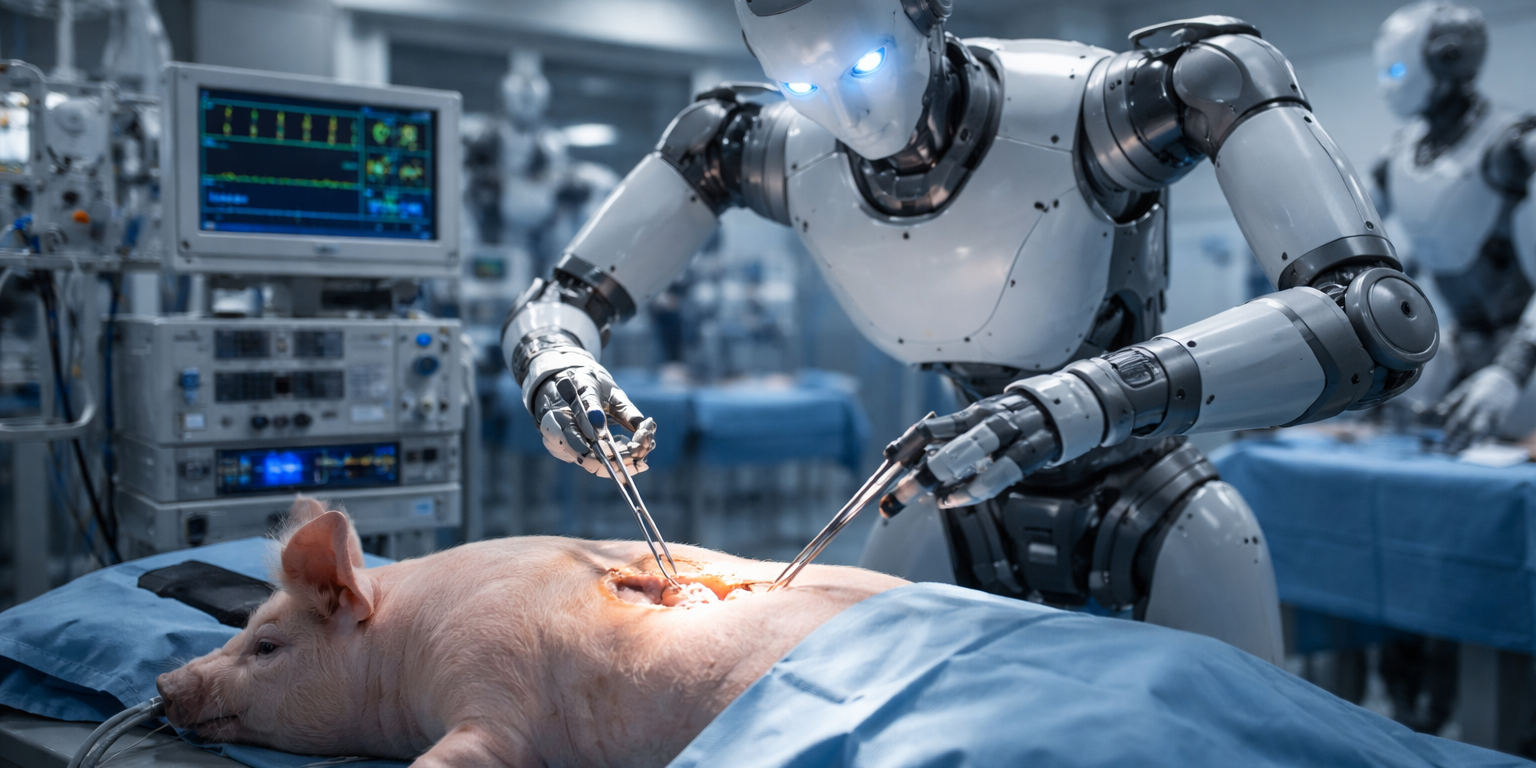
Two humanoid robots removed gallbladders from live pigs without human intervention last Tuesday at a research facility affiliated with Johns Hopkins University, completing procedures that required the machines to identify anatomy, make incision decisions, and respond to unexpected bleeding in real time. The operations, each lasting approximately 47 minutes, represent the first time fully autonomous humanoid systems have successfully performed soft tissue organ removal in a living subject. Unlike teleoperated surgical robots such as Intuitive Surgical's da Vinci platform, which translate a human surgeon's hand movements into precise robotic actions, these humanoid systems operated independently after receiving only high-level instructions to perform a cholecystectomy.
The research team, led by Dr. Axel Krieger from Johns Hopkins' Laboratory for Computational Sensing and Robotics, developed the humanoid surgical platforms over four years with funding from the National Science Foundation and the Department of Defense's Medical Technology Enterprise Consortium. Each robot stands roughly five feet tall, features dual manipulator arms with seven degrees of freedom, and incorporates vision systems capable of distinguishing between tissue types through a combination of hyperspectral imaging and machine learning models trained on more than 200,000 annotated surgical images. The machines weigh 340 pounds each and cost an estimated $780,000 to build at current prototype scale. During the pig procedures, the robots made an average of 180 micro-decisions per minute, adjusting grip pressure, blade angle, and cauterization intensity based on visual and haptic feedback. One robot encountered arterial bleeding during dissection and autonomously applied clips and cautery to control hemorrhage, a response that researchers say demonstrates genuine adaptive capability rather than scripted behavior.
Surgical robotics represents a $7.8 billion market dominated by teleoperated systems, but autonomous platforms could address scenarios where specialist surgeons are unavailable or cannot physically reach patients. Military medical units operating in contested environments, rural hospitals lacking surgical specialists, and future space missions all present use cases where a robot capable of performing procedures independently could prove valuable. The challenge has been teaching machines to handle the variability inherent in biology. Human anatomy varies significantly between individuals, and tissues respond differently to cutting, suturing, and cauterization depending on age, disease state, and countless other factors. Scripted robotic procedures fail when reality deviates from programming. Machine learning offers a path forward, but training autonomous surgical systems requires massive datasets of annotated procedures and the ability to practice on realistic subjects. The Johns Hopkins team addressed this by creating synthetic training environments using high-fidelity surgical simulators and then validating performance in porcine models, which share significant anatomical similarities with humans.
The timing of this milestone coincides with broader momentum in humanoid robotics. Companies including Figure AI, Apptronik, and Sanctuary AI have raised more than $2.4 billion in combined funding since early 2025 to develop general-purpose humanoid robots for manufacturing and logistics applications. Most of that development focuses on relatively simple manipulation tasks like picking, packing, and assembly. Surgical applications represent a far more demanding test of humanoid capability, requiring precision measured in fractions of a millimeter, the ability to distinguish between dozens of tissue types, and real-time decision-making under conditions of uncertainty and risk. Success in surgical applications could accelerate development of dexterity and decision-making capabilities that transfer to other domains. Conversely, the medical device regulatory pathway presents obstacles that manufacturing applications do not face. The Food and Drug Administration requires extensive safety and efficacy data before clearing surgical robots for human use, and autonomous systems will face heightened scrutiny compared to teleoperated devices where a human surgeon retains final authority.
What to Watch: Johns Hopkins plans to submit an investigational device exemption application to the FDA in the fourth quarter of 2026 for limited human trials involving gallbladder removals in patients already scheduled for the procedure with human surgeons standing by. The research team is also negotiating with Medtronic and Johnson & Johnson's Ethicon division regarding potential licensing arrangements for the underlying control architecture and vision systems. Separately, watch for competing autonomous surgical robot demonstrations from research groups at Stanford and Imperial College London, both of which have published papers describing similar approaches and may attempt validation procedures within the next six months.