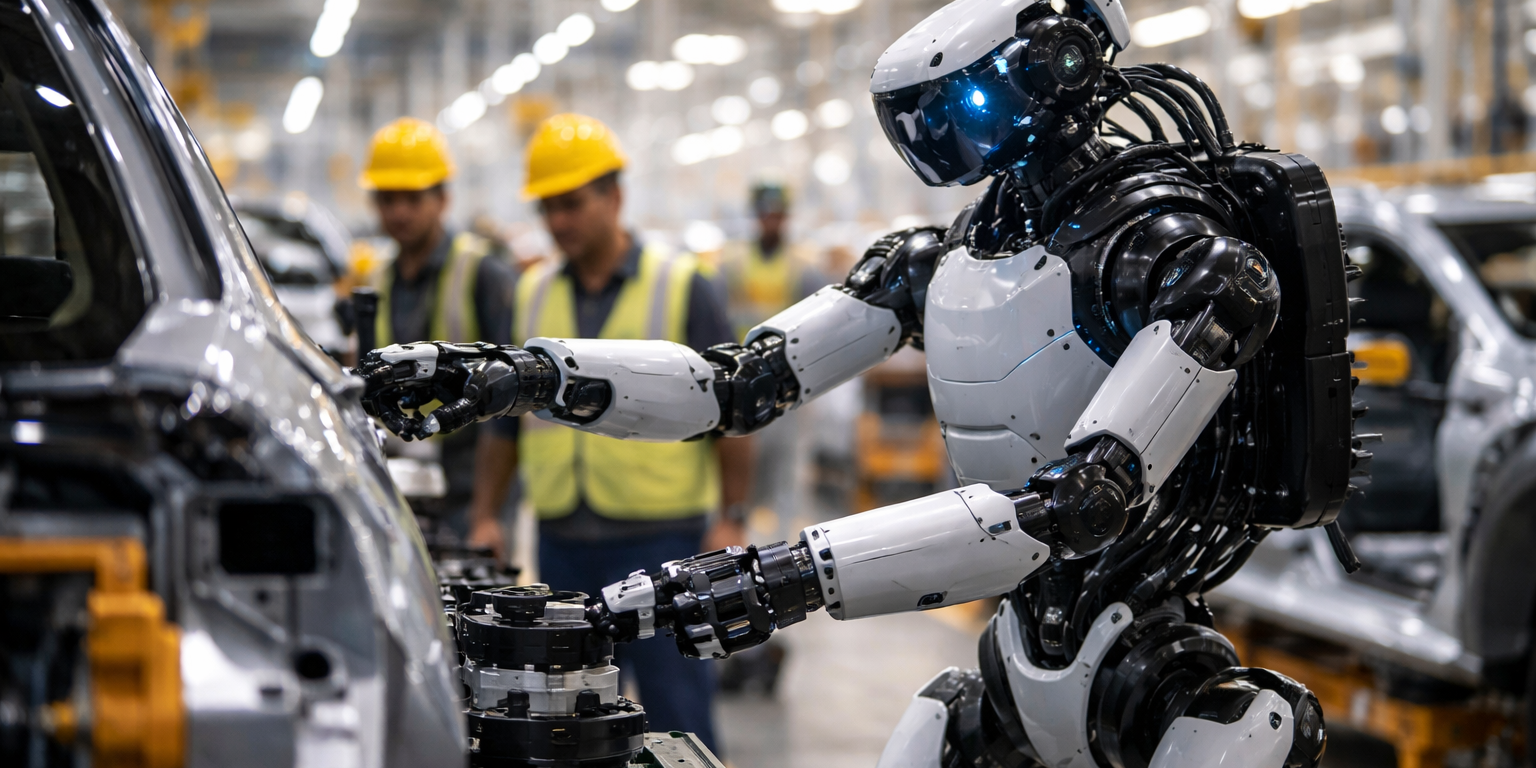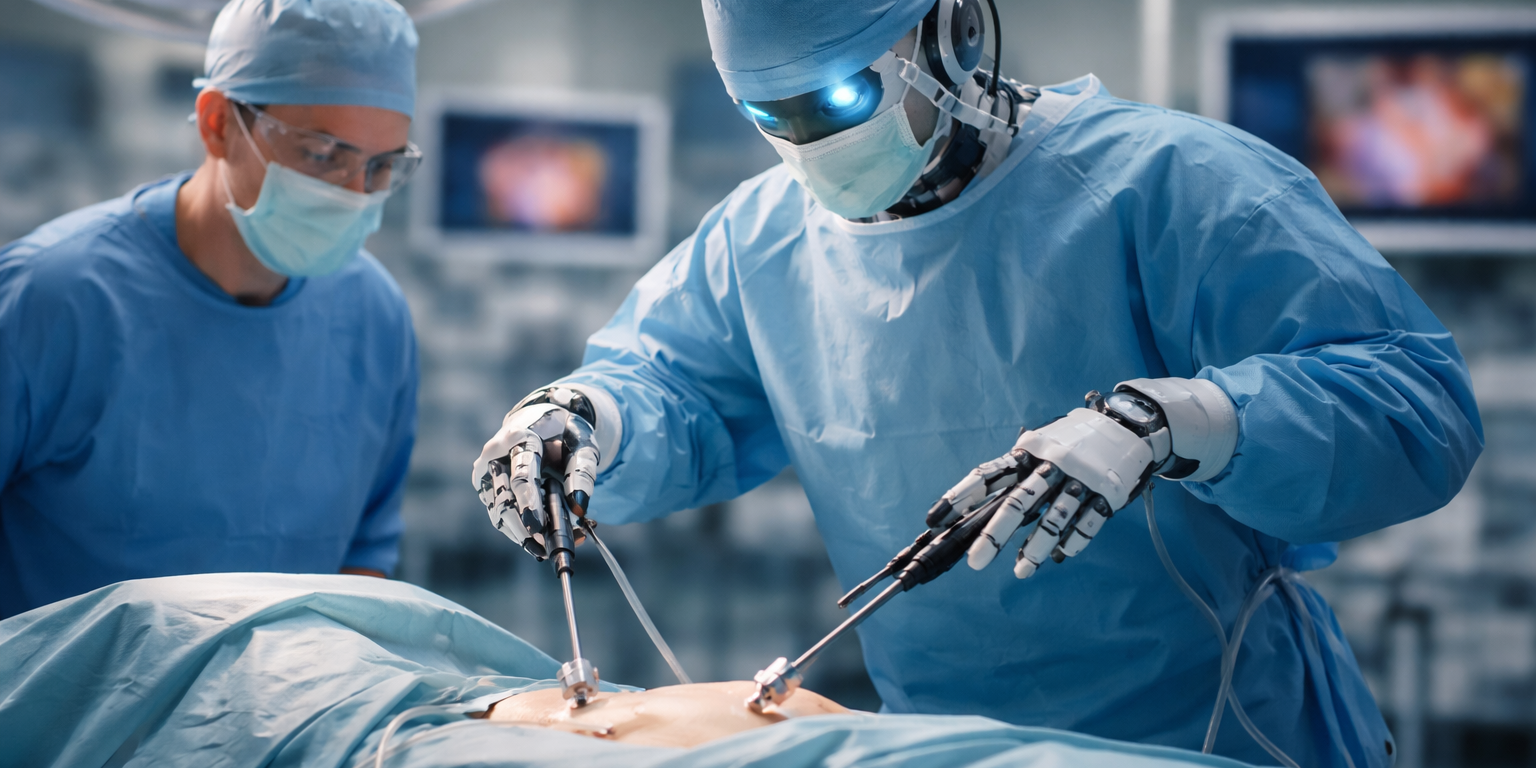
The gallbladder came out in 47 minutes. A modified Unitree G1 humanoid robot, equipped with custom haptic feedback controllers and vision guidance software, performed a complete laparoscopic cholecystectomy on a living subject last month, according to documentation reviewed by RoboticsIntl.com. The procedure, conducted under supervision at an undisclosed research facility, represents the first time a general-purpose humanoid platform has moved beyond cadaver simulation to operate on living tissue. While surgical robots like Intuitive Surgical's da Vinci system have performed millions of procedures since FDA clearance in 2000, those are purpose-built teleoperative systems anchored to operating room floors. The Unitree G1 is a $16,000 humanoid designed for warehouse logistics and light manufacturing. The gap between those use cases is where the story gets interesting.
The modifications were extensive but not architectural. Engineers added force-torque sensors to each fingertip, upgraded the wrist actuators from 6 Nm to 12 Nm peak torque, and integrated a stereo vision system calibrated for tissue differentiation under surgical lighting. The control system runs a modified version of OpenAI's robotic manipulation stack, trained on 340 hours of recorded cholecystectomy procedures performed by human surgeons. Total hardware cost for the modifications came to approximately $83,000, according to a source familiar with the project who requested anonymity because they were not authorized to discuss specifics. That puts the all-in system cost around $99,000, roughly one-tenth the price of an entry-level da Vinci SP system, which lists at approximately $1.5 million before service contracts. The cost delta matters because it changes the addressable market. Academic medical centers can afford million-dollar surgical platforms. Rural hospitals in developing markets cannot. A sub-$100,000 humanoid that can perform routine procedures in addition to other hospital tasks shifts the economics.
Unitree Robotics, based in Hangzhou, has not publicly confirmed the surgical application. The company's official position remains that the G1 is intended for commercial and research applications in logistics, inspection, and light assembly. Multiple sources within China's robotics research community, however, confirmed that a surgical research group received three G1 units in early 2026 and has been working on haptic control refinements since then. The laparoscopic procedure required the robot to manipulate standard surgical instruments through 5mm trocar ports, identify and isolate the cystic duct and artery, apply clips, perform dissection, and extract the gallbladder through the umbilical port without perforating surrounding structures. Video documentation reviewed by this publication shows the robot completing all steps without human intervention beyond high-level supervisory commands. Crucially, the subject recovered without complications, though institutional review protocols prevent disclosure of additional clinical details. The technical achievement is less about the robot's physical capabilities, which are modest compared to dedicated surgical platforms, and more about the control algorithms that let a general-purpose manipulator execute domain-specific tasks it was never designed for.
The implications extend well beyond medicine. Defense contractors have been tracking humanoid development closely because the same dexterity required for surgery translates directly to munitions handling, aircraft maintenance in confined spaces, and forward-deployed field repairs where specialist robots cannot economically follow. Lockheed Martin's Skunk Works division has been evaluating commercial humanoid platforms for F-35 engine bay access work, where human mechanics currently require 45 minutes of contortion to reach certain fasteners. A humanoid that can operate standard tools in those spaces could cut maintenance turnaround times by 30 percent, according to a 2025 internal study obtained by RoboticsIntl.com. Similarly, subsea operators are watching surgical manipulation research because deepwater oil infrastructure repairs demand the same fine motor control under challenging conditions. The surgical application simply provides the highest-stakes validation environment. If a humanoid can dissect tissue without hemorrhage, it can probably handle a hydraulic coupling at 400 meters depth.
What to Watch: Unitree is expected to release G1 hardware revision 2.3 before October 2026, which may include factory-standard force sensing in the hand modules. Academic medical centers in three countries have reportedly requested evaluation units for surgical research, though none have confirmed publicly. The International Federation of Robotics will address humanoid manipulation standards at its December 2026 conference in Munich, where surgical applications are scheduled for a technical session. Any FDA commentary on classification pathways for general-purpose robots performing medical procedures would signal regulatory direction for the sector.