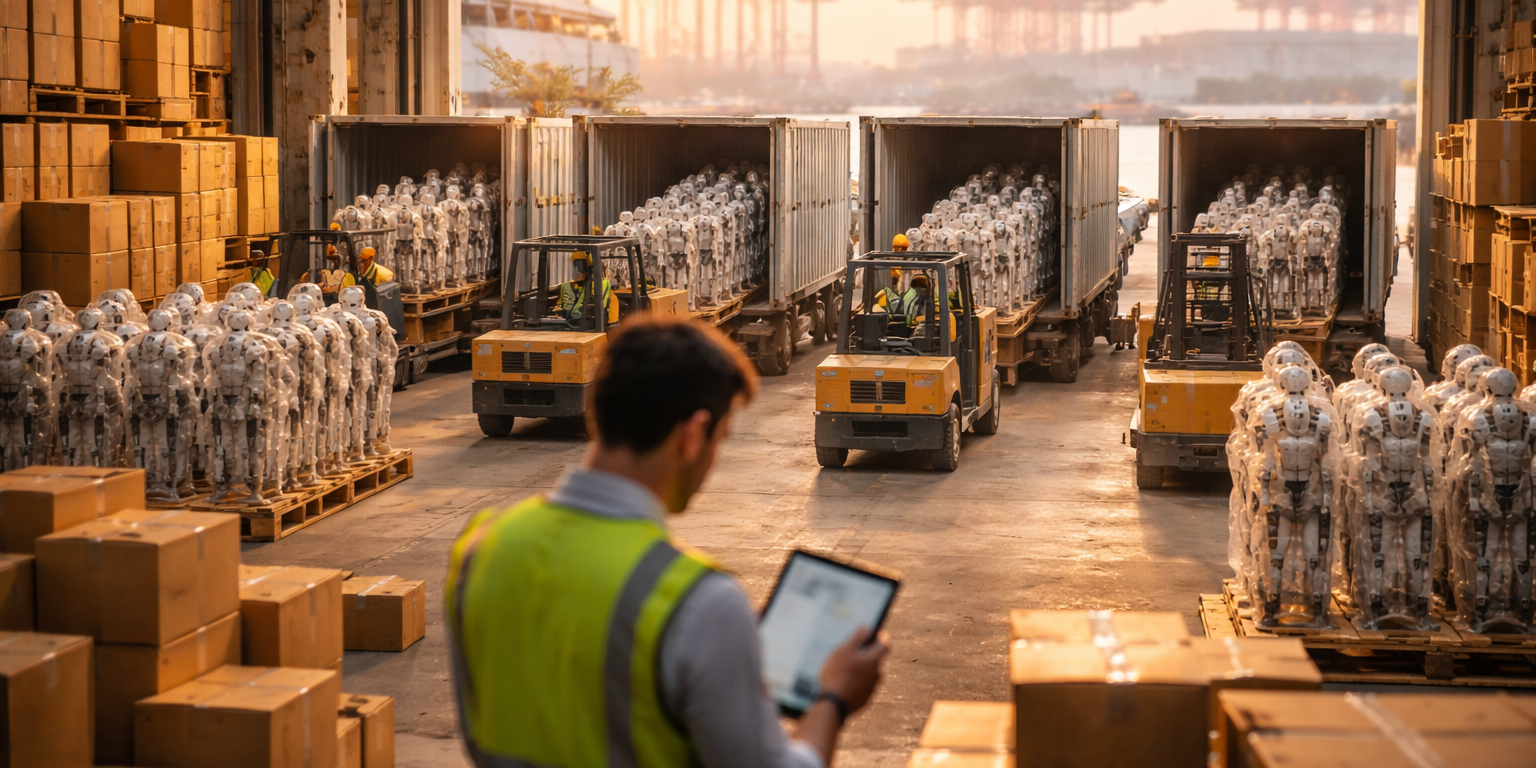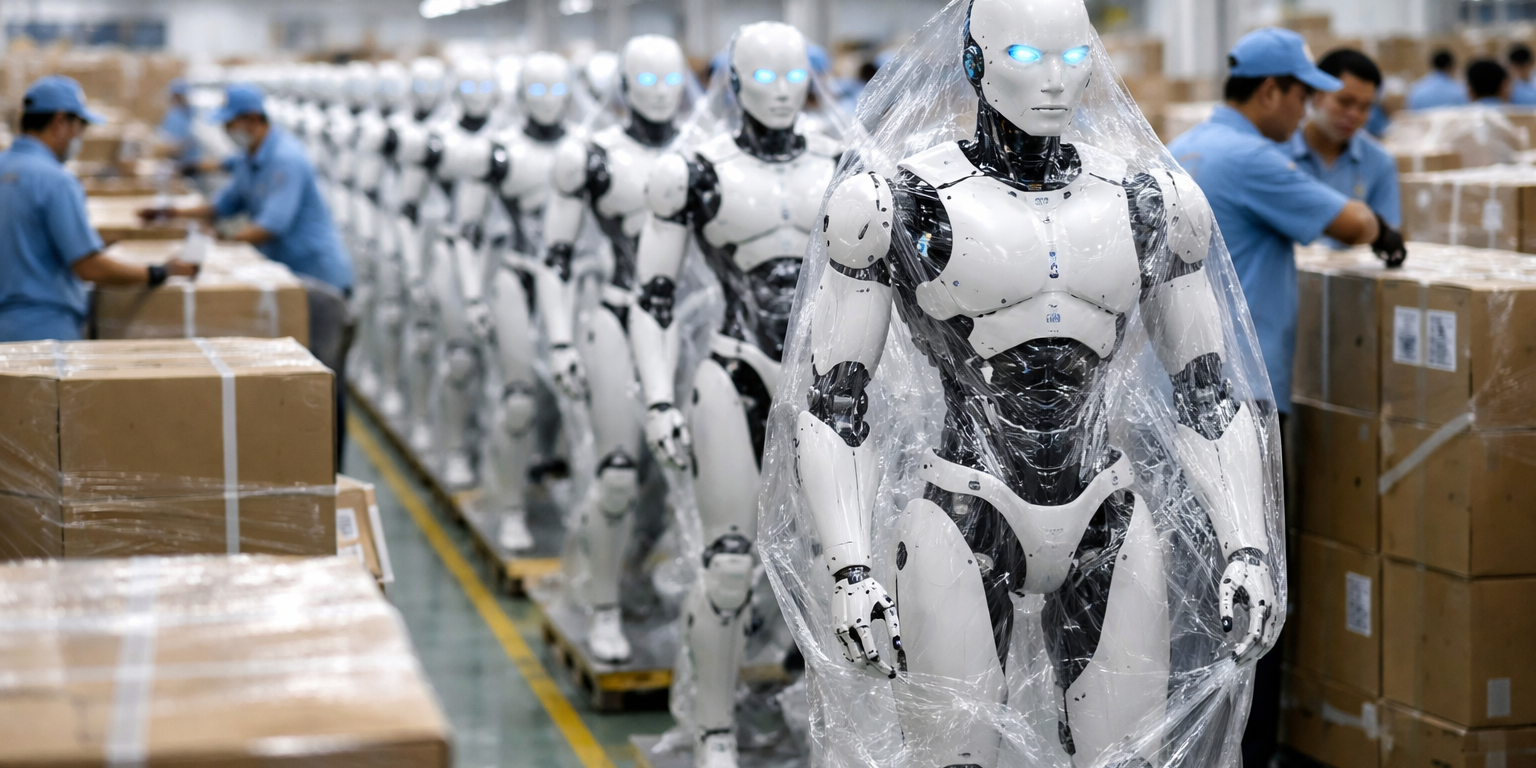
A $370 billion market opportunity is drawing robotics manufacturers into a design philosophy debate that will separate commercial winners from well-funded science projects. Goldman Sachs projects the humanoid robotics market will reach that valuation within the next decade, driven primarily by warehouse automation, elderly care, and manufacturing applications where bipedal form factors offer advantages over wheeled alternatives. But reaching commercial scale demands a fundamental shift in how these machines are engineered, according to industry veterans who have watched multiple robotics booms collapse under the weight of their own complexity.
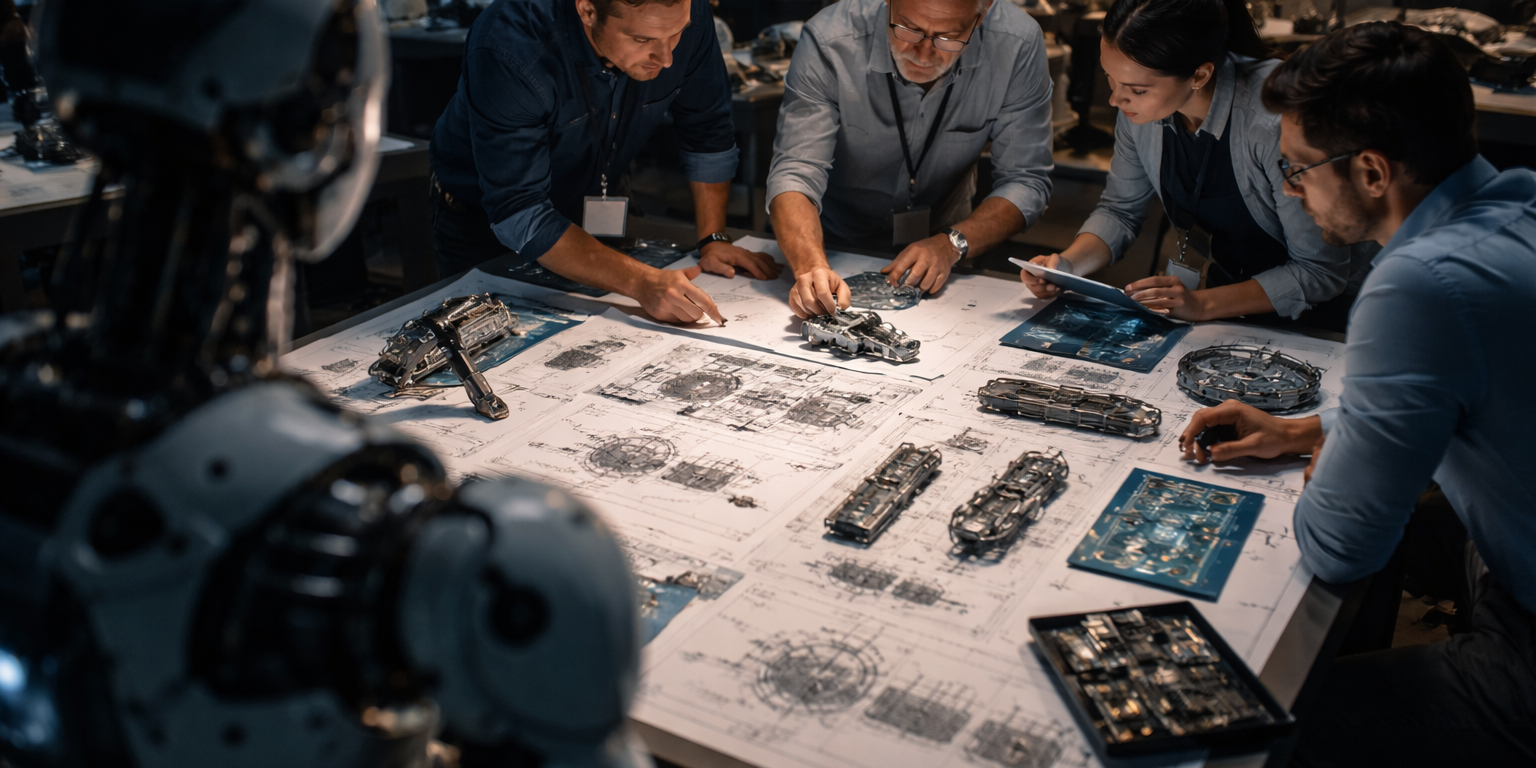
The shift centers on integrated design, an approach where mechanical, electrical, and software teams work from a unified architecture rather than assembling best-in-class components after the fact. Boston Dynamics spent two decades refining Atlas through iterative prototyping, a luxury most startups cannot afford. Figure AI, Apptronik, and 1X Technologies are instead betting on simultaneous co-development of actuators, power systems, perception stacks, and control algorithms, compressing what once took years into 18-month cycles. The approach reduces interface losses between subsystems and allows teams to optimize for manufacturing constraints from day one rather than discovering them during pilot production. Agility Robotics learned this lesson expensively when early Digit units required extensive hand-assembly of custom joint mechanisms, delaying its Amazon warehouse deployment by nine months while engineers redesigned for automated production lines.
The technical challenges are formidable and specific. Humanoid robots require roughly 30 to 50 actuated degrees of freedom depending on hand complexity, each demanding precise torque control, thermal management, and sensor feedback loops that must execute within millisecond latencies. Traditional design sequences address these systems in isolation, leading to weight penalties, thermal bottlenecks, and wiring harnesses that double as failure points. Tesla's Optimus team publicly acknowledged scrapping its initial actuator design after realizing the cooling requirements would push total system weight beyond viable battery endurance for eight-hour warehouse shifts. Integrated design would have surfaced that constraint during initial CAD modeling rather than after fabricating 200 prototype units. Sanctuary AI took the opposite approach with its Phoenix platform, designing custom torque-dense actuators and the carbon fiber skeletal structure in parallel, achieving a 70-kilogram humanoid capable of 25-kilogram payload manipulation, specifications that required the structural and actuation teams to negotiate tradeoffs weekly throughout the 14-month development cycle.
The financial implications extend beyond engineering efficiency into supply chain strategy and investor patience. Modularity sounds appealing in pitch decks, but off-the-shelf components often carry 40% to 60% gross margin overhead from vendors optimizing for their own profitability rather than the robotics integrator's cost structure. Companies pursuing vertical integration of critical components report bill-of-materials costs 30% to 50% lower than competitors assembling from catalog parts, a difference that determines whether a humanoid sells for $150,000 or $80,000 at commercial volumes. Investors are taking notice. Figure AI's $675 million Series B in early 2025 came explicitly contingent on demonstrating in-house actuator production capability, according to sources familiar with the term sheet negotiations. Meanwhile, several European humanoid startups that positioned themselves as system integrators have quietly shut down or pivoted after discovering their margin structure could not support the iteration velocity required to match Chinese and American competitors.
Beyond the balance sheet, integrated design disciplines force organizational decisions that many robotics companies resist until crisis hits. Co-development requires mechanical engineers to understand control theory well enough to design structures that simplify rather than complicate the control problem. It requires software teams to accept hardware constraints rather than assume infinite computational headroom. It requires executives to resist the procurement instinct to outsource everything non-core, because in humanoid robotics, nearly everything touches the critical path to bipedal stability and manipulation dexterity. The companies thriving in late 2026 are those that embraced these constraints two years ago, building small multidisciplinary cells that own complete subsystems rather than large specialized departments throwing designs over cubicle walls. Whether that organizational model scales to the thousands of engineers needed for true mass production remains the industry's next test.
What to Watch: Monitor whether Apptronik's announced partnership with Mercedes-Benz moves beyond pilot installations into series production commitments by Q4 2026, which would signal automotive manufacturers are willing to bet on humanoid economics at scale. Track Figure AI's actuator production ramp at its new Sunnyvale facility, targeting 10,000 units monthly by year-end. Watch for Tesla's next Optimus capability demonstration, expected at its October shareholder event, particularly any discussion of per-unit manufacturing cost trajectories.