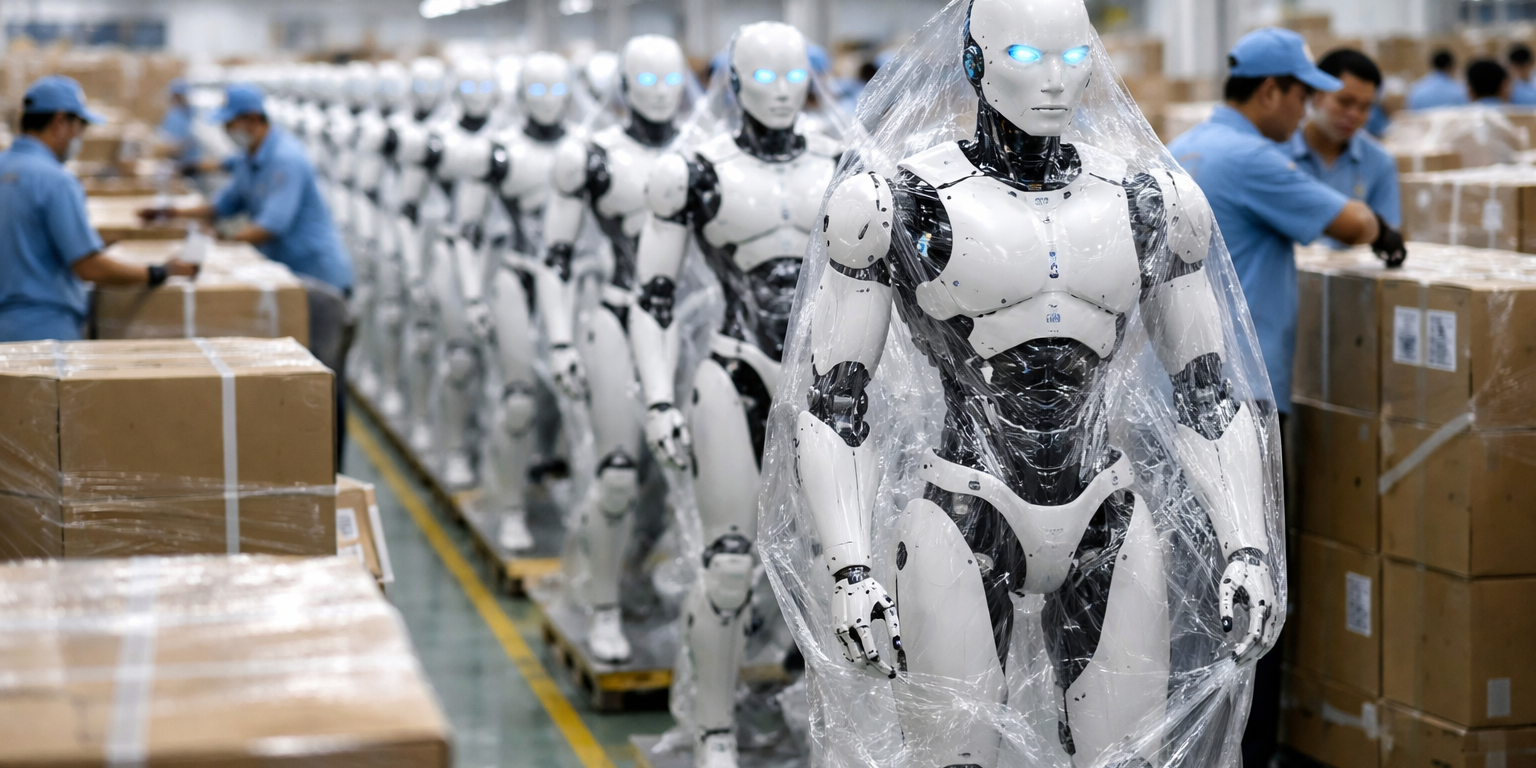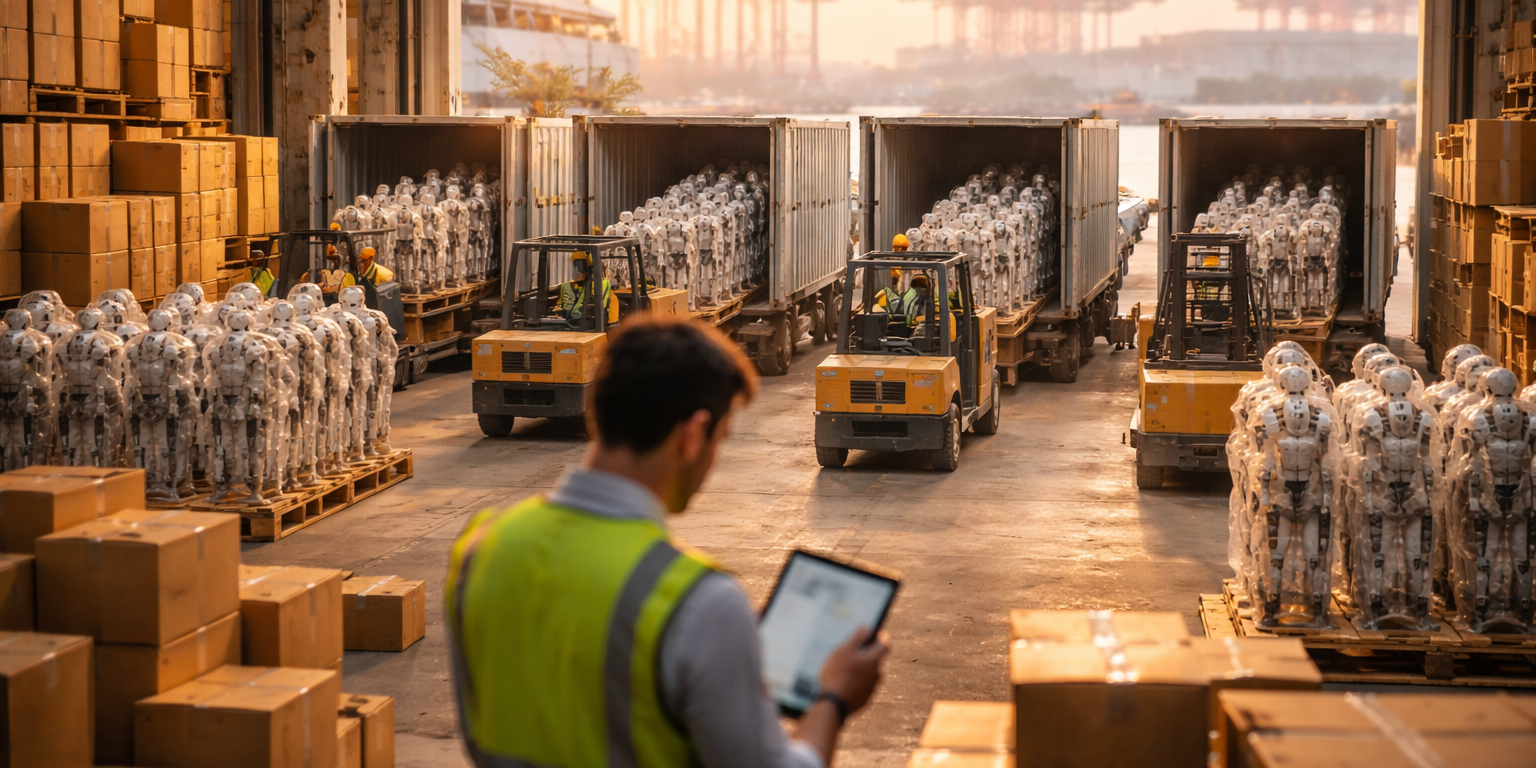
AgiBot shipped 840,000 humanoid robots between January and June 2026, claiming 44 percent of the 1.91 million units delivered worldwide during that period. Smart Analytics Global released the figures on August 9, showing Chinese vendors accounted for 1.85 million of those shipments while non-Chinese manufacturers contributed roughly 60,000 units. Unitree placed second with 590,000 shipments, representing 30.9 percent market share. The data covers the period immediately before the United States Trade Representative enacted Section 301 tariffs and licensing requirements on Chinese-manufactured humanoid robots on July 28, a policy shift that may significantly alter these shipment trajectories in the second half of the year.
The 274 percent year-on-year growth rate indicates the humanoid sector reached commercial scale far earlier than most industry forecasts predicted. In the first half of 2025, global shipments totaled approximately 510,000 units, meaning the market nearly quadrupled in twelve months. AgiBot, founded in Shenzhen in 2023, began mass production of its Raise-A1 model in October 2025 at a facility in Dongguan capable of producing 10,000 units monthly. The company expanded that capacity in March 2026 with a second line in Chongqing, though it has not disclosed current production rates. Unitree, based in Hangzhou, ships primarily its G1 model at a retail price of $16,000, positioning it as a consumer and light industrial platform. The G1 entered production in April 2025 and has been deployed in hospitality, warehousing, and retail demonstration projects across Asia and Europe. Neither AgiBot nor Unitree has published detailed customer breakdowns, but industry observers note the bulk of shipments likely consist of enterprise pilot programs rather than individual consumer purchases.
The Smart Analytics Global report does not identify which companies comprise the remaining 25.1 percent of Chinese market share, though it almost certainly includes manufacturers such as Fourier Intelligence, UBTECH Robotics, and potentially smaller regional players. Tesla did not ship Optimus units commercially during this period, according to sources familiar with the program. The company has stated it plans to deploy Optimus internally at Texas and Nevada factories before external sales, with no confirmed timeline for broad commercial availability. Figure AI, which raised $675 million in February 2025 at a $3.2 billion valuation, has not announced production shipments, though it deployed pilot units at BMW's Spartanburg plant beginning in March 2026. Boston Dynamics has not entered the general-purpose humanoid market, focusing instead on quadrupedal and wheeled platforms. The data suggests the humanoid robot industry has bifurcated sharply: Chinese manufacturers pursued rapid commercialization at accessible price points, while U.S. and European developers emphasized controlled pilots with anchor customers in automotive and logistics.
The July 28 restrictions require any Chinese-manufactured robot with bipedal locomotion and manipulator arms capable of human-like tasks to undergo export license review before entering the United States. The Commerce Department cited dual-use concerns and national security considerations, particularly around data collection and remote operation capabilities. Importers must now demonstrate end-use exclusively in commercial or research settings, with defense and critical infrastructure applications explicitly prohibited. The rules apply retroactively to units already in the U.S., requiring registration by October 15, 2026. European Union officials convened an extraordinary session of the Trade Defence Instruments Committee on August 4 to discuss parallel measures, though no formal proposal has emerged. Japan's Ministry of Economy, Trade and Industry announced August 6 it would not impose similar restrictions, instead establishing a voluntary disclosure framework for humanoid robot deployments in sensitive facilities. The policy divergence creates a fractured global market where Chinese manufacturers may concentrate on Asia-Pacific and Middle Eastern customers while U.S. and European developers target Western markets under the premise of supply chain security.
What to Watch: AgiBot and Unitree shipment data for Q3 2026 will reveal whether U.S. restrictions meaningfully dented momentum or simply redirected volume to other regions. October 15 marks the U.S. registration deadline for existing Chinese humanoid robots, and compliance rates will indicate how many units actually entered commercial operation versus remaining in pilot or demonstration status. The EU Trade Defence Instruments Committee meets again September 12, and any decision to mirror U.S. policy would effectively close the Western market to Chinese platforms. Tesla's Optimus production timeline remains the wildcard—if the company begins external shipments before year-end at a competitive price, it could fragment Chinese dominance, particularly in North American industrial accounts.