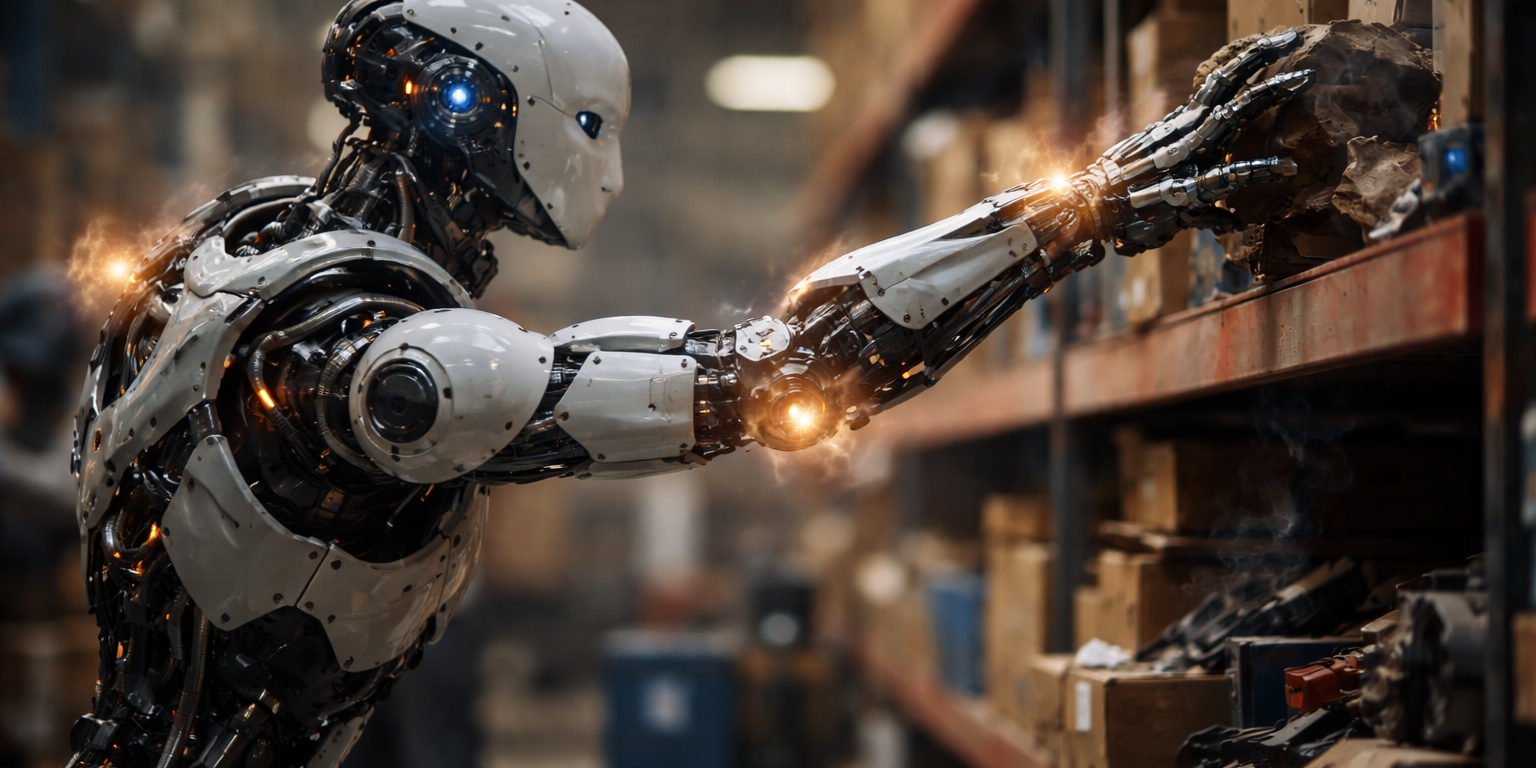
Software can now tell a humanoid robot exactly how to grasp an irregular object, navigate a crowded warehouse, or recover from a stumble. The problem is the robot's body often cannot keep up with what its brain demands. Actuators overheat. Joints lack the torque density to lift payloads smoothly. Response times lag behind the control loop frequencies required for dynamic balance. This mismatch between computational capability and physical execution has emerged as the primary constraint on deploying humanoids in real-world environments, according to engineers across the sector who increasingly find themselves hardware-limited rather than software-limited.
The shift marks a reversal from the dynamics of the past decade, when perception and planning algorithms struggled to match human intuition. Foundation models trained on vast datasets have largely closed that gap. A humanoid equipped with a modern vision-language-action model can identify objects, infer intent, and generate motion plans with near-human speed. But translating those plans into smooth, forceful, energy-efficient movement remains stubbornly difficult. Electric actuators dominate current designs, yet even the most advanced units deliver only a fraction of the specific power of biological muscle. Hydraulic systems offer higher force density but introduce complexity, weight, and maintenance burdens that few commercial developers find acceptable. The result is a growing inventory of capable minds trapped in inadequate bodies.
Several companies have quietly reprioritized their engineering roadmaps in response. Figure AI, which demonstrated object manipulation tasks using a vision-language model earlier this year, now dedicates more than half its hardware team to actuator development rather than AI integration. Apptronik shifted resources toward custom joint designs after field tests revealed that off-the-shelf servo motors could not sustain the duty cycles required for eight-hour warehouse shifts. Agility Robotics, whose Digit humanoid operates in logistics facilities, reports that thermal management and power delivery now consume more engineering hours than software updates. These adjustments reflect a broader recognition that the next performance leap depends less on training larger models and more on building bodies capable of exploiting the intelligence already available.
The bottleneck extends beyond raw strength. Bandwidth matters as much as peak torque. High-frequency control loops needed for dynamic walking or rapid object manipulation require actuators that respond in milliseconds, not tens of milliseconds. Compliance and impedance control, essential for safe human interaction, demand sensors and actuators that can modulate force across a wide range with minimal latency. Energy efficiency remains critical for untethered operation, yet current electric drivetrains rarely achieve more than sixty percent efficiency under variable load. Solving these problems requires advances in motor design, gearbox technology, materials science, and power electronics, fields that move slower than software and resist the kind of rapid iteration that defines AI development. Investors who once focused exclusively on perception algorithms now scrutinize actuator specifications and thermal budgets during due diligence. The realization has set in that no amount of compute can compensate for a joint that overheats after twenty minutes or a gripper that cannot modulate grip force with sufficient precision.
What to Watch: Apptronik and Figure AI are both expected to detail custom actuator specifications in product announcements before the end of 2026. Agility Robotics will likely publish performance data on Digit's thermal and power management systems as it scales deployment beyond pilot programs. Investors should track partnerships between humanoid developers and specialty actuator manufacturers, particularly those working on quasi-direct-drive and proprioceptive actuation technologies that promise higher bandwidth and better force control.