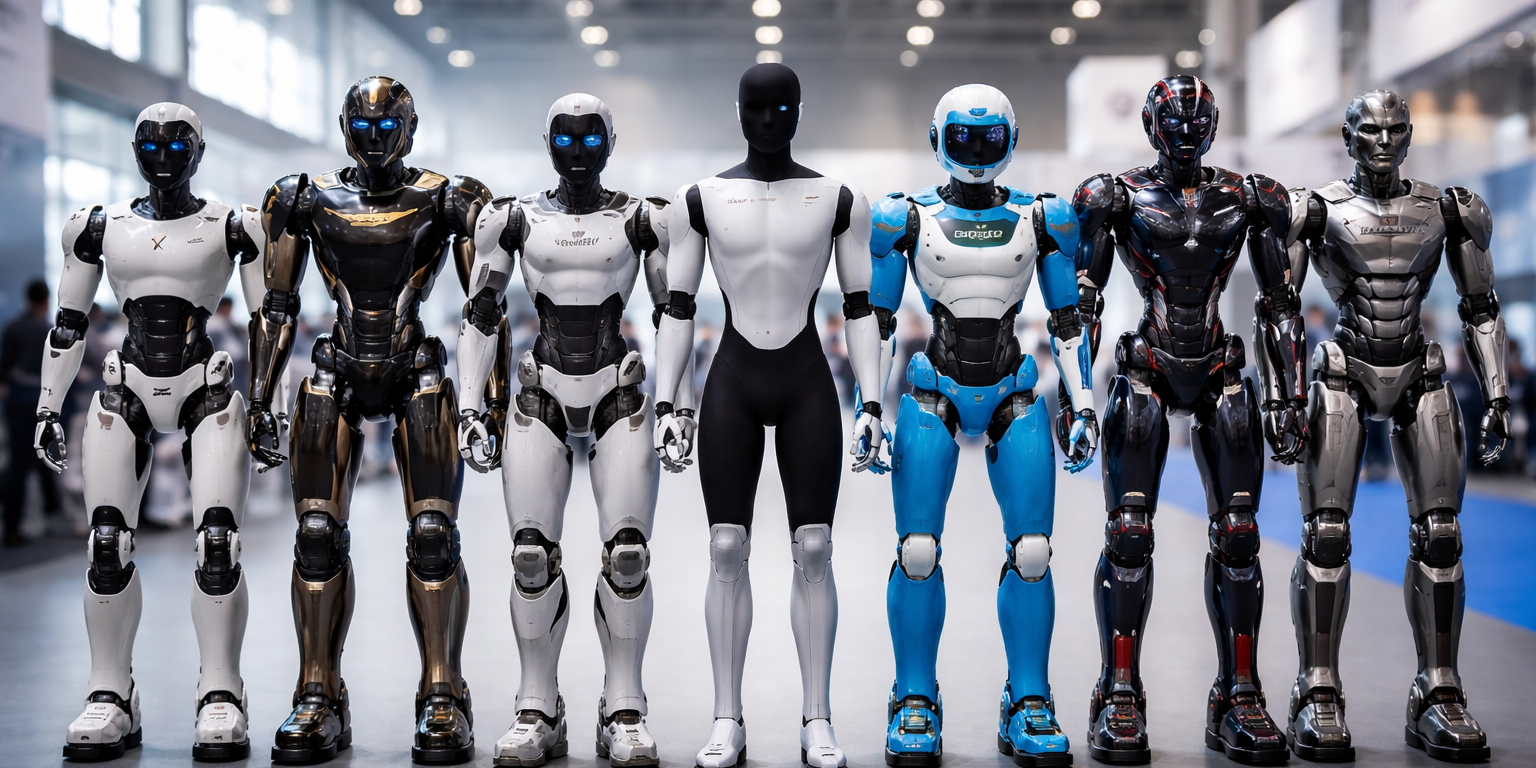
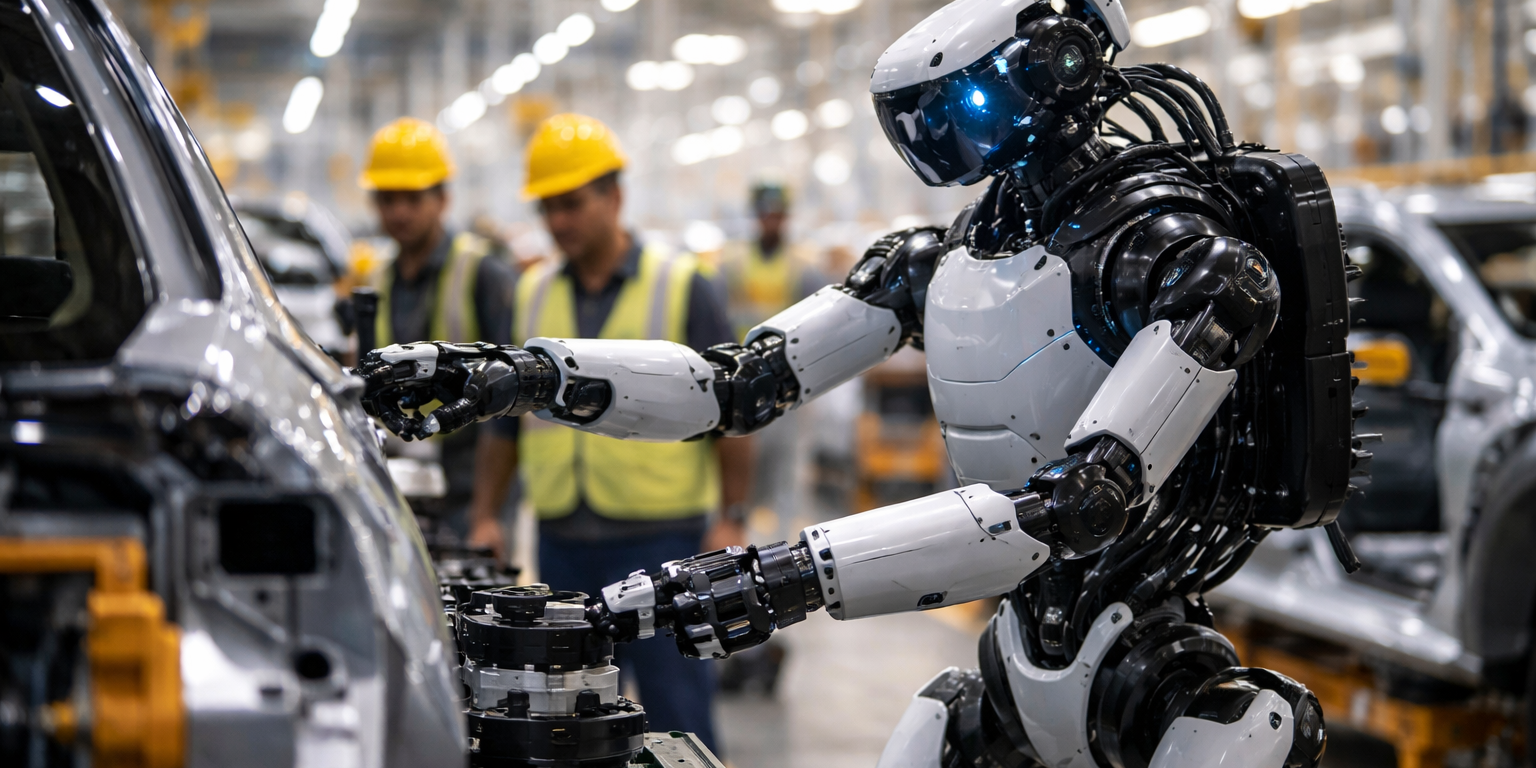
Valuates Reports released market projections showing the home humanoid segment growing from $1.29 billion in 2024 to $8.56 billion by 2031, a sevenfold increase driven by what analysts describe as simultaneous breakthroughs in hardware economics and AI capabilities. The forecast represents a sharp departure from earlier projections that treated household humanoids as a distant prospect. Companies including Tesla, Figure AI, 1X Technologies, and Agility Robotics have all announced platforms targeting home deployment between 2026 and 2029, with price targets clustering below $20,000 per unit. The 31.2% compound annual growth rate exceeds projections for industrial humanoids, which face slower adoption curves due to integration complexity and established automation alternatives. Home applications encompass elderly care, household tasks like cleaning and cooking, companionship for isolated individuals, and basic home maintenance.
The economics enabling this growth phase stem from component cost trajectories that finally make consumer-priced humanoids viable. Brushless motors suitable for humanoid joints now cost under $50 in volume, down from $200 three years ago. Vision systems built on automotive-grade cameras and lidar sensors have dropped 60% in price since 2022 as autonomous vehicle production scaled. Battery energy density improvements mean a 150-pound humanoid can operate four to six hours on a 5 kWh pack costing under $800. Compute costs have fallen even more dramatically, with inference chips capable of running large language models locally now available for under $200. These hardware improvements arrived simultaneously with software breakthroughs in foundation models that allow robots to understand natural language commands and adapt to unstructured home environments without extensive programming. The convergence makes 2024-2025 the first period where household humanoids achieve technical and economic feasibility at consumer scale rather than as research curiosities or luxury items.
Tesla's Optimus program represents the highest-profile bet on home humanoids, with Elon Musk stating the robot could reach consumers by 2027 at a price between $15,000 and $20,000. The company has demonstrated rapid iteration, moving from initial prototypes in 2022 to units performing factory tasks at Tesla facilities by late 2024. Figure AI raised $675 million in February 2024 at a $2.6 billion valuation, with backers including Microsoft, Nvidia, and Amazon's Jeff Bezos, explicitly targeting home care applications. The company's Figure 02 humanoid, revealed in August 2024, features 16 degrees of freedom in each hand and demonstrated folding laundry and loading dishwashers. Norwegian company 1X Technologies shipped its first NEO units to select customers in March 2025 for in-home testing, focusing initially on elderly care tasks like medication reminders and fall detection. Chinese manufacturers including Unitree and Fourier Intelligence have announced sub-$10,000 humanoids for 2026 release, though with reduced capability sets compared to Western competitors. South Korea's Samsung disclosed in April 2025 that its robotics division is developing a home humanoid platform leveraging its display, battery, and semiconductor technologies, with pilot deployments planned for 2027.
The 31% annual growth rate implies fundamental shifts in robotics supply chains and investment patterns. Current global production of humanoid-specific actuators totals perhaps 50,000 units annually across all manufacturers. Reaching $8.56 billion in revenue by 2031 suggests annual unit volumes between 300,000 and 500,000 humanoids depending on average selling prices, requiring 6-8 million specialized actuators per year. No supplier currently operates at that scale for humanoid-grade components. Vision system suppliers, battery manufacturers, and compute chip foundries will need to commit to automotive-scale production volumes for robotics applications, a transition that typically requires 24-36 months and billions in capital investment. The market projection also signals a reallocation of venture capital toward consumer robotics, a category that represented just 8% of robotics investment in 2023 according to PitchBook data, compared to 47% for industrial automation and 31% for logistics robots. Several venture firms including Khosla Ventures and Lux Capital have announced dedicated robotics funds totaling over $1 billion specifically targeting home applications. Whether deployment volumes match the forecast depends on solving reliability challenges that destroyed previous consumer robotics categories. Social robots like Jibo and Anki's Vector achieved strong initial sales but suffered 40-60% return rates due to software failures and limited utility, ultimately leading both companies to shut down.
What to Watch: Tesla's Optimus deployment timeline will likely shift based on its demonstration at the annual shareholder meeting in June 2025, where the company typically provides updated production forecasts. Figure AI plans to announce its first commercial customer partnership for in-home elderly care by third quarter 2025, which will reveal actual pricing and service models. Component suppliers like Harmonic Drive and Kollmorgen will signal confidence in volume forecasts through capacity expansion announcements, with any multi-hundred-million-dollar facility investments indicating belief in the 2028-2030 volume ramp. Chinese manufacturers will show their hand at the World Robot Conference in Beijing in August 2025, where sub-$10,000 humanoids could pressure Western pricing assumptions if they demonstrate comparable capability.