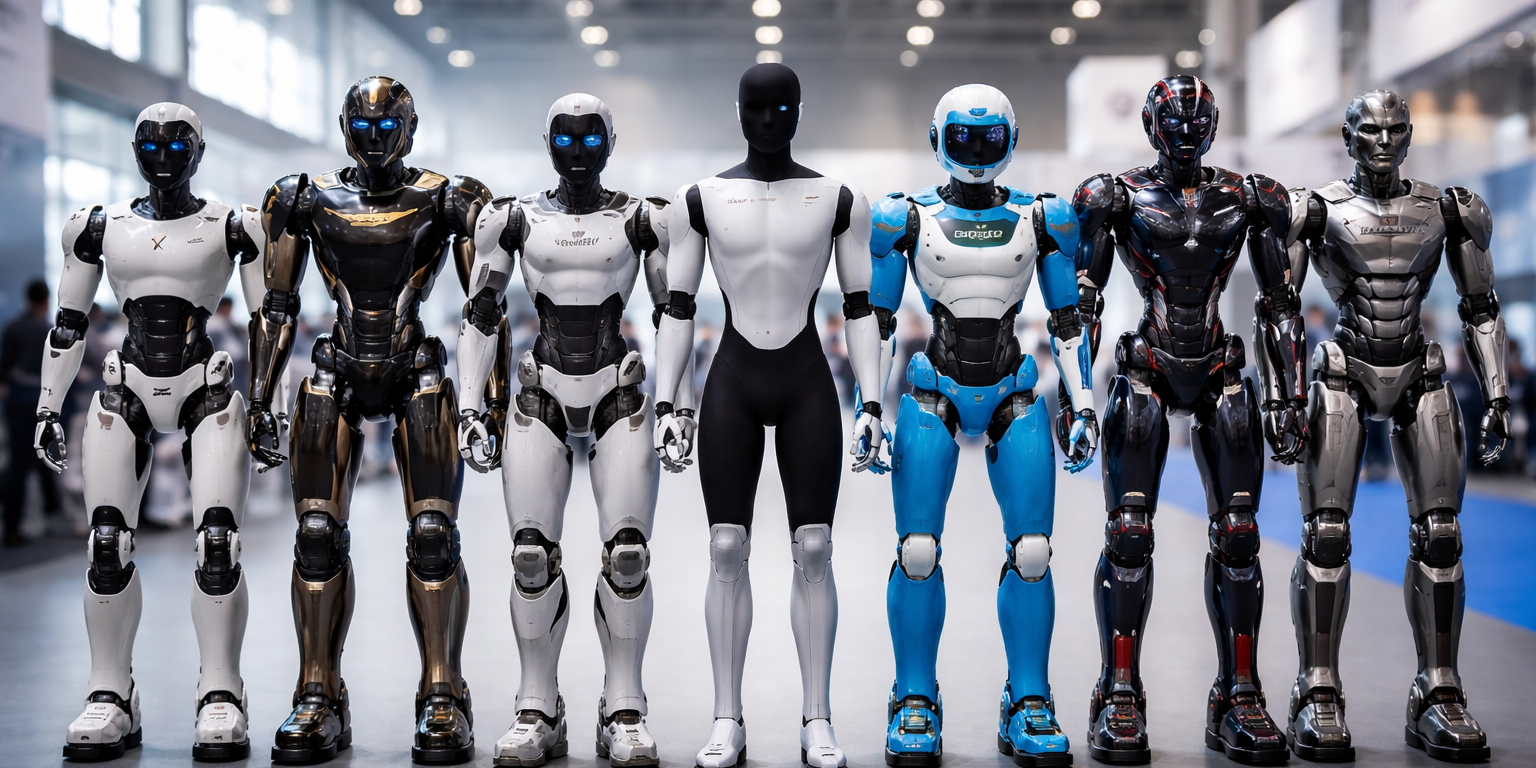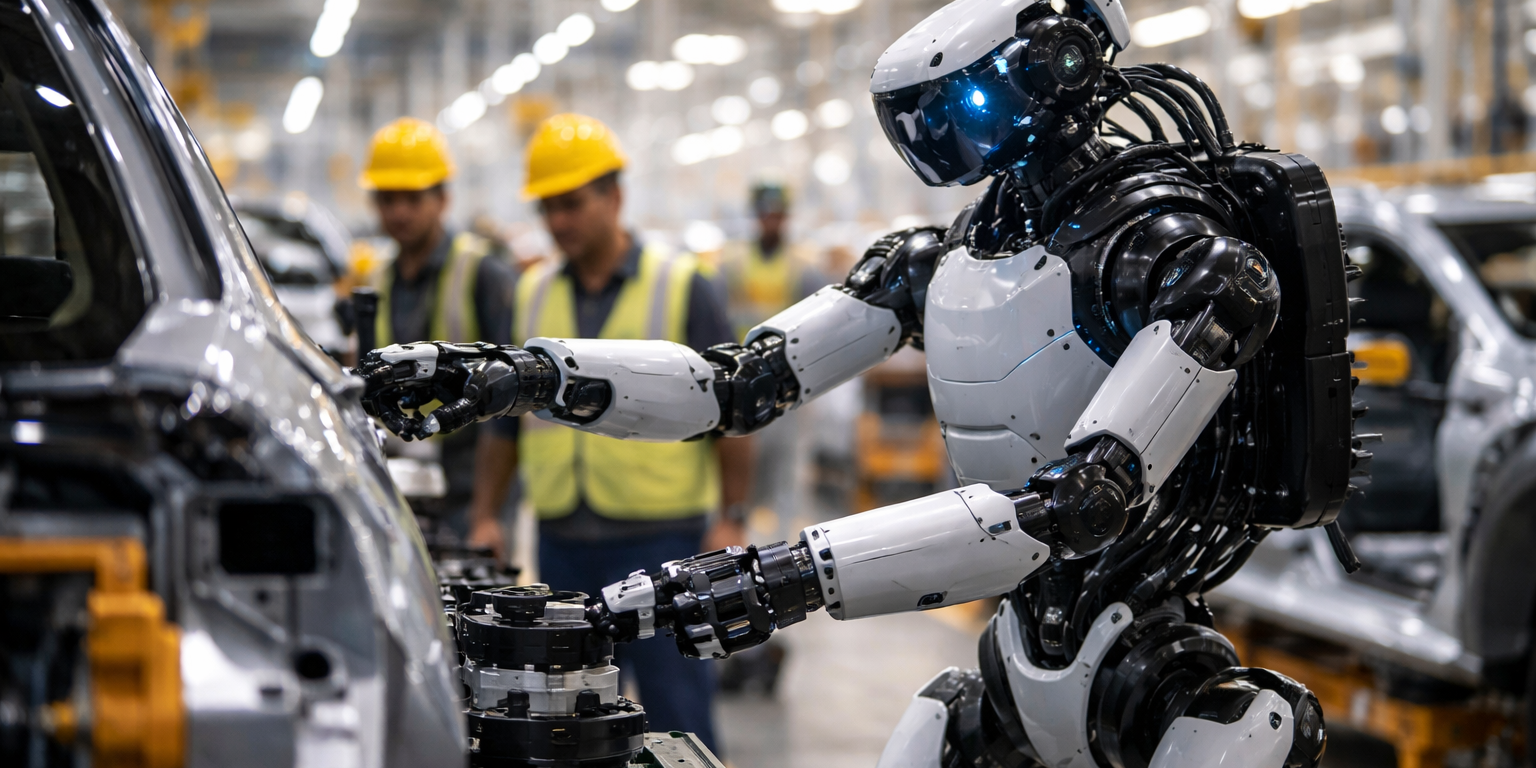

Holiday Robotics secured $105 million in new capital to manufacture FRIDAY, a humanoid robot that trades legs for wheels and targets facilities where battery runtime determines economic viability. The round signals growing investor confidence that wheeled mobility platforms may solve industrial deployment challenges faster than walking robots, particularly in environments already designed for forklifts and automated guided vehicles. Holiday declined to disclose the round's lead investor or valuation, though sources familiar with the financing said the company is now valued above $400 million.
FRIDAY represents a design philosophy that diverges sharply from Figure, Tesla, and others pursuing bipedal humanoids. The robot mounts an anthropomorphic torso and dual manipulator arms onto a differential-drive wheeled base, sacrificing the ability to navigate stairs or uneven terrain in exchange for faster transit speeds, lower power consumption per meter traveled, and simplified control algorithms. Holiday claims FRIDAY can operate for twelve continuous hours on a single battery pack, with hot-swappable cells allowing indefinite runtime during multi-shift operations. That operational envelope matters for warehouses running 24/7 picking operations or assembly lines where a dead robot creates downstream bottlenecks. The company has not published payload specifications, manipulation dexterity benchmarks, or navigation accuracy data, making independent technical assessment difficult at this stage.
The funding arrives as the humanoid robotics sector attracts unprecedented capital despite limited commercial deployments. Figure AI raised $675 million in February 2026 at a $2.6 billion valuation. Apptronik announced partnerships with NASA and Mercedes-Benz in late 2025. Sanctuary AI deployed its Phoenix robots in automotive manufacturing pilot programs earlier this year. Holiday competes in a market segment where no company has yet demonstrated sustainable unit economics at scale, though several claim pilot deployments with Fortune 500 partners under non-disclosure agreements. The gap between prototype demonstrations and economically viable production remains the defining challenge across the sector. Holiday founder and CEO Marcus Vail, previously a robotics program manager at Boston Dynamics, argued in a company blog post that wheeled platforms reduce mechanical complexity by eliminating the balance and gait planning problems inherent to legged systems, potentially accelerating the path to commercial reliability.
Holiday plans to deploy the capital across three areas: expanding its engineering team from 47 to approximately 120 employees by mid-2027, building out a manufacturing facility in Austin capable of producing 500 units annually, and funding pilot deployments with three undisclosed logistics and manufacturing partners beginning in the fourth quarter of 2026. The company currently operates from a 32,000-square-foot facility in San Jose where it assembles robots from components sourced primarily from suppliers in Japan, South Korea, and Taiwan. Holiday has not disclosed component costs, though industry analysts estimate current humanoid robots carry bill-of-materials costs between $35,000 and $75,000 depending on sensor suite, compute hardware, and actuator specifications. Achieving positive unit economics requires either driving component costs below $25,000 through volume manufacturing or demonstrating productivity gains that justify premium pricing to end customers facing labor shortages in sectors like warehousing, where turnover exceeds 40 percent annually.
What to Watch: Holiday expects to demonstrate FRIDAY in customer facilities during the fourth quarter of 2026, providing the first independent data on cycle times and task completion rates. Competing wheeled humanoid developers including Robust.AI and established industrial robotics companies like ABB may announce similar platforms as the mobility architecture debate intensifies. Component suppliers, particularly those manufacturing custom actuators and vision systems for humanoid applications, will indicate market momentum through production volume commitments over the next six months.