The Guozheng Robot Industry Index ETF began trading as China's Ministry of Industry and Information Technology finalizes production guidelines for humanoid platforms expected to ship before year-end. The fund tracks companies supplying actuators, vision systems, control architectures, and integration services to manufacturers building anthropomorphic robots for factory floors and logistics centers. Unlike broader automation indices that blend industrial arms with collaborative systems, this vehicle isolates the humanoid-specific value chain, according to fund documentation reviewed by engineers familiar with the offering.
China published its first national humanoid development roadmap in November 2023, setting 2025 as the milestone for small-batch production and 2027 for what officials termed "scaled manufacturing capability." That policy framework allocated research funding to universities and state-backed labs while identifying gaps in domestic supply chains for harmonic drive reducers, torque sensors, and real-time inference chips. The ETF capitalizes on Beijing's industrial strategy by bundling equity positions in firms that either already manufacture these components or have secured contracts to develop them. Several constituent companies operate joint ventures with municipal governments in Shenzhen, Shanghai, and Beijing, where local authorities have committed infrastructure support and pilot deployment sites in public facilities.
The fund's composition reflects the fragmented nature of China's humanoid ecosystem. No single manufacturer dominates the way Boston Dynamics or Agility Robotics anchor Western supply networks. Instead, the index weights suppliers of subsystems: motor and gearbox specialists that previously served automotive or aerospace customers, machine vision providers adapting surveillance technology for robot perception, and software houses building proprietary control stacks. This distribution mirrors the approach Chinese electric vehicle makers took a decade ago, when battery cell producers, power electronics firms, and charging infrastructure operators grew in parallel rather than waiting for a single automaker to establish primacy. Fund managers argue the same pattern will emerge in humanoids, where component innovation and systems integration proceed on separate but converging timelines.
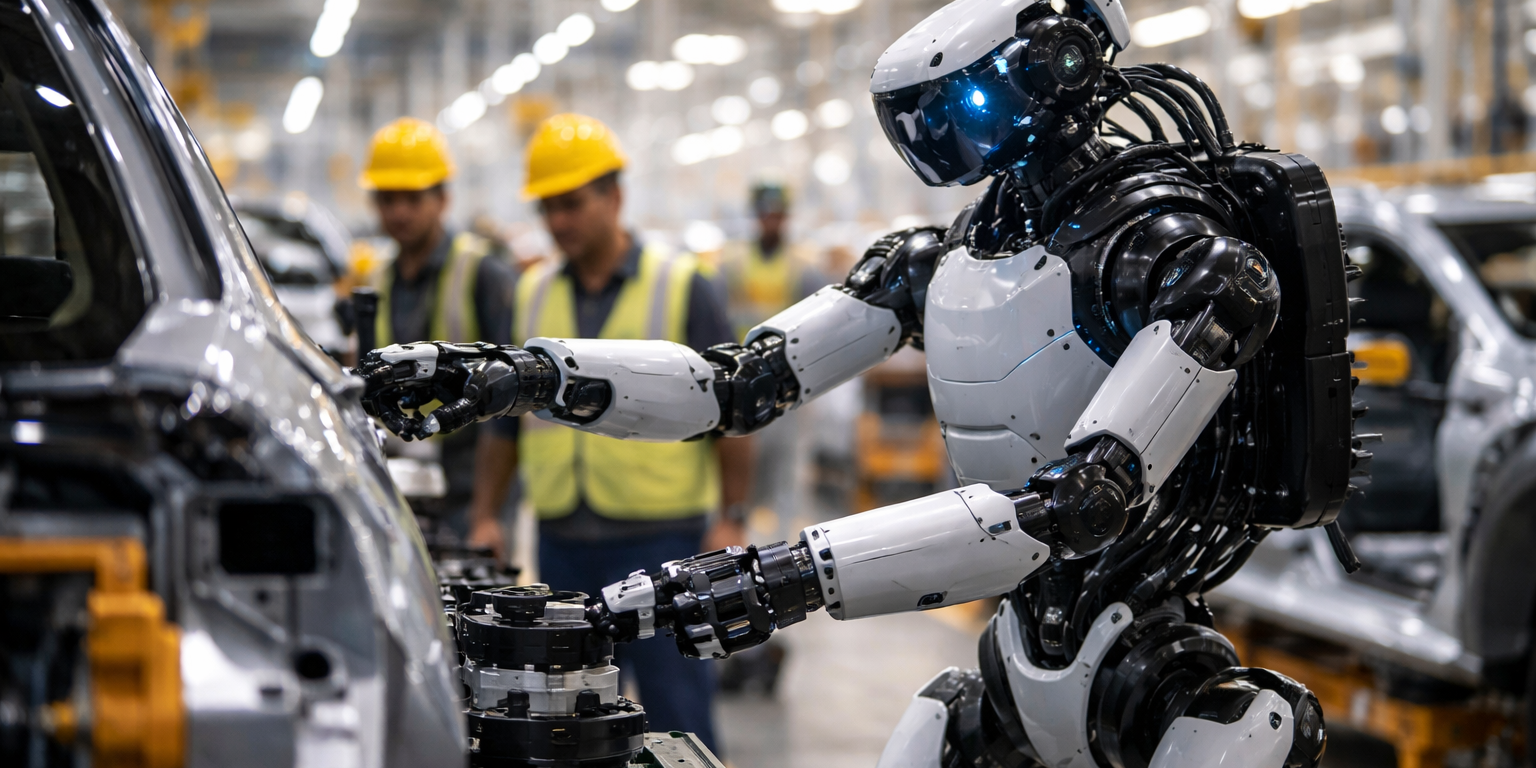
Industry analysts note the ETF's launch coincides with visible production milestones. At least three Chinese robotics companies have demonstrated humanoid prototypes in factory trials over the past six months, handling tasks like parts sorting, quality inspection with handheld tools, and collaborative assembly alongside human workers. These pilots remain limited in scope—typically fewer than ten units per site—but represent a shift from research labs to operational environments where uptime, maintenance intervals, and return on investment become measurable. The companies involved have not disclosed unit economics, though component suppliers interviewed at recent trade events estimated per-robot manufacturing costs in the range of 200,000 to 500,000 RMB for current-generation platforms, depending on sensor arrays and degrees of freedom. Volume production would need to halve that figure to compete with conventional automation on purely financial grounds, separate from the flexibility advantages humanoid forms provide in environments designed for human ergonomics.
The financial instrument arrives as global investment in humanoid development accelerates. Venture capital deployments in the sector exceeded $1.5 billion in 2024 across North America, Europe, and Asia, with significant concentrations in manipulation hardware and sim-to-real training infrastructure. Chinese startups have accounted for roughly one-quarter of that total, according to disclosed funding rounds, though government-backed investment vehicles and strategic corporate stakes often go unreported. The ETF provides a mechanism for institutional capital to enter the market without direct equity positions in pre-revenue companies, instead gaining exposure through publicly traded suppliers whose revenue streams already include humanoid-adjacent businesses. This structure appeals to pension funds and sovereign wealth managers seeking robotics exposure with lower volatility than venture-stage bets.
What to Watch: Monitor whether Chinese humanoid manufacturers meet the Ministry of Industry and Information Technology's 2025 small-batch production target, particularly any announcements of cumulative units shipped by companies like Xiaomi, UBTech, or Fourier Intelligence. Track quarterly revenue disclosures from harmonic drive and torque sensor suppliers for evidence that humanoid orders are transitioning from prototyping budgets to production contracts. Watch for policy updates in the first quarter of 2025 regarding tax incentives or depreciation schedules for companies deploying humanoid robots in manufacturing, which would directly affect adoption rates and, by extension, component demand.