The Global X Robotics & Artificial Intelligence ETF manages $3.54 billion across 41 holdings, a scale that positions it as the dominant instrument for investors seeking diversified exposure to the robotics sector without the concentration risk of individual equities. The fund, trading under the ticker BOTZ on NASDAQ, has attracted capital from institutional investors, family offices, and retail traders who view robotics as a multi-decade growth trajectory but lack the technical expertise to parse balance sheets at component suppliers or assess the durability of software moats at autonomy startups. The ETF structure offers liquidity and transparency that private robotics funds cannot match, particularly important in a market where valuations have compressed sharply since the 2021 peak and where distinguishing genuine revenue traction from PowerPoint projections requires operational visibility most investors do not possess.
BOTZ tracks companies that derive at least 50 percent of revenue from robotics or artificial intelligence, a threshold that excludes the hyperscalers like Amazon and Alphabet despite their growing robotics operations, while admitting pure-play automation suppliers, vision system providers, and collaborative robot manufacturers. The fund's methodology weights holdings by market capitalization adjusted for float, which means NVIDIA, ABB, and Keyence command outsized allocations while smaller names like Mobile Industrial Robots or AutoStore remain fractional positions. This approach mirrors the broader market's view that robotics value accrues disproportionately to chip designers and legacy industrial giants with distribution networks, rather than to the startups building novel form factors or pioneering unstructured environments. The composition has shifted over the past eighteen months as the fund rebalanced to reflect AI's growing role in perception and planning, adding positions in semiconductor firms while trimming legacy motion control suppliers whose growth rates have plateaued.
The $3.54 billion in assets under management represents a pullback from the fund's 2021 peak but a substantial recovery from the trough in late 2022, when rising interest rates and supply chain disruptions sent robotics valuations spiraling downward. BOTZ launched in September 2016 at a moment when collaborative robots were capturing headlines and Amazon's Kiva acquisition had validated warehouse automation as a category. The fund rode the pandemic-driven surge in e-commerce and labor shortages, then absorbed the subsequent correction as inflation fears shifted capital away from growth stocks toward energy and financials. The current asset base suggests investors have returned to a thesis that automation adoption will accelerate through the remainder of the decade, driven by persistent labor constraints in manufacturing, logistics, and agriculture, and by the maturation of vision systems capable of handling variable tasks that previously required human judgment. The ETF's expense ratio of 0.69 percent annually sits above passive index funds but below actively managed technology funds, a pricing band that reflects the specialized research required to evaluate robotics companies across geographies and subsectors.
Global X structures BOTZ as a passive vehicle tracking the Indxx Global Robotics & Artificial Intelligence Thematic Index, which reconstitutes quarterly to add companies meeting the revenue threshold and remove those falling below it or acquired by non-qualifying firms. The index provider applies a screening process that examines regulatory filings, earnings transcripts, and product portfolios to verify that robotics and AI constitute core operations rather than experimental side projects. This matters because many industrial conglomerates now tout automation capabilities without meaningful revenue contribution, and the index methodology aims to filter marketing language from financial reality. The quarterly rebalancing creates predictable trading windows that sophisticated investors monitor for entry points, particularly when high-performing stocks exceed weighting caps and must be trimmed, or when mergers force sudden liquidations of positions. The fund's performance has correlated closely with capital equipment cycles and manufacturing PMI readings, lagging in recessionary environments when enterprises defer automation projects, and surging when labor costs rise faster than equipment prices.
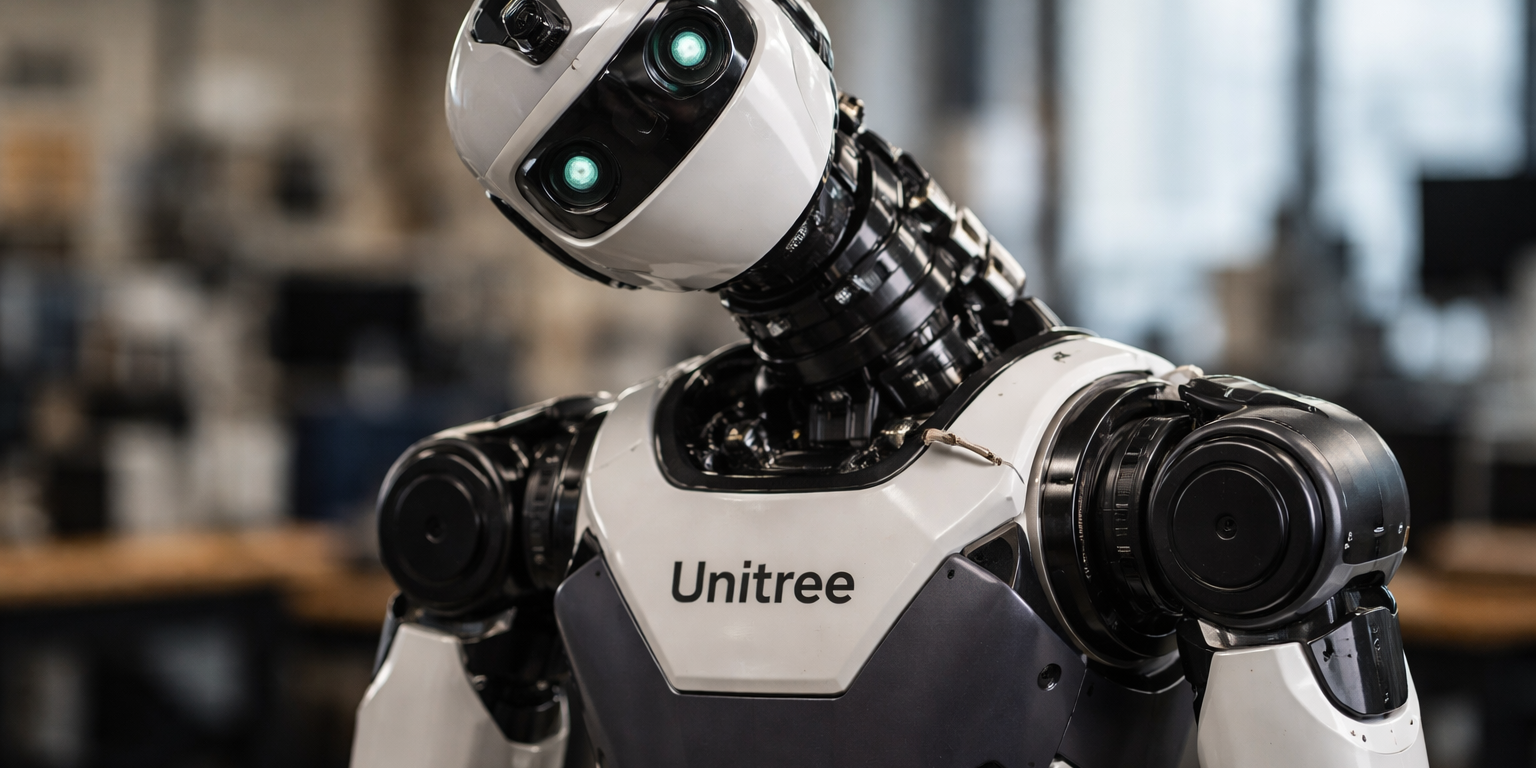
The robotics sector that BOTZ tracks has evolved considerably since the fund's inception, with collaborative robots and autonomous mobile robots shifting from niche products to standard offerings at major industrial distributors, and with AI-driven perception replacing rule-based programming in applications from bin picking to quality inspection. The fund's holdings now include companies building humanoid platforms, though these remain speculative positions given the limited commercial deployments to date and the unproven economics of general-purpose form factors. The larger allocations flow to established players in semiconductor design, servo motors, machine vision, and industrial software, reflecting the market's view that these enabling technologies will capture more value than the integrators and end-users deploying complete systems. The ETF provides a viewport into which subsectors are attracting capital and which are being starved, a signal that engineers and executives track when planning product roadmaps or evaluating acquisition targets.
What to Watch: Monitor BOTZ's quarterly rebalancing in March 2025 for additions or deletions that signal which robotics companies have crossed the 50 percent revenue threshold or fallen below it. Track the fund's semiconductor weighting, particularly NVIDIA and AMD allocations, as a proxy for investor conviction in AI-driven autonomy versus traditional motion control. Watch for flows into or out of the ETF during earnings season for ABB, Fanuc, and Yaskawa, which will indicate whether institutional investors view industrial automation as cyclical or secular.