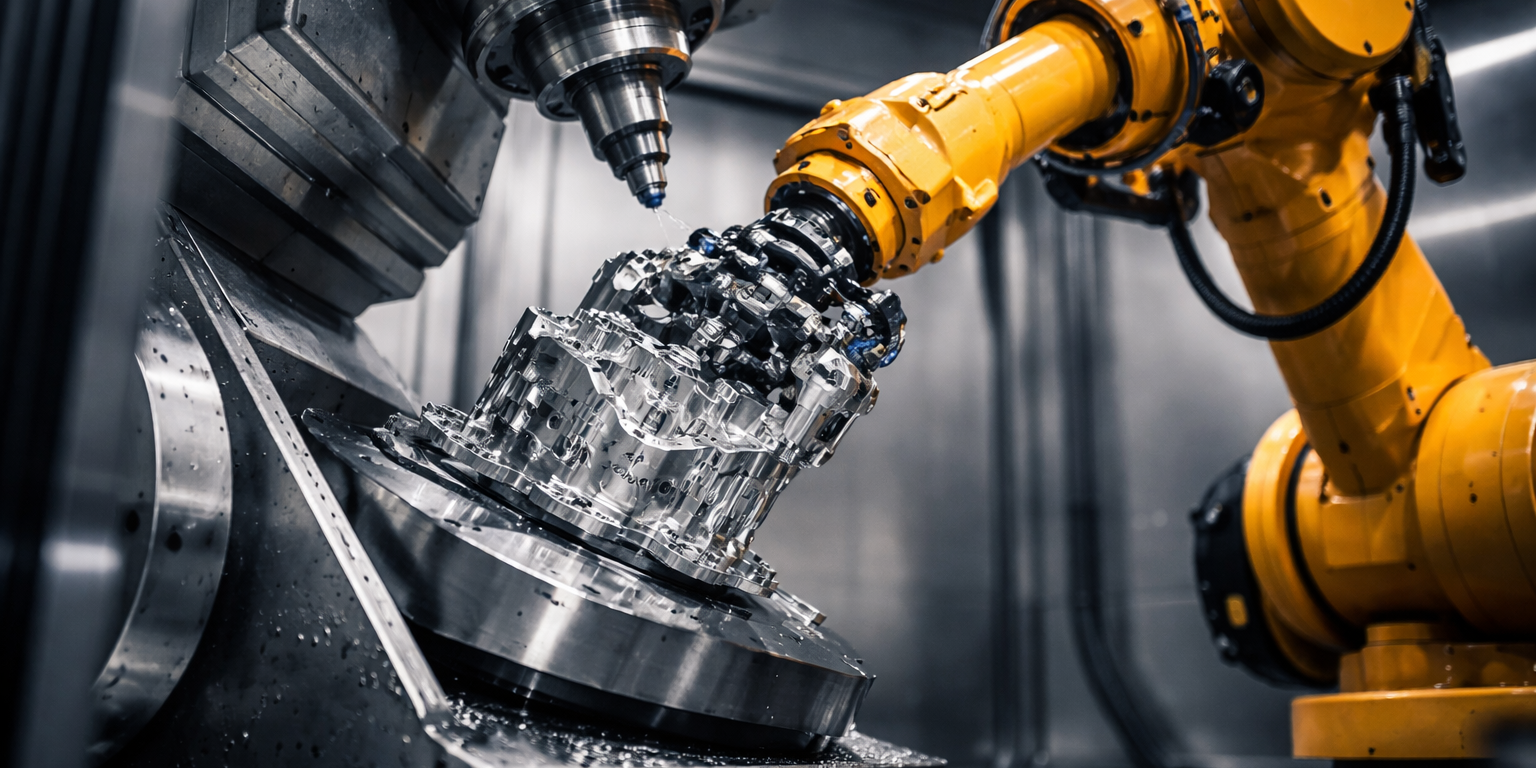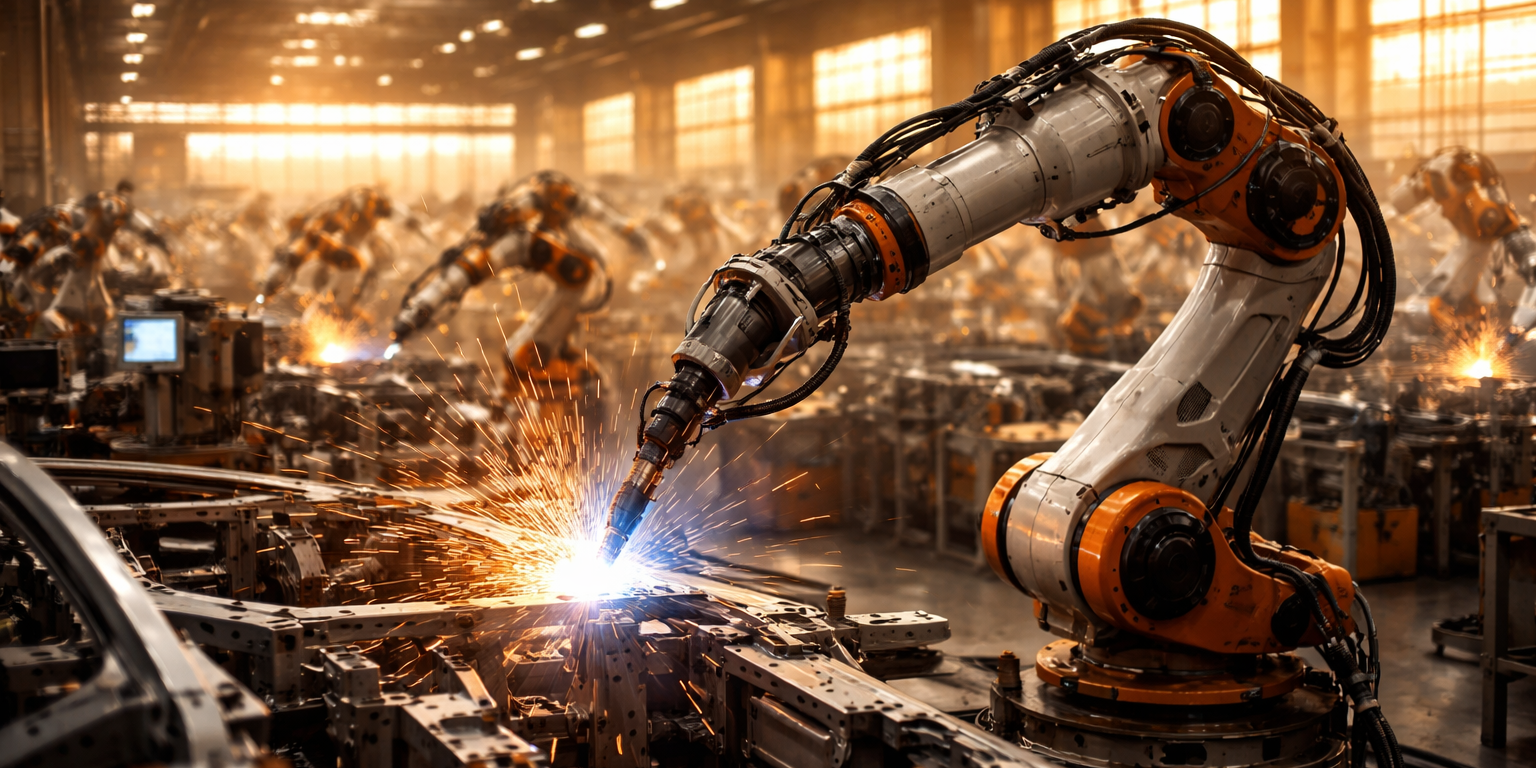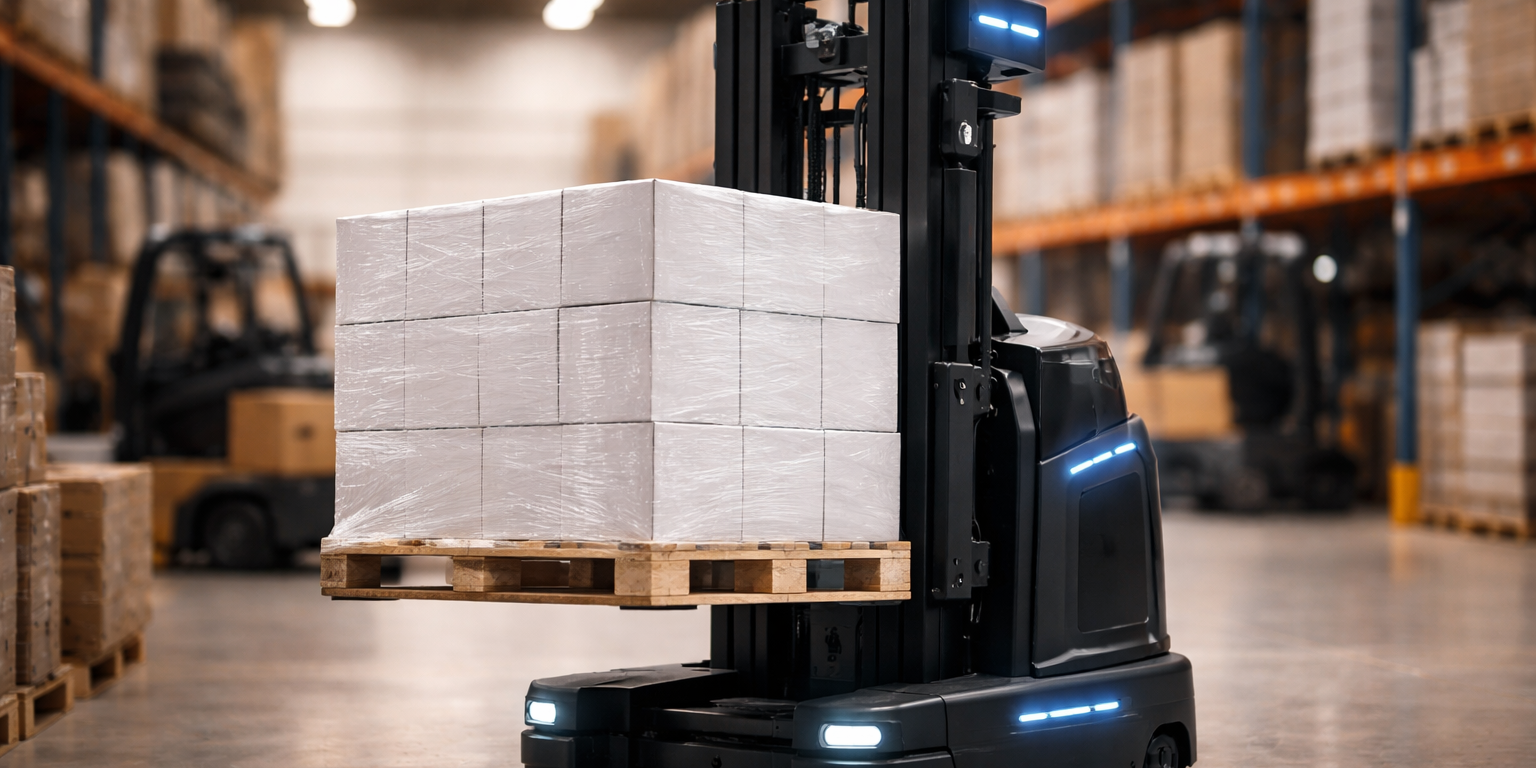
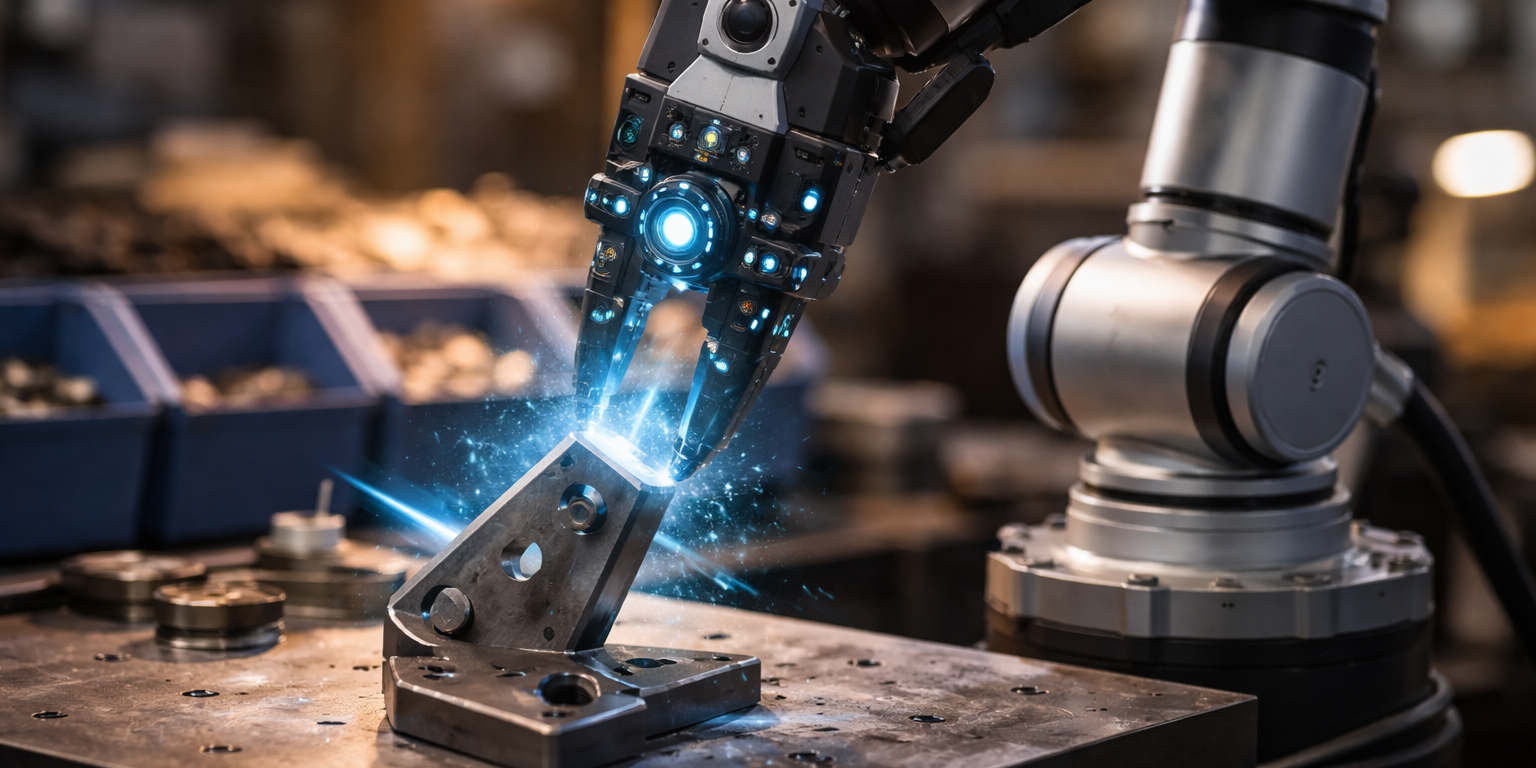
Galbots, a Chinese industrial robotics company, has positioned vision-based artificial intelligence as the bridge between traditional fixed-task robot arms and the flexible automation manufacturers increasingly require. While conventional industrial robots excel at precision work in controlled environments—welding car frames in the same position thousands of times, inserting components on electronics boards with micron-level accuracy—they fail when conditions deviate from programmed parameters. A part arriving in a slightly different orientation, a fastener with minor dimensional variation, or a work surface with unexpected features can stop a traditional robotic cell dead. Galbots' approach combines real-time visual sensing with adaptive motion planning, allowing robot arms to identify objects, assess their position and orientation, and adjust manipulation strategies on the fly. The company's systems use neural networks trained on manufacturing imagery to recognize parts, detect defects, and plan grasps without relying on fixed jigs or precisely indexed conveyors. This matters because manufacturers face mounting pressure to handle smaller batch sizes, frequent product changeovers, and mixed-part production runs—scenarios where traditional teach-pendant programming becomes prohibitively time-consuming.
The impetus for adaptive industrial AI stems from fundamental shifts in manufacturing economics. Automotive plants once produced identical vehicles for months or years before retooling. Electronics assembly lines ran millions of identical circuit boards. Those conditions justified weeks of robot programming and fixture design. Contemporary manufacturing looks nothing like that. Electric vehicle makers introduce new battery pack designs every six months. Consumer electronics companies launch product variants tailored to regional markets or seasonal promotions. Contract manufacturers bid on projects requiring fast turnaround with minimal capital investment in dedicated tooling. Traditional industrial robots, despite their precision and speed, become liabilities in this environment because reconfiguring them demands specialized integrators charging $150 to $300 per hour for reprogramming and validation. Galbots addresses this by offloading adaptation from human programmers to machine vision and learning algorithms. The system observes the workspace, identifies what needs manipulation, and calculates approach vectors and grip forces based on part geometry it extracts from camera data. Engineers at the company have focused deployment efforts on quality inspection—where the robot must locate and measure features on parts with geometric variation—and bin picking, where components arrive in random orientations requiring visual recognition before grasping.
The technical challenge lies in bridging perception and action reliably enough for production environments. Manufacturing tolerates zero ambiguity: a robot must grasp a part correctly or not attempt the grasp at all. False positives—thinking it has secured a component when it hasn't—lead to dropped parts, damaged tooling, or line stoppages. Galbots' vision systems run inference on edge computing modules mounted directly on robot controllers, processing camera feeds at 30 to 60 frames per second to update motion plans in real time. The neural networks identify part boundaries, estimate 3D pose from 2D images, and calculate stable grasp points based on shape and material properties. Training these models requires thousands of labeled images showing parts in various orientations, lighting conditions, and degrees of occlusion. Galbots has built datasets from partner factories, capturing real production conditions rather than sanitized lab environments. The company's engineers report accuracy rates above 95 percent for part identification and pose estimation in structured manufacturing settings, though performance degrades when parts are heavily soiled, stacked in complex tangles, or partially obscured. Integration partners handling deployment calibrate systems for specific production lines, tuning camera positions, lighting, and model parameters to match local conditions. Each installation generates operational data that feeds back into model refinement, gradually improving performance across Galbots' customer base.
The broader industrial robotics sector has taken varied approaches to this flexibility problem. Universal Robots built a market around collaborative robot arms that workers can manually guide through task sequences, reducing dependence on specialized programming but sacrificing speed and precision. ABB and FANUC have introduced vision-guided picking systems as optional modules for their heavy-duty industrial arms, targeting logistics and warehousing rather than precision manufacturing. Galbots positions itself between these extremes: maintaining the rigidity and speed of traditional industrial robots while adding perceptual capabilities comparable to research-grade systems. The company faces competition from established integrators adding vision modules to conventional robot brands, as well as newer entrants like Mech-Mind and Synapticon offering specialized 3D vision systems for industrial manipulation. Differentiation hinges on deployment speed and total cost of ownership. Galbots claims installations require one to two weeks versus four to eight weeks for traditional vision-guided systems, primarily due to simplified calibration procedures and pre-trained models that reduce on-site tuning. Pricing remains opaque, as industrial robot projects involve complex quoting based on application specifics, but industry sources suggest complete vision-guided cells from Galbots run 20 to 35 percent below comparable offerings from major incumbents when accounting for integration labor.
What to Watch: Galbots' ability to secure deployments with tier-one automotive or electronics manufacturers will signal whether vision-based adaptation meets production-grade reliability standards. Monitor partnerships announced in Q4 2026 or early 2027, particularly any involving multinational manufacturers with quality systems requiring extensive validation. Also track whether established players like ABB or KUKA acquire or partner with specialized vision AI firms as an alternative to internal development, which would validate Galbots' technical approach while intensifying competitive pressure. Finally, watch for published data on total cost of ownership and uptime metrics from early installations, as these numbers will determine whether adaptive vision systems remain niche or expand into mainstream factory automation.