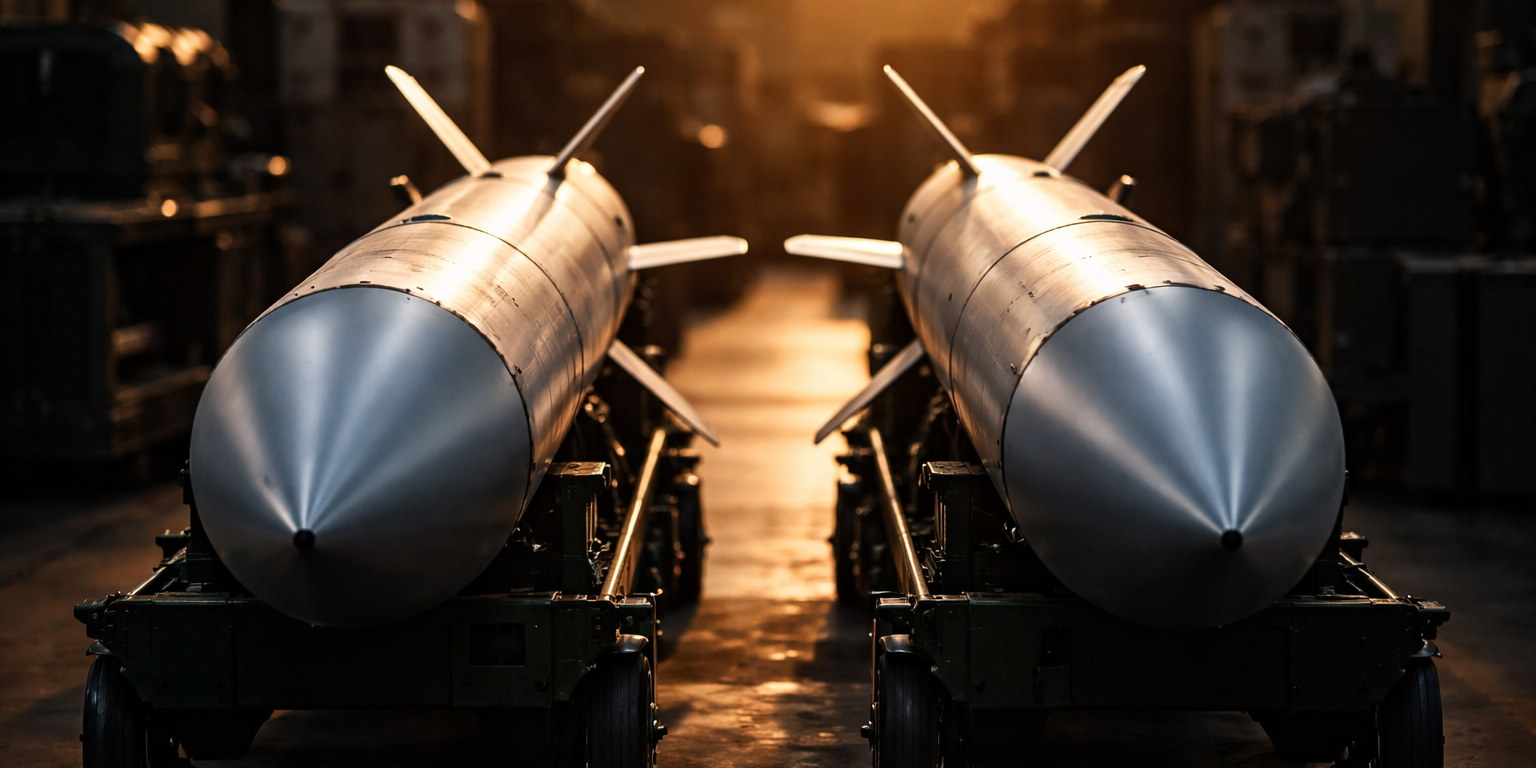
Verification would be impossible. That's the central thesis Frank Kendall advances against international efforts to ban autonomous weapons systems, according to excerpts from his forthcoming book released this week. Kendall, who served as Air Force Secretary from 2021 to 2024 and spent decades in defense acquisition roles, argues that unlike nuclear weapons or chemical agents, the software that enables autonomy cannot be reliably detected or monitored by external parties. A cruise missile looks identical whether a human controls its terminal guidance or an algorithm does. The distinction exists only in lines of code that can be modified, hidden, or denied. For arms control advocates who have spent years building momentum toward an international treaty restricting lethal autonomous systems, Kendall's position represents a significant counterargument from someone who shaped U.S. defense technology policy during a critical period of military AI development.
The timing of Kendall's public intervention reflects the current state of play in both technology development and diplomatic efforts. At the United Nations Convention on Certain Conventional Weapons, member states have debated autonomous weapons governance since 2014 without reaching consensus on binding restrictions. Meanwhile, the Pentagon has fielded increasingly sophisticated autonomous systems across domains. The Army's Collaborative Combat Aircraft program, which Kendall championed during his tenure, envisions uncrewed aircraft operating alongside piloted fighters with increasing levels of autonomy by 2028. The Navy's Large Unmanned Surface Vessel program aims to deploy autonomous warships capable of independent navigation and threat assessment. China has demonstrated swarm capabilities in both aerial and maritime domains, with the People's Liberation Army publicly discussing concepts for autonomous decision-making in contested scenarios. Russia continues development of autonomous submersibles and ground vehicles. The technology trajectory suggests that major military powers view autonomy as integral to future force structure, regardless of arms control negotiations.
Kendall's verification argument extends beyond simple detection problems. He notes that autonomous capabilities exist on a spectrum rather than as a binary state. Modern weapon systems already incorporate varying degrees of automation, from target recognition algorithms to waypoint navigation. Establishing where acceptable automation ends and prohibited autonomy begins would require defining technical thresholds that rapidly evolving technology would render obsolete. A treaty banning systems that select and engage targets without human intervention might simply drive development toward systems where human involvement becomes perfunctory rather than meaningful. An operator who rubber-stamps algorithmic recommendations every few seconds technically maintains control while adding no substantive judgment. The challenge resembles earlier debates over precision-guided munitions, where the distinction between a weapon that could hit what it aimed at versus one that could choose what to aim at proved difficult to codify in international law. Kendall spent his career managing programs that pushed those boundaries, including the Long Range Anti-Ship Missile and various intelligence, surveillance, and reconnaissance platforms that increasingly automated the sensor-to-shooter chain.
The broader industry implications of Kendall's position deserve scrutiny beyond the policy debate. Defense contractors including Anduril Industries, Shield AI, and Helsing have built business models around providing autonomous capabilities to militaries. These companies attract venture capital and engineering talent specifically because major military customers signal sustained demand for autonomy across platforms. Shield AI's Hivemind software, which enables collaborative autonomy for drones, has been integrated into multiple aircraft types and demonstrated in combat conditions. Anduril's Lattice command and control system processes sensor data and recommends responses faster than human operators can assess situations. If international restrictions appeared likely to constrain this market, investment patterns would shift. But Kendall's analysis suggests such restrictions face insurmountable practical obstacles, effectively giving industry a green light to continue development. The question becomes not whether autonomous weapons will proliferate, but how quickly and with what safeguards. Some nations may adopt unilateral policies around human oversight and engagement authority, as the United States did with its 2012 directive on autonomous weapons that Kendall helped implement. That directive required human involvement in lethal targeting decisions but left substantial room for interpretation regarding what constitutes meaningful human control.
What to Watch: Monitor the August 2026 CCW meeting in Geneva for how UN member states respond to arguments against verification feasibility. Track whether the European Union's AI Act provisions regarding high-risk military applications gain traction as a regional governance model. Defense budget submissions in early 2027 will reveal whether Pentagon funding for autonomous systems accelerates further based on assessments that international restrictions remain unlikely. Anduril's planned IPO, expected late 2026, will test investor confidence in the regulatory environment for autonomous defense technology.