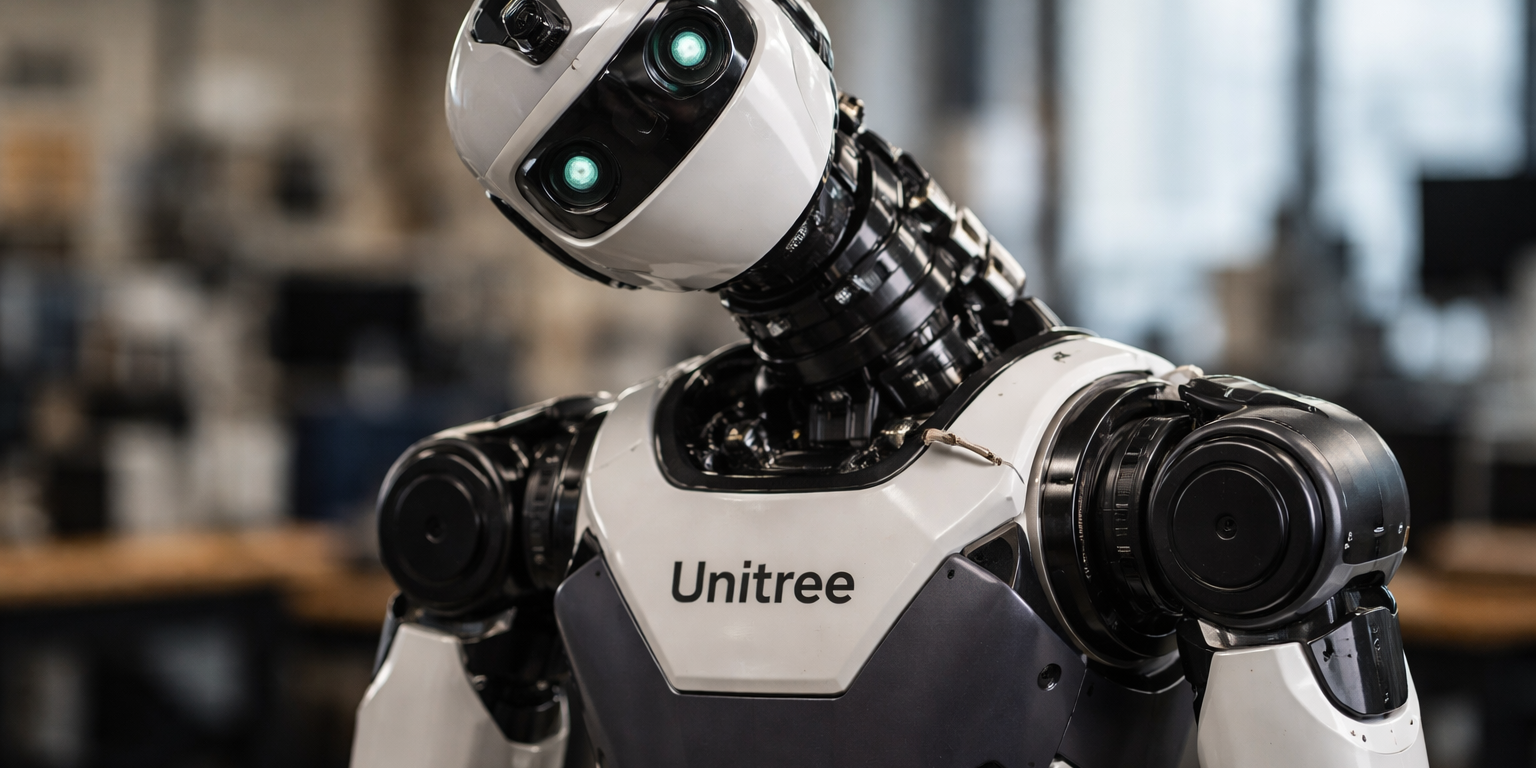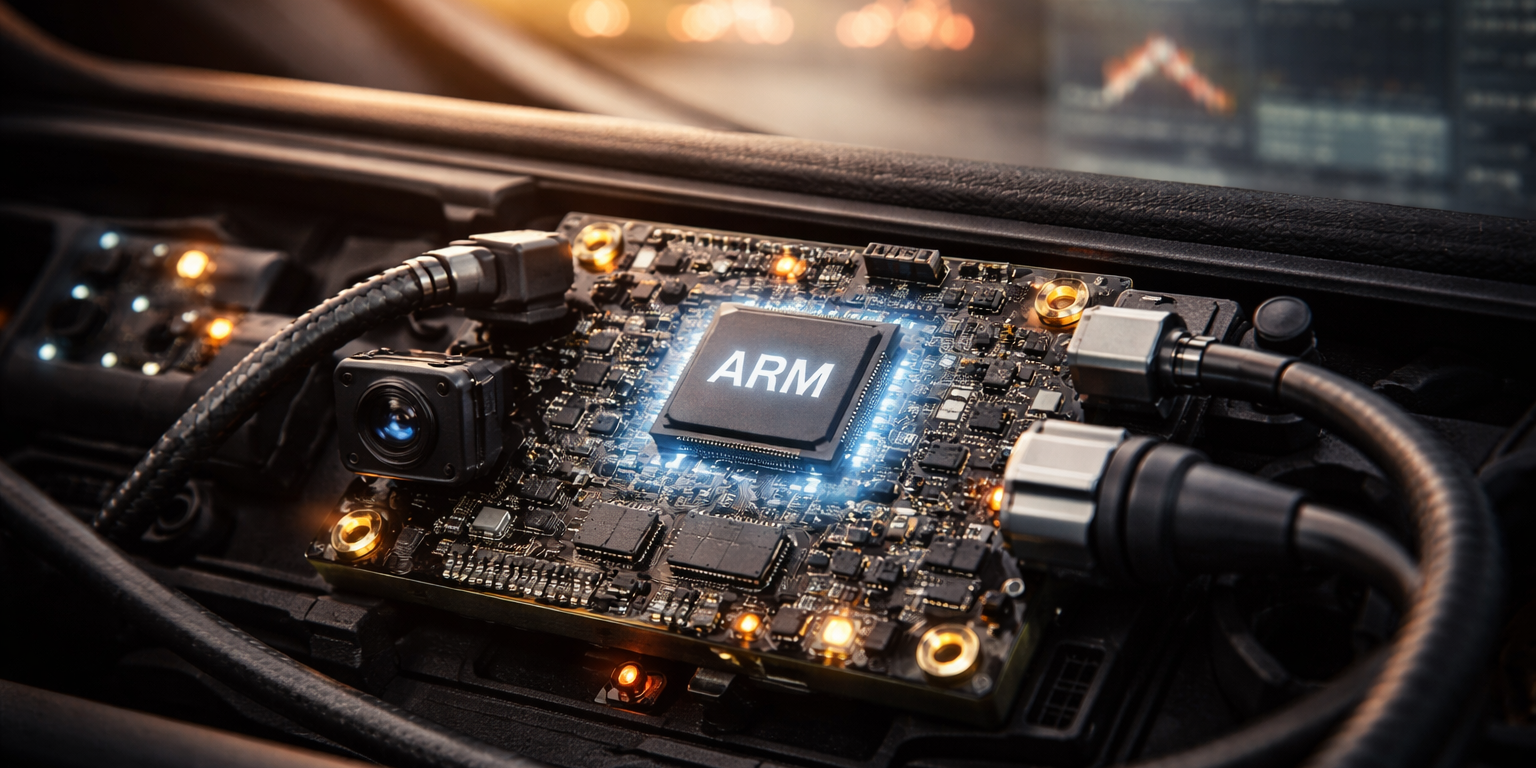
ARM processes more than 250 billion chips annually across mobile, automotive, and embedded systems, but Drew Henry believes the company's next major growth vector sits at the intersection of physical AI and robotics. Henry, who leads ARM's automotive and robotics business development, detailed how the Cambridge-based chip architecture firm plans to extend its dominance in low-power computing into robots, drones, and autonomous machines that must make decisions in milliseconds while running on battery power. The approach differs sharply from datacenter AI strategies. Where cloud-based models prioritize raw throughput, ARM's physical AI roadmap emphasizes performance per watt, deterministic latency, and the ability to fuse sensor data from cameras, lidar, radar, and IMUs in real time. Henry pointed to automotive as the proving ground. ARM-based systems-on-chip already handle sensor fusion and path planning in millions of vehicles. Translating those capabilities to humanoid robots, warehouse AMRs, and agricultural drones means adapting the same compute architectures to different form factors, power envelopes, and safety requirements.
The technical challenge revolves around heterogeneous computing. Modern robotics workloads don't run on a single processor. They require a mix of CPU cores for control logic, GPU or NPU cores for vision and inference, dedicated signal processors for sensor fusion, and real-time cores for safety-critical tasks. ARM's strategy involves tightly coupling these elements on a single die, reducing the latency and power overhead that comes from shuttling data between discrete chips. Henry cited specific examples where this architecture enables robots to react to unexpected obstacles in under 10 milliseconds, a threshold impossible to meet when inference runs in the cloud or on loosely integrated chipsets. The company's Cortex-A, Cortex-R, and Mali GPU families already ship in robotics platforms from companies including Boston Dynamics, Agility Robotics, and several Chinese humanoid developers. Henry declined to name unannounced partners but said ARM-based SoCs would appear in multiple commercial humanoid platforms shipping in late 2026 and early 2027.
Physical AI also demands new software paradigms. Henry acknowledged that most robotics developers still cobble together fragmented toolchains, stitching together ROS for middleware, PyTorch or TensorFlow for model training, and vendor-specific SDKs for hardware acceleration. ARM has been working with partners to streamline this stack, focusing on libraries that let developers compile models trained in standard frameworks directly to ARM's Ethos NPUs and Mali GPUs without manual optimization. The goal is to shrink the gap between research and deployment. Henry pointed to ARM's collaboration with NVIDIA's Isaac platform as one example, though he noted that ARM's strategy remains architecture-agnostic. The company licenses IP to dozens of chipmakers, and Henry emphasized that ARM's role is to provide the building blocks, not dictate the end solution. That flexibility has made ARM the default architecture for edge AI, with more than 70 percent of AI-enabled embedded devices running ARM cores.
The economics matter as much as the engineering. Henry argued that physical AI represents a fundamentally different business model than cloud AI. Datacenter operators can amortize the cost of expensive accelerators across thousands of users. A robot carries its own compute, and every watt, every dollar, and every cubic centimeter counts. ARM's licensing model lets chipmakers optimize for specific use cases, whether that means a $20 SoC for a delivery drone or a $500 compute module for a factory cobot. Henry said ARM is also exploring new licensing structures tailored to robotics startups, though he offered no specifics. The broader implication is that ARM sees physical AI as a volume play, not a high-margin niche. If autonomous systems proliferate at the scale ARM projects, millions of robots will each need onboard inference, creating a chip market that dwarfs even the automotive semiconductor boom.
What to Watch: ARM's next-generation Cortex-X cores, expected to be announced in late 2026, will reportedly include architectural optimizations specifically for sensor fusion and real-time inference. Track which humanoid robot companies announce ARM-based compute platforms in the fourth quarter of 2026, particularly among Chinese developers racing to commercialize at scale. Monitor ARM's partnerships with chipmakers like Qualcomm, MediaTek, and Rockchip, all of which are developing robotics-focused SoCs on ARM architectures. Finally, watch whether ARM introduces a robotics-specific reference design or evaluation kit, which would signal a more aggressive push into the market beyond pure IP licensing.