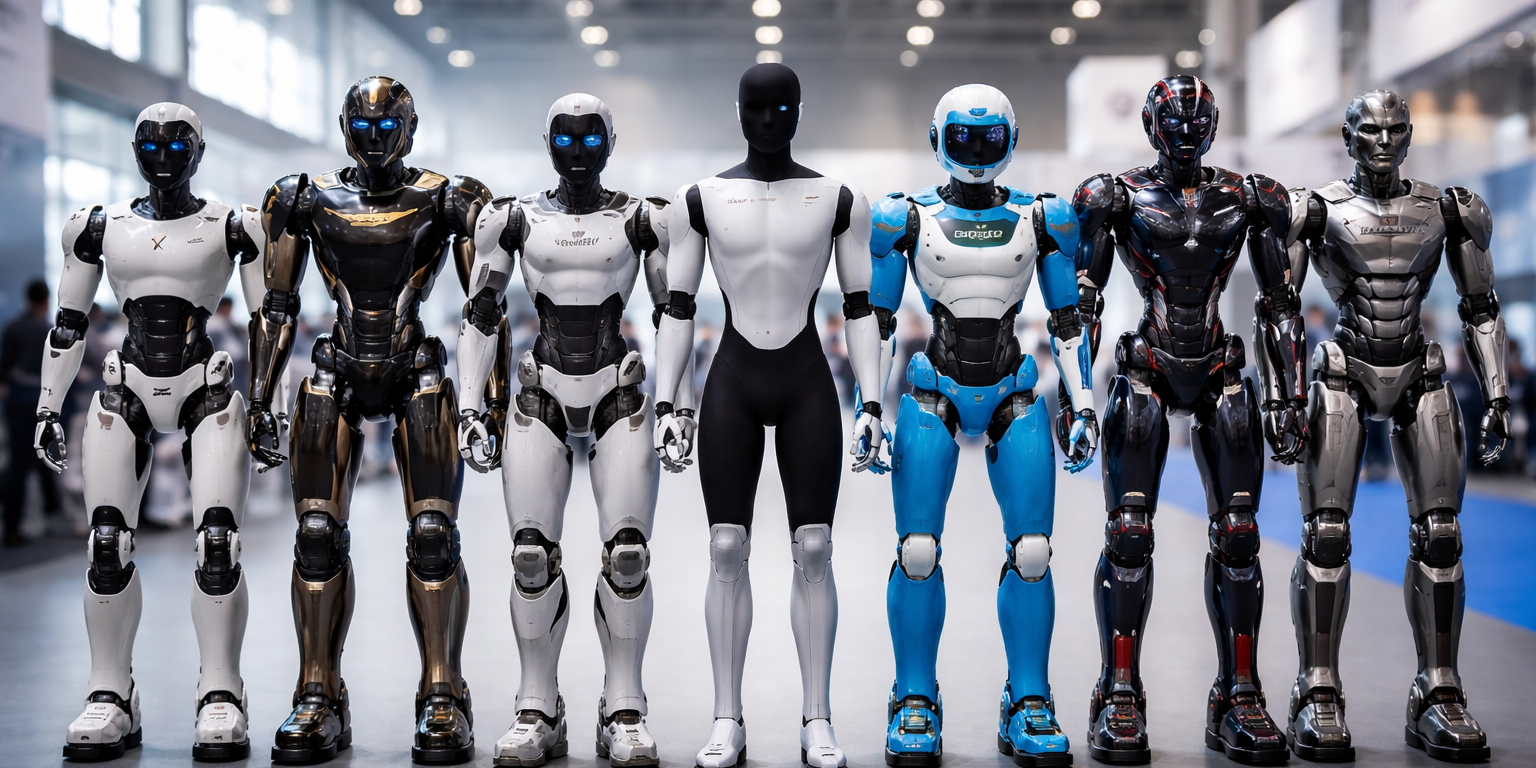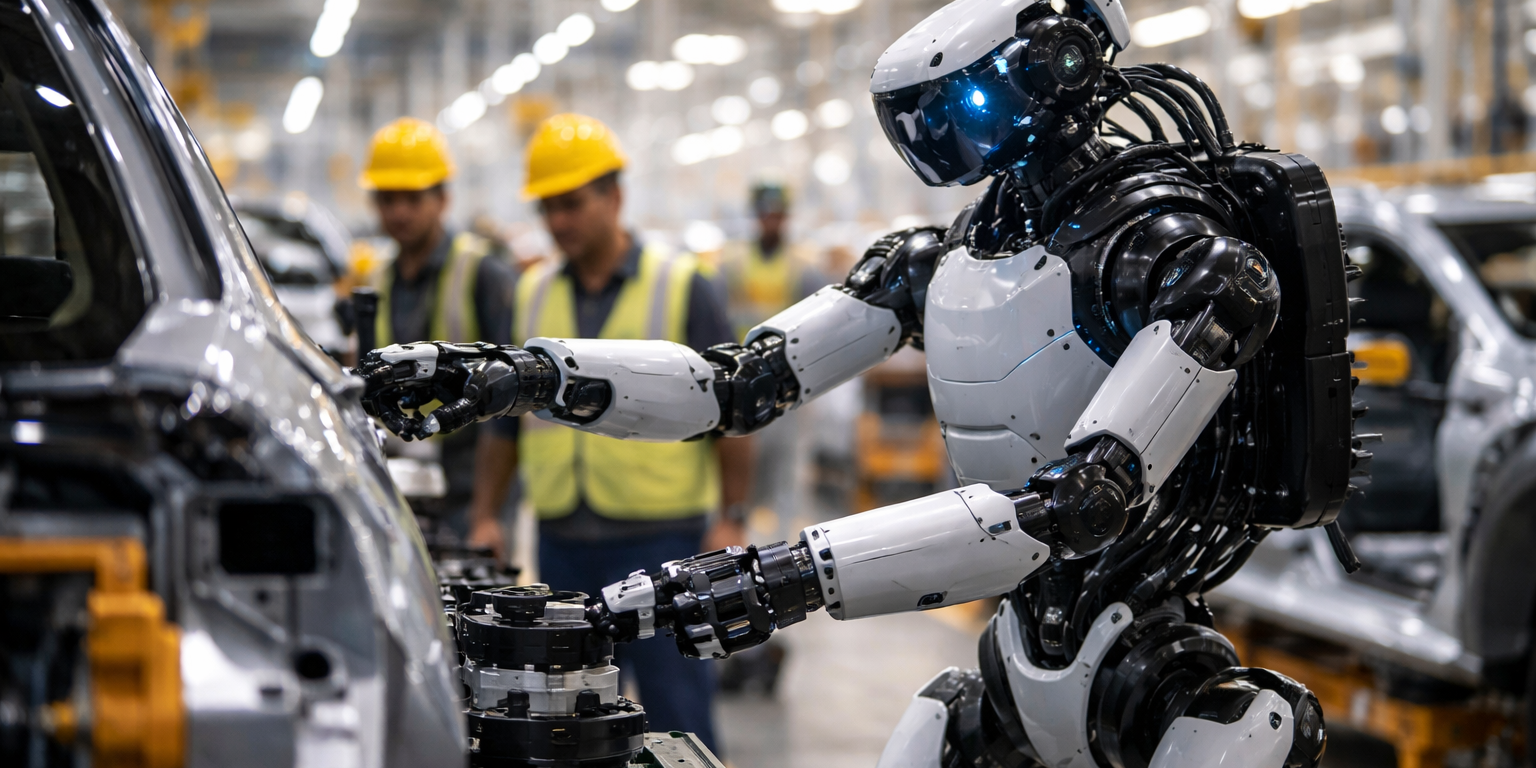
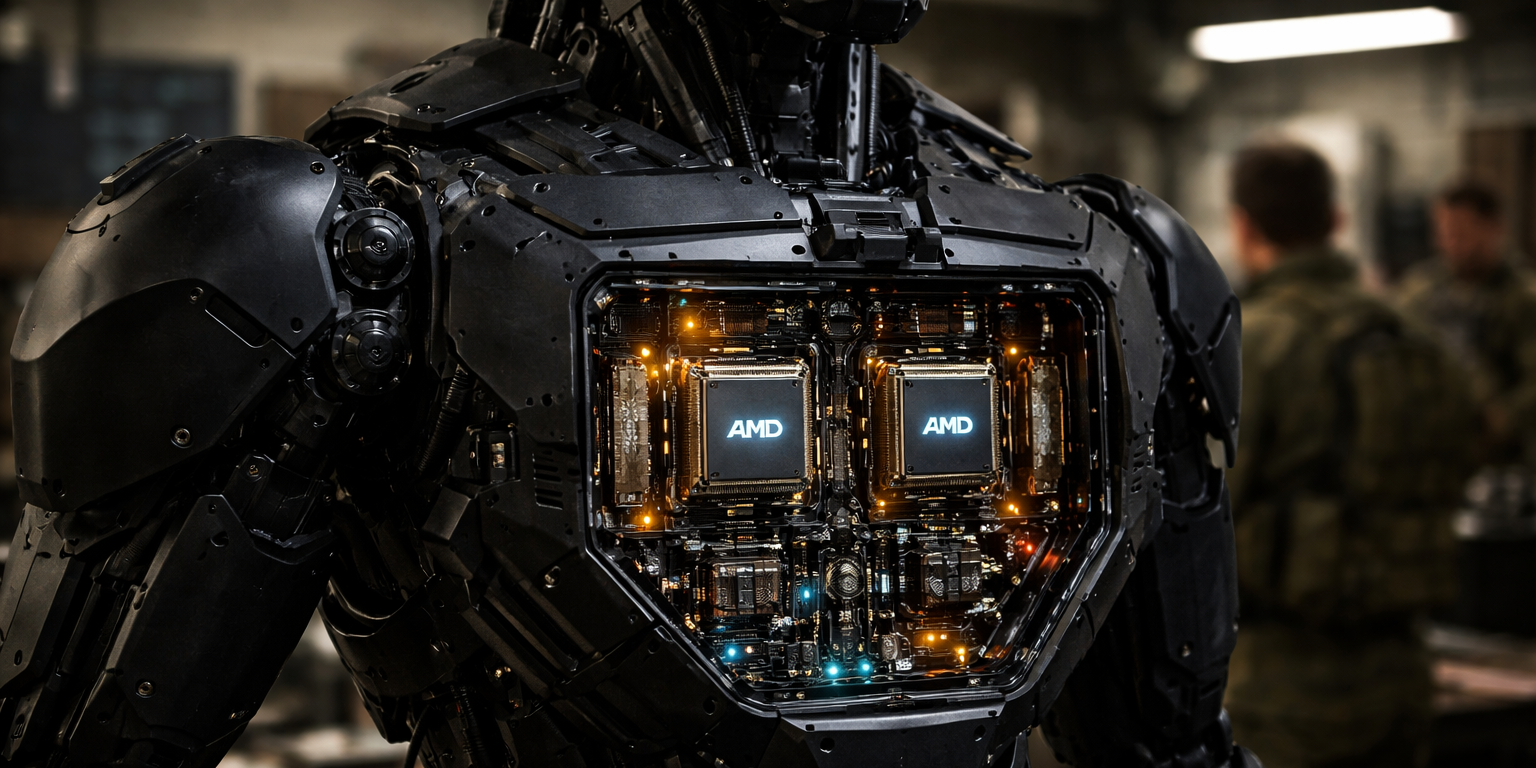
Foundation Future Industries announced Thursday it will co-develop autonomous humanoid robots with Advanced Micro Devices, integrating AMD's processors into bipedal platforms intended for military and industrial deployment. The robotics startup, which counts Eric Trump among its investors, did not disclose which AMD chip architectures will power the systems or whether the collaboration involves custom silicon development. Eric Trump, son of President Donald Trump, has backed Foundation Future through family investment vehicles, though the company has not published the size of his stake or total capital raised to date.
The partnership arrives as defense contractors and chipmakers race to secure positions in the emerging military robotics market. AMD has historically focused on data center and gaming processors, with limited public presence in robotics compute. The company's Ryzen and EPYC architectures have appeared in some industrial automation systems, but this marks its first announced partnership explicitly targeting humanoid platforms for defense applications. Foundation Future has not revealed prototype specifications, unit economics, or testing timelines. Industry observers note that military humanoid development remains in early stages across the sector, with most programs still in lab environments rather than field trials. Boston Dynamics, Figure AI, and Agility Robotics have all explored defense applications, though deployment details remain closely held.
Foundation Future's business model centers on dual-use humanoid platforms that can transition between military reconnaissance, industrial inspection, and logistics tasks. The company has not disclosed manufacturing partners, supply chain arrangements, or production capacity targets. AMD's participation suggests Foundation Future is pursuing compute-intensive autonomy stacks, likely involving real-time sensor fusion, path planning, and decision-making algorithms that require significant onboard processing. Whether AMD will provide off-the-shelf components or collaborate on custom ASICs remains unclear. The defense robotics supply chain has grown increasingly complex, with startups often integrating components from multiple semiconductor vendors while developing proprietary software layers. Anduril Industries, Shield AI, and Ghost Robotics have all pursued similar strategies, mixing commercial processors with custom firmware to meet military specifications.
Eric Trump's involvement through Foundation Future adds a political dimension to what would otherwise be a straightforward technology partnership. The Trump family has faced scrutiny over business dealings during and after Donald Trump's presidency, though Foundation Future's operations predate the current administration. The company has not commented on whether it holds or is pursuing Department of Defense contracts. Military procurement rules impose strict disclosure and conflict-of-interest requirements on vendors with family ties to sitting officials. Foundation Future's website lists no government contracts or awards, though the company could be operating under research agreements not subject to public disclosure. AMD declined to specify whether the partnership involves government funding or whether resulting technology will be export-controlled under International Traffic in Arms Regulations. The chipmaker's China business has already faced restrictions on advanced processors, and any military-specific humanoid development would likely trigger additional export controls.
What to Watch: Monitor whether Foundation Future discloses Department of Defense contracts or Defense Innovation Unit partnerships in the coming quarter, as any military funding would require public filing. Track AMD's second-half 2026 product announcements for embedded or edge AI processors that could support humanoid compute requirements. Watch for Foundation Future prototype demonstrations or technical specifications, particularly around payload capacity, runtime, and autonomy levels, which remain undisclosed. Observe whether competitors like Figure AI or Agility Robotics announce similar chip partnerships, as the humanoid compute landscape is rapidly consolidating around a handful of processor vendors.