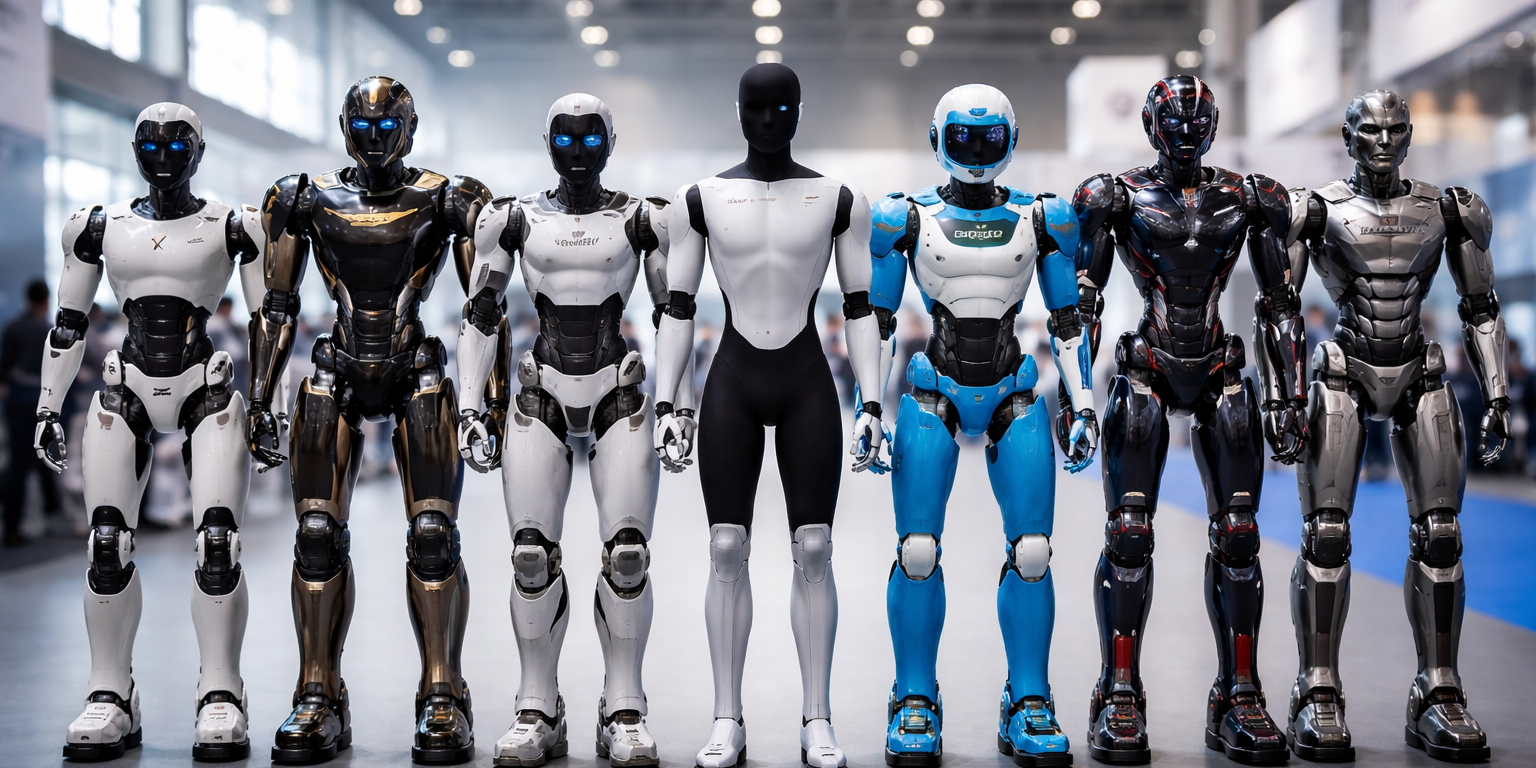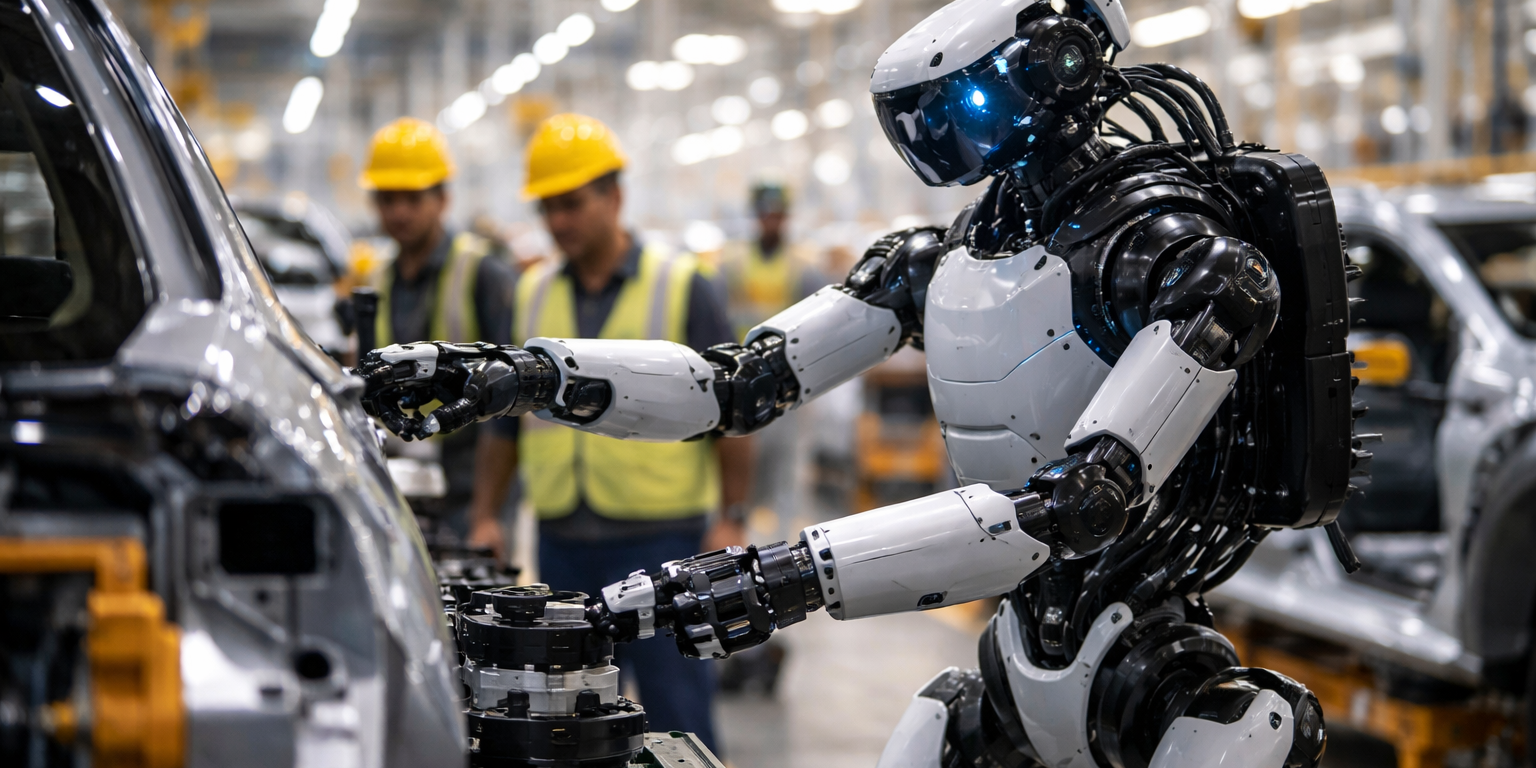
Teleoperation data alone won't deliver autonomous humanoid robots, according to the CEO of Flexion, who argues that the industry's current fixation on human demonstration risks creating systems permanently dependent on remote operators. While teleoperation serves a critical role in generating initial training datasets, companies that neglect simulation environments and reinforcement learning frameworks may find their robots perpetually tethered to human input rather than developing genuine decision-making capabilities. The observation arrives as dozens of humanoid robotics startups have converged on teleoperation as their primary development methodology, collecting thousands of hours of human-guided manipulation and locomotion data. That data feeds imitation learning models intended to replicate human behavior, but without the complementary infrastructure to let robots explore, fail, and improve beyond what humans explicitly demonstrate, the learning ceiling remains artificially low.
Flexion's leadership sees the pattern repeating across the sector. Companies build teleoperation rigs, hire operators, capture demonstrations, train models, then discover their robots can only handle scenarios represented in the training set. Edge cases, novel object configurations, or environments that differ meaningfully from the data collection setup cause performance to degrade rapidly. The path forward requires simulation at scale, where robots can attempt millions of grasps, manipulations, and navigation sequences without the time and cost constraints of physical hardware. Reinforcement learning algorithms running in these simulated environments generate the diversity of experience that imitation learning from teleoperation cannot match. A human operator demonstrating a pick-and-place task shows one solution; a reinforcement learning agent trying ten million variations discovers optimizations, failure modes, and recovery strategies that no human would think to demonstrate. The computational expense is real, but so is the performance gap between robots trained exclusively on human demos versus those that combine demonstrations with self-supervised exploration.
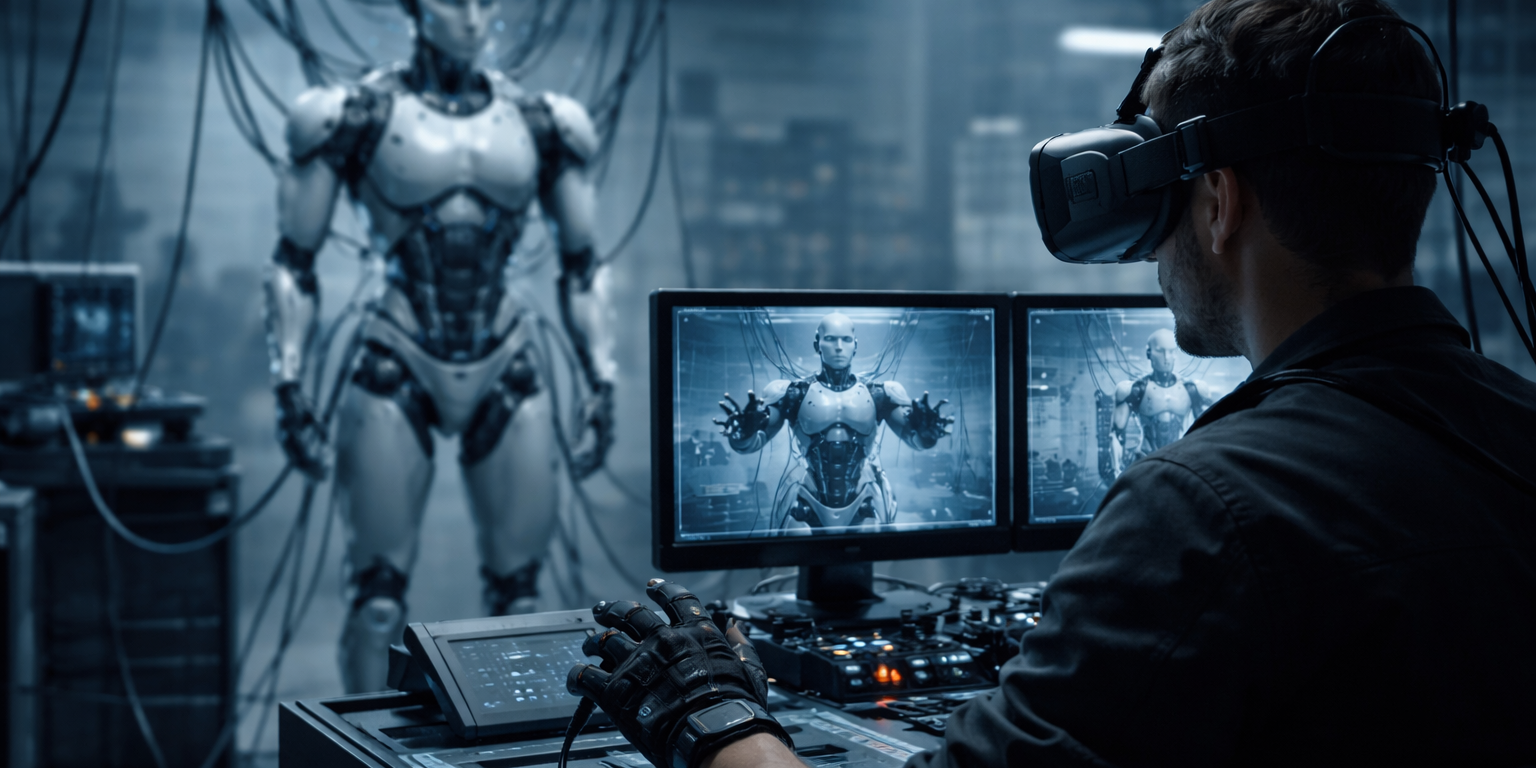
The teleoperation infrastructure itself has matured considerably. Multiple vendors now offer haptic feedback systems, stereoscopic vision, and motion capture suits that let operators control humanoid robots with increasing fidelity. Data collection throughput has improved accordingly, with some teams reporting they can capture dozens of task demonstrations per hour once operators reach proficiency. That efficiency makes teleoperation attractive from a program management perspective, particularly when executives and investors want visible progress on timelines measured in quarters rather than years. Simulation and reinforcement learning demand patience; the early results often look worse than even crude teleoperation before the algorithms converge on effective policies. The temptation to double down on what produces immediate, legible results has led multiple well-funded robotics companies to deprioritize or even abandon simulation work in favor of scaling their teleoperation fleets. Flexion's CEO characterizes this as a strategic misstep that will become apparent when these companies attempt to deploy robots in unstructured environments where novel situations arise faster than operators can respond or new demonstrations can be collected.
The technical literature supports the hybrid approach Flexion advocates. Recent results from academic labs and the few companies that have maintained robust simulation pipelines show that models pre-trained via reinforcement learning in simulation, then fine-tuned with smaller amounts of teleoperation data, outperform models trained on teleoperation alone. The simulation work establishes broad competency across diverse scenarios; the real-world demonstrations inject the specific task structure and object properties that simulations struggle to model perfectly. Neither alone suffices, but together they produce robots capable of generalizing beyond their training distribution. The challenge lies in the organizational commitment required to maintain both tracks simultaneously. Simulation infrastructure demands GPU clusters, physics engine expertise, photorealistic rendering pipelines, and domain randomization strategies to ensure simulated experience transfers to physical robots. Teleoperation requires hardware, operators, physical space, and the workflow infrastructure to version, label, and manage petabytes of demonstration data. Companies operating on finite engineering budgets face pressure to choose, and the near-term legibility of teleoperation makes it the path of least organizational resistance.
What to Watch: Track whether major humanoid robotics companies announce simulation partnerships or infrastructure investments over the next quarter, particularly cloud-based platforms that could lower the barrier to large-scale reinforcement learning. Monitor academic publications from labs working on sim-to-real transfer for humanoid manipulation to see if techniques emerge that make simulation more sample-efficient. Pay attention to which companies announce deployment metrics versus data collection metrics; those reporting successful autonomous operation hours rather than teleoperation hours collected may have solved the integration challenge Flexion describes.