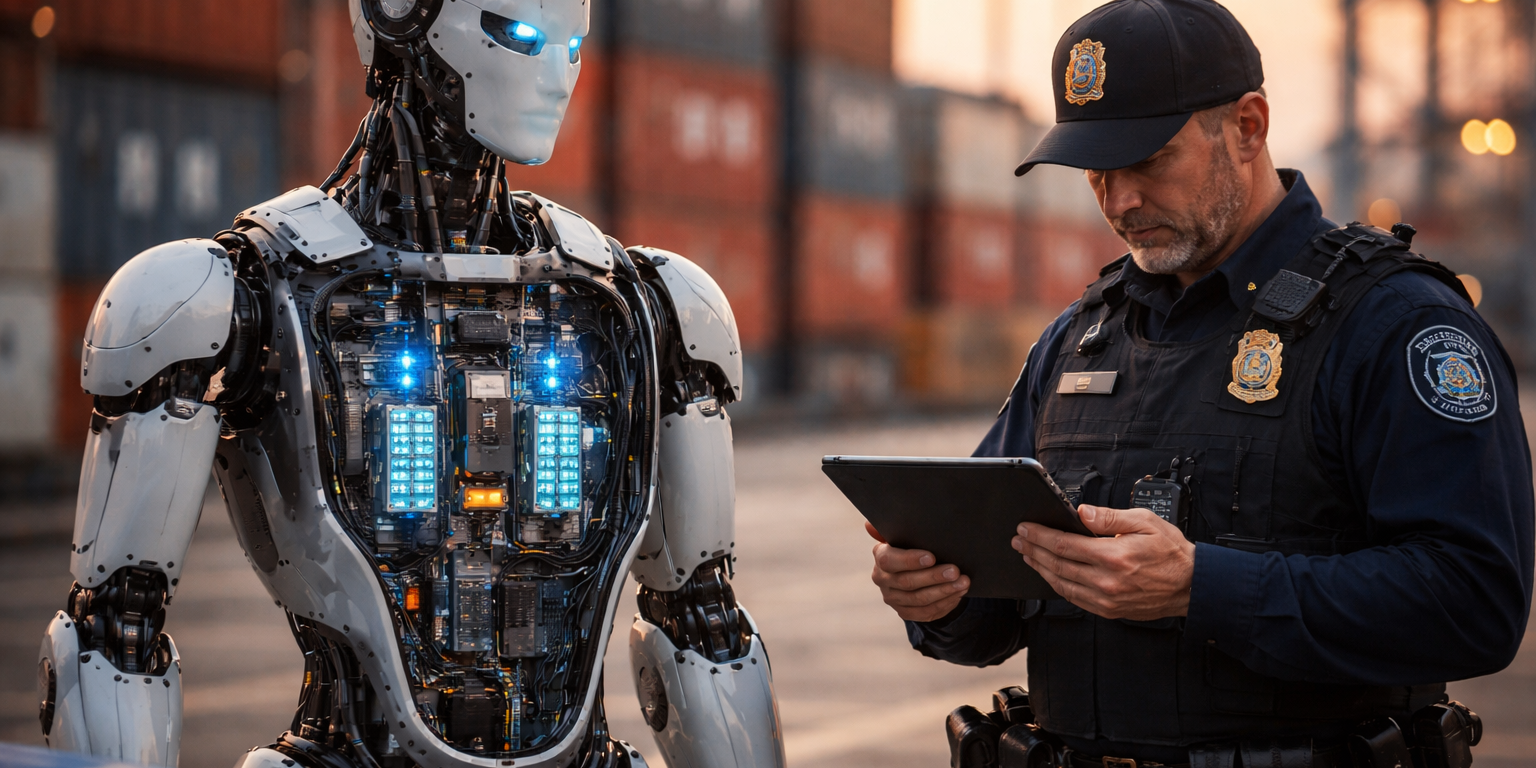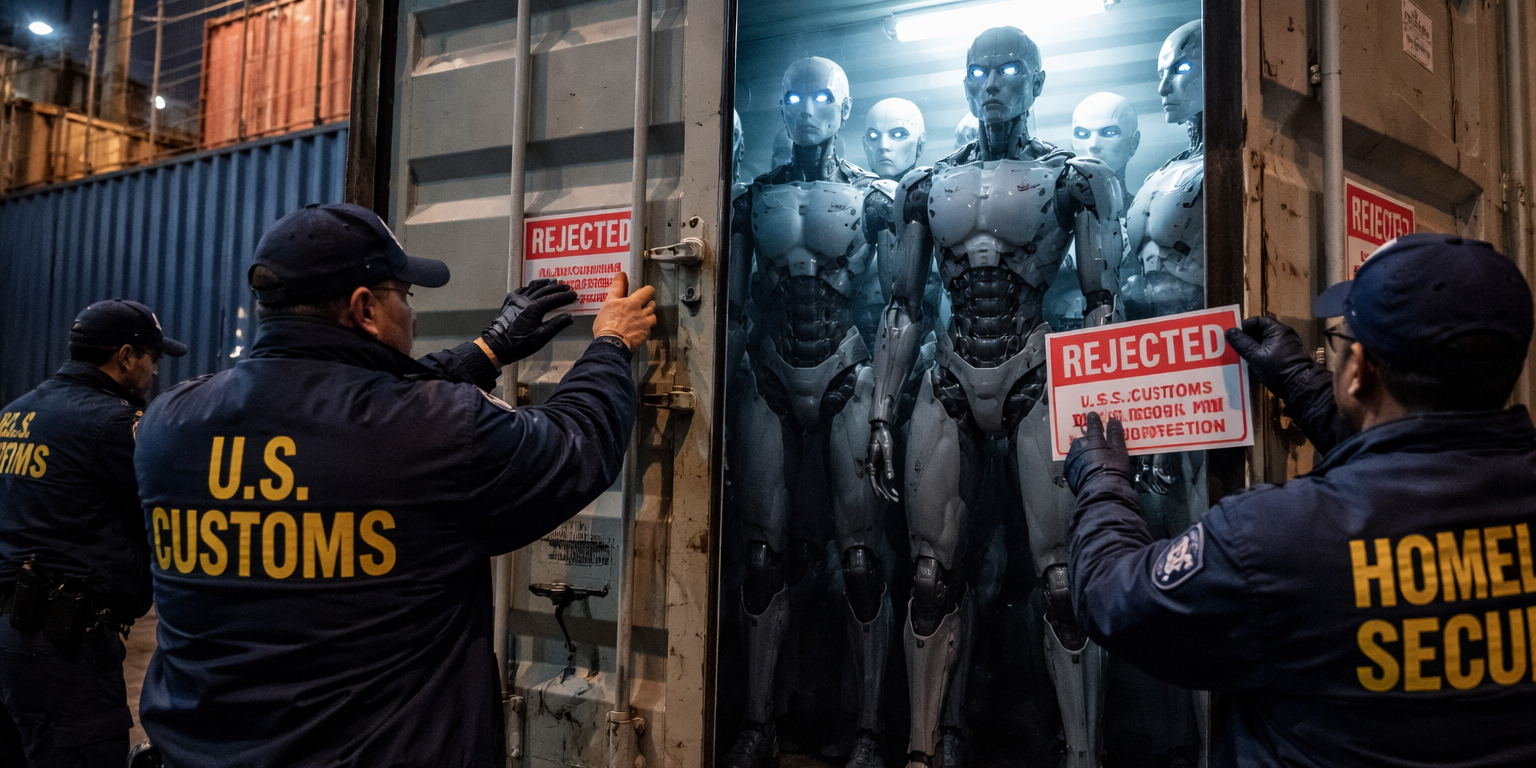
The federal government imposed an immediate ban on imports of new humanoid robots, quadrupedal platforms, and solar inverters manufactured outside the United States, citing national security vulnerabilities in both hardware supply chains and embedded software systems. The executive order, issued without advance notice to industry stakeholders, does not grandfather existing contracts or inventory in transit, forcing companies with pending shipments to seek exemptions through a newly established review process at the Department of Commerce. Officials declined to specify which threat actors or incidents prompted the action, but the timing coincides with a classified briefing to congressional leadership on foreign surveillance capabilities embedded in commercial robotics platforms.
China manufactures approximately 70 percent of the world's humanoid robots by unit volume, according to a 2025 analysis by the International Federation of Robotics, a concentration that leaves U.S. companies dependent on suppliers like Unitree, UBTECH, and smaller contract manufacturers in Shenzhen and Guangzhou. The ban applies to complete robotic systems and major subassemblies including torso structures, actuator arrays, and vision-processing boards, effectively cutting off access to price-competitive hardware that U.S. startups have relied on for prototyping and pilot deployments. Domestically designed humanoids from companies like Agility Robotics, Figure AI, and Apptronik are manufactured partly or entirely in the United States, giving them a sudden advantage in a market where imported platforms had undercut their pricing by 40 to 60 percent in recent procurement bids. The order exempts platforms already operating under existing permits, but prohibits software updates or replacement components for banned models, a restriction that could force premature retirement of fleets deployed in warehouses and distribution centers.
Quadrupedal robots face similar restrictions, with Boston Dynamics' Spot and Ghost Robotics' Vision quadrupeds emerging as the only widely deployed platforms manufactured within U.S. borders. Unitree's Go2 and B2 models, priced between $1,600 and $15,000 depending on configuration, had captured significant market share in academic research, construction site monitoring, and security patrol applications where Boston Dynamics' $75,000 Spot proved cost-prohibitive. Universities and research labs with Unitree units already in operation can continue using them under the exemption, but cannot purchase additional units or source replacement parts after existing inventory depletes. The solar inverter component of the ban targets manufacturers including Huawei, Sungrow, and GoodWe, which together supply inverters for an estimated 40 percent of U.S. commercial solar installations completed in 2025. Energy industry groups challenged the inclusion of inverters in a robotics-focused order, arguing the components lack autonomous capabilities and pose minimal security risk compared to networked mobile platforms.
Domestic robotics manufacturers welcomed the policy while acknowledging near-term supply chain disruption. Agility Robotics, which assembles its Digit humanoid at a facility in Salem, Oregon, sources certain precision bearings and servo controllers from Asian suppliers that may fall under the ban's subassembly provisions. The company declined to specify which components might require redesign or alternate sourcing, but acknowledged that build times for new units could extend by eight to twelve weeks while it qualifies domestic or allied-nation suppliers. Apptronik, based in Austin, Texas, said its Apollo humanoid uses entirely U.S.-manufactured structural components but relies on vision sensors from a German supplier with a Chinese manufacturing subsidiary, creating ambiguity about whether those parts qualify as foreign-made under the order's country-of-origin definitions. Smaller startups that built prototypes using Unitree actuators or off-the-shelf Chinese components face more fundamental challenges, with several telling investors they would need to halt testing and seek bridge funding to redesign around compliant parts. Venture capital firms active in the robotics sector reported fielding calls from portfolio companies seeking emergency capital to cover unexpected engineering costs, with one partner estimating the ban could add $2 million to $5 million in non-recurring expenses for early-stage companies that must now source or develop alternative components.
What to Watch: The Department of Commerce is expected to publish detailed exemption criteria and a list of specific banned manufacturers by mid-August 2026, giving companies clarity on borderline cases involving joint ventures or subassembly sourcing. Boston Dynamics and Agility Robotics will likely announce expanded production capacity to meet demand from customers who can no longer purchase Chinese alternatives. Several members of Congress have indicated they will introduce legislation to codify the ban and establish a domestic robotics manufacturing incentive program modeled on the CHIPS Act, with initial hearings scheduled for September 2026.