The Federal Communications Commission added robotic vacuum cleaners to its covered list under the Secure Equipment Act on July 15, 2026, blocking any new model containing communications components manufactured by firms the agency deems national security threats. The expanded interpretation affects every major consumer robotics brand that sources production from Chinese contract manufacturers, including iRobot's Roomba lineup, Roborock, Ecovacs, and Shark's AI-enabled models. Devices already granted equipment authorization retain their certifications, but any vacuum submitted for approval after the cutoff date now enters a waiver review process the FCC has designed to be prohibitively slow and uncertain.
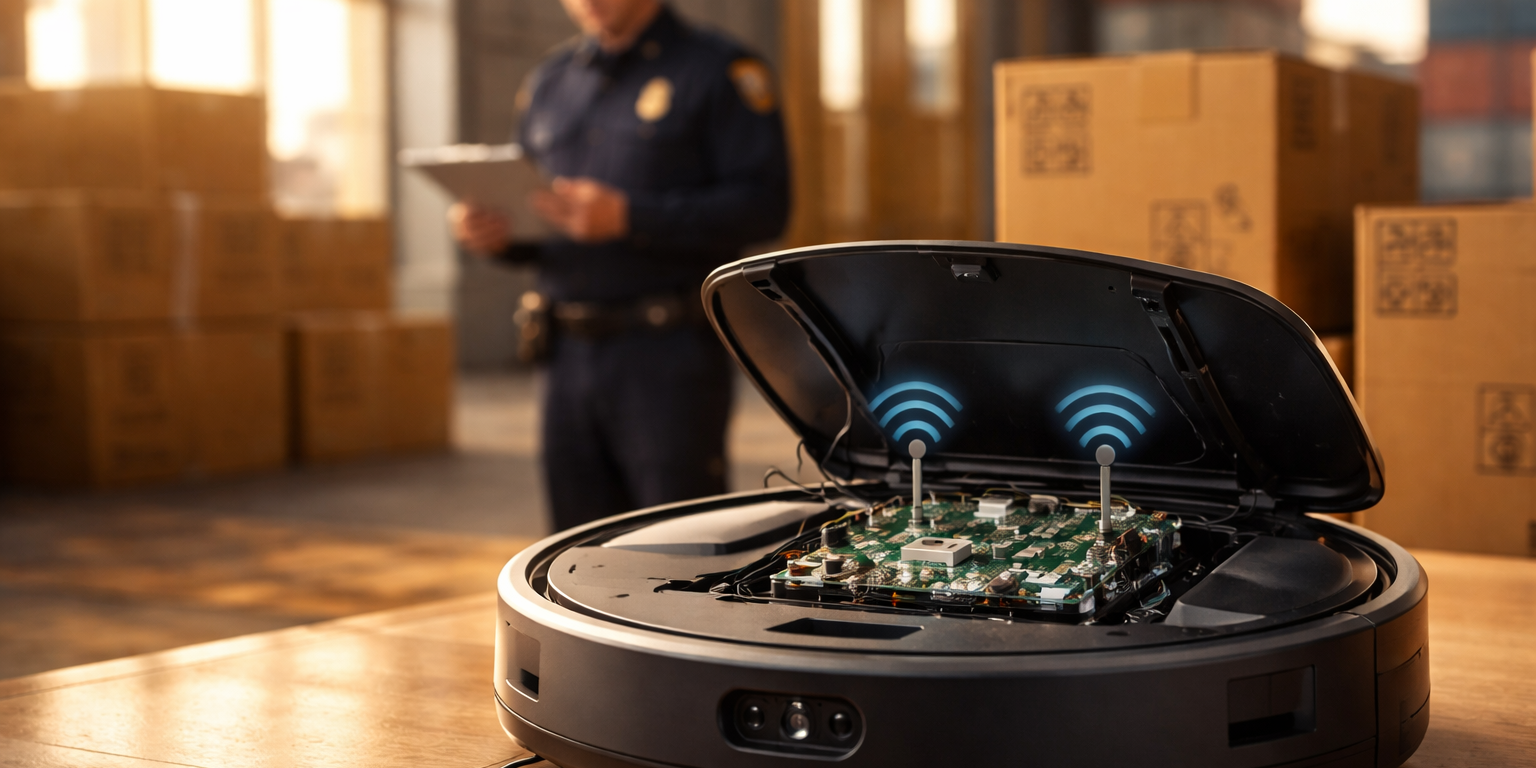
The agency's July rulemaking broadens language originally aimed at telecommunications infrastructure. Previous FCC actions under the Secure Equipment Act targeted cellular base stations and networking gear from Huawei and ZTE. This expansion interprets "communications equipment" to include any device transmitting radio frequency signals for command, control, or data relay purposes. Consumer robots fit that definition through their WiFi and Bluetooth radios, which handle app connectivity, firmware updates, and cloud-based mapping services. An FCC spokesperson confirmed the policy applies to any autonomous device using covered components, opening questions about whether smart thermostats, connected cameras, and other IoT products face similar restrictions in subsequent rulemakings.
Manufacturers seeking waivers must demonstrate their devices pose no national security risk, a standard the FCC has left deliberately vague. The application requires complete bills of materials, supply chain documentation tracing every semiconductor and radio module to its fabrication origin, third-party security audits, and evidence that no data flows to servers in territories the Commerce Department considers adversarial. Processing times for the 14 waiver applications filed since the rule took effect have ranged from 90 to 180 days, with eight still pending and three denied outright. One approval came with conditions requiring the applicant to replace its WiFi chipset with a Taiwan-sourced alternative and submit to quarterly compliance audits. Legal counsel at Cooley LLP estimates waiver pursuit costs between $400,000 and $1.2 million per product SKU when accounting for documentation, engineering reviews, and legal fees.
The restriction arrives as U.S. consumer robot sales reached $4.8 billion in 2025, with vacuum cleaners representing 72 percent of unit volume according to the Consumer Technology Association. iRobot, now owned by Amazon following a $1.7 billion acquisition completed in April 2024, manufactures its Roomba j9 and Combo j7 models in Malaysia but sources radio frequency components from Chinese suppliers including Realtek and Espressif Systems. The company disclosed in its Q2 2026 earnings filing that three planned product launches face delays while it evaluates either component substitution or waiver applications. Roborock and Ecovacs, both Chinese firms with substantial U.S. market share, have publicly committed to building waiver cases but acknowledged the timeline makes 2026 holiday season launches impossible. Shark, a subsidiary of SharkNinja Operating LLC, shifted some production to Vietnam in 2023 but still relies on Chinese-manufactured sensor arrays and navigation processors in models accounting for 40 percent of its North American revenue.
Industry observers note the FCC action creates unintended leverage for the small cohort of robotics component suppliers outside China's manufacturing ecosystem. Samsung Electronics and STMicroelectronics, both of which produce WiFi system-on-chip modules in South Korea and Italy respectively, have seen inquiry volume from robotics OEMs triple since June. One senior supply chain executive at a Top 5 consumer robotics brand, speaking on condition of anonymity, estimated that redesigning a robotic vacuum around non-Chinese radio hardware adds 14 to 18 months to development cycles and increases per-unit component costs by $12 to $19 at volume. Those margins matter acutely in a product category where retail prices cluster between $299 and $799 and where Amazon's private-label offerings already apply downward pricing pressure.
What to Watch: Monitor whether the FCC extends the covered list to include cameras, smart speakers, or other high-volume consumer IoT categories before year-end, which multiple commissioners have signaled in recent public statements. Track iRobot's Q3 earnings call in October 2026 for details on which models receive waiver approvals and whether the company announces retail price increases to offset component substitution costs. Observe whether Chinese manufacturers Roborock and Ecovacs pursue legal challenges to the waiver process itself, as trade association filings suggest coordinated litigation may emerge by September 2026.