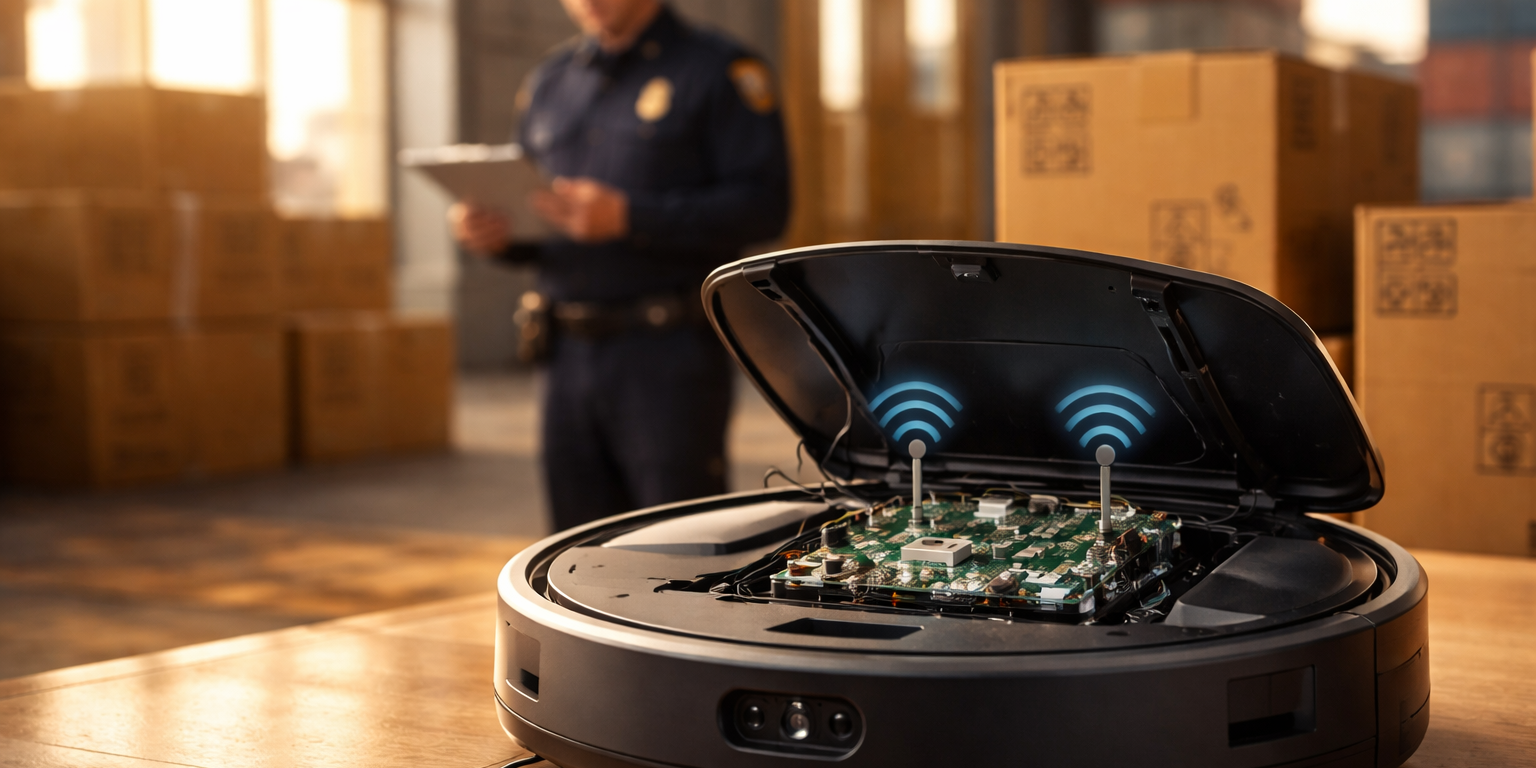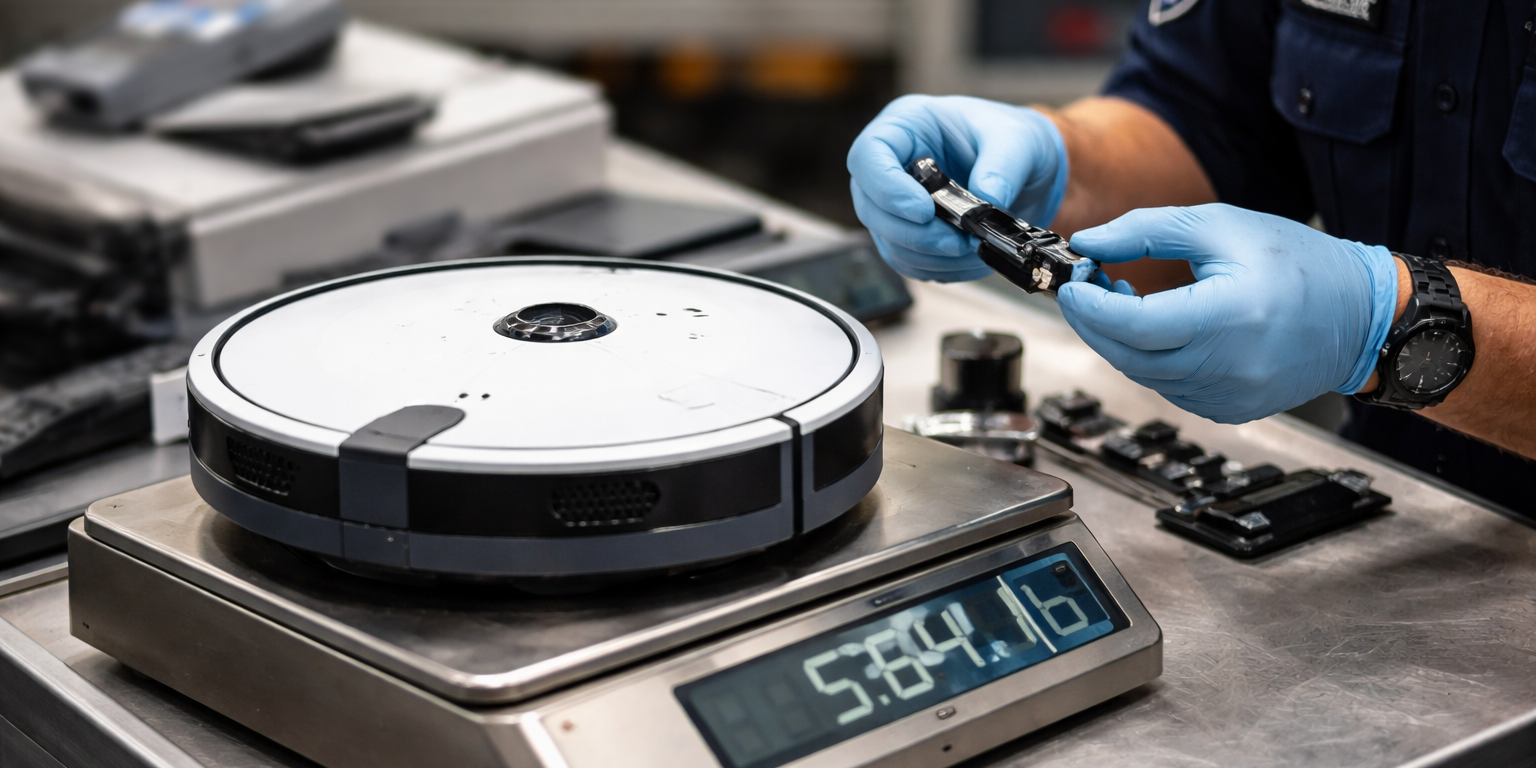
A 4.4-pound weight limit now determines whether your robot vacuum can legally enter the United States. The Federal Communications Commission updated its Covered List in late July 2026 to include foreign-produced advanced robotic devices and connected power inverters, establishing specific technical parameters that sweep most premium robot vacuums into the ban. Any ground-based robot exceeding 4.4 pounds with wireless connectivity capable of 200 kilobits per second or faster falls under the restriction when manufactured by companies the FCC deems national security risks. The threshold captures iRobot Roomba competitors from China almost entirely while leaving domestic manufacturers and their lighter-weight models untouched.
The Covered List, maintained under the Secure and Trusted Communications Networks Act of 2019, previously focused on telecommunications infrastructure from Huawei, ZTE, and similar companies. This expansion into consumer robotics marks the first time the FCC has applied national security restrictions to household autonomous devices based on technical specifications rather than pure origin. The 200 kbps data rate effectively means any robot vacuum with standard Wi-Fi connectivity falls under scrutiny. Bluetooth Low Energy variants might slip through, but any device uploading mapping data, receiving firmware updates, or enabling smartphone control through cloud services hits that threshold within seconds of operation. The weight specification appears calibrated to exempt toy-grade robots while catching anything with meaningful battery capacity, navigation sensors, and cleaning mechanisms.
Roborock, Ecovacs, and Dreame dominate the premium robot vacuum segment, with U.S. market share estimates putting Chinese brands above 60 percent in units sold over $400. None of these companies appear on the Covered List by name yet, but the FCC rule allows the agency to designate specific manufacturers or apply blanket restrictions to devices meeting technical criteria from any foreign producer deemed a security risk. The distinction matters for enforcement. Customs and Border Protection can now detain shipments based on device specifications alone, without proving the manufacturer's direct ties to foreign intelligence services. Several retailers contacted by RoboticsIntl.com in late July said they received preliminary guidance to halt new purchase orders for affected Chinese-made robot vacuums pending clarification on specific brand designations. Best Buy and Amazon have not publicly commented, but inventory checks show several Roborock and Ecovacs models listed as temporarily unavailable with no restock dates.
The consumer robotics industry has operated in regulatory ambiguity since these devices started mapping interior floorplans and uploading spatial data to cloud servers. Privacy advocates have questioned whether LiDAR-equipped vacuums constitute surveillance devices, particularly when owned by companies subject to Chinese data-sharing laws. The FCC's move suggests the agency agrees that risk exists, though the commission has not released technical analysis explaining how a vacuum's floor map could compromise national security infrastructure. Some engineers speculate the concern centers on aggregate data. Individual floorplans mean little, but millions of maps could reveal building layouts for government facilities, defense contractors, or critical infrastructure sites. Others point to supply chain fears. If a foreign adversary controls the firmware update pipeline for millions of robots inside American homes, those devices become potential footholds for broader network intrusion. The 4.4-pound threshold suggests the FCC worries more about capable devices with substantial compute power than it does about basic sweepers.
What to Watch: The FCC has not yet published the full technical methodology for evaluating which specific manufacturers fall under the advanced robotic device category, but expect formal brand designations by September 2026. Roborock's pending IPO on the Hong Kong Stock Exchange, originally scheduled for October 2026, may face delays if U.S. market access becomes uncertain. Watch for potential workarounds: some Chinese manufacturers are exploring Mexico-based final assembly to satisfy country-of-origin rules, though the FCC language suggests component sourcing could still trigger restrictions. iRobot, now owned by a private equity consortium after Amazon abandoned its acquisition attempt, stands to gain significant market share if Chinese competitors face extended import blocks.